


Table of Contents
- Why Bike Storage Matters in Your Garage
- Wall-Mounted Bike Hooks and Hangers
- Vertical Bike Rack for Garage Storage
- Ceiling Bike Hoist Systems
- Bike Storage for Multiple Bikes
- How to Hang a Bike in a Garage
- Outdoor Sheds: Full-Scale Bike Storage
- Choosing the Right Solution for Your Space
- Frequently Asked Questions
Last Updated: October 12, 2026
Why Bike Storage Matters in Your Garage
A cluttered garage is wasted potential. Bicycles sprawled across the floor consume space that could serve your car, workshop, or hobby area. The right space saving garage storage solutions for bicycles turn dead wall and ceiling space into functional zones, reclaiming floor clearance and protecting your bikes.
A horizontal bike takes up roughly 6 feet of floor space; stack three that way and you've sacrificed 18 feet of garage real estate. Vertical and overhead solutions compress that footprint to less than 2 square feet per bike.
Below, we walk through the most effective space saving garage storage solutions for bicycles, from wall-mounted hooks to full outdoor sheds.
Wall-Mounted Bike Hooks and Hangers
Wall-mounted bike hooks are the simplest, most affordable way to store bicycles vertically. A single hook costs $15 to $50, requires minimal installation, and holds one bike off the ground. Best for garages with available wall space and bikes you access regularly.
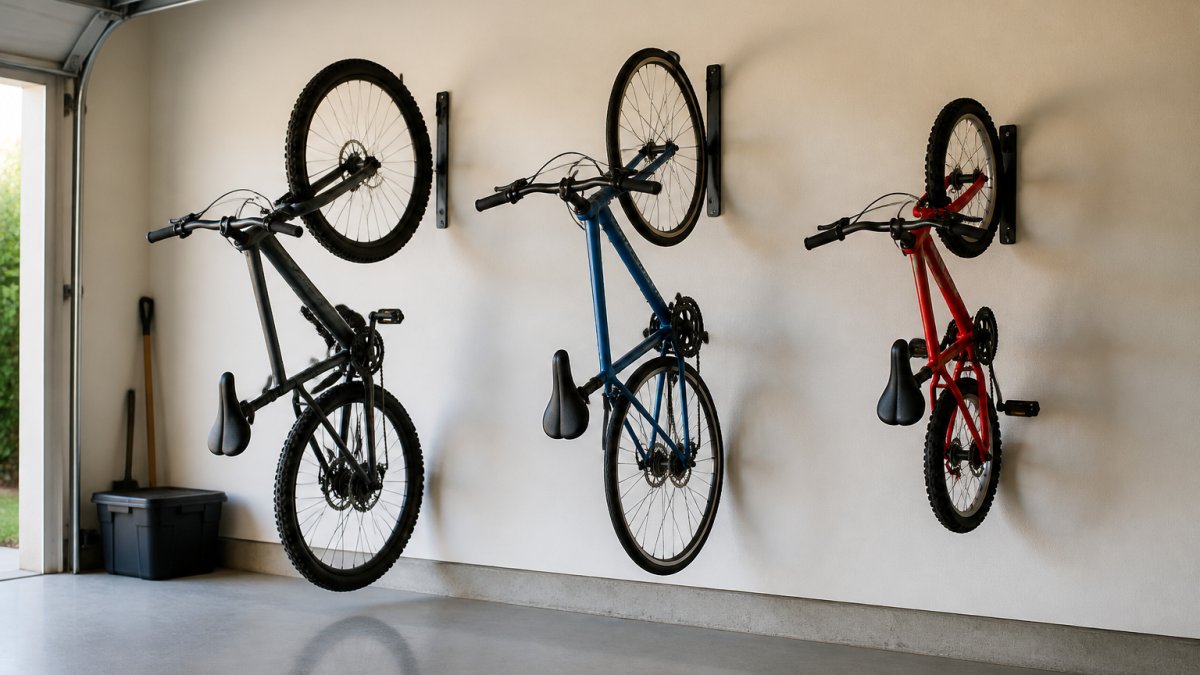
Proper installation is key: anchor hooks into studs or use heavy-duty wall anchors rated for at least 50 pounds. Most bikes weigh 25 to 40 pounds, so one hook handles the load easily. Hang at eye level or slightly higher, around 5 to 6 feet, for easy grabbing.
Horizontal hooks (bike hangs from the frame) work for any frame type. Vertical hooks (wheel sits in a cup) suit road and hybrid bikes better than full-suspension mountain bikes, which can stress the frame. For renters, freestanding hook stands offer the same vertical storage without drilling.
Vertical Bike Rack for Garage Storage
A vertical bike rack for garage storage stands on the floor and holds bikes upright in a compact footprint. Racks range from simple A-frame designs ($40-$100) to multi-bike stands ($150-$300), ideal if you rent, prefer not to drill, or want to move your setup.
Vertical racks support the frame or wheel to keep the bike perpendicular to the ground. Single-bike racks take roughly 2 by 2 feet of floor space; multi-bike versions hold three to four bikes in a 3-by-3-foot area.
The limitation is that they still occupy floor space, unlike wall-mounted solutions. But they install quickly, need no tools, and relocate easily. Look for rubberized contact points to protect your frame and prevent slipping.
Ceiling Bike Hoist Systems
For maximum space recovery, ceiling bike hoist systems lift bikes out of the way using pulleys and rope: lower a bike to grab it, then hoist it back up. They work well where wall space is limited or occupied by shelving and workbenches.
A ceiling bike hoist costs $60 to $150 and holds one bike at heights of 5 to 8 feet. Installation requires anchoring to ceiling joists. Verify your ceiling supports the weight and fasteners are rated for at least 75 pounds.
Most people master the hoist within a few uses. The advantage emerges with seasonal or rarely-used bikes: hoist them up and forget them until needed. For daily riders, a wall hook is faster.
Bike Storage for Multiple Bikes
Once you own three or more bikes, storage becomes a capacity problem: how do I fit a fleet into the wall, ceiling, and floor space I actually have? The answer depends on bike count, frame type, and vehicle clearance.
Measure usable space, not total space. A typical two-car garage is about 20 by 20 feet, but a parked vehicle eats 8 to 9 feet of width and 16 to 18 feet of depth, leaving the back wall, one side wall, and ceiling as realistic storage zones.
Wall-mounted multi-bike racks (3-6 bikes, $100-$300). A horizontal rail or staggered arms hold several bikes flat against the wall, typically spaced 12 to 16 inches apart.
Vertical multi-bike stands (3-4 bikes, $150-$300). These hold bikes upright by the wheel or frame in roughly 3 by 3 feet. They suit road, hybrid, and commuter bikes.
Slatwall systems (4-8 bikes, $150-$400 for a 4-by-8-foot panel plus accessories). Slatwall is the most flexible option because you reposition hooks and hangers as your collection changes. Mount the panel into studs across its full height, then add hooks, shelves, and bins.
Ceiling-mounted multi-bike lifts (2-3 bikes, $100-$250). Space individual hoists along ceiling joists to stack bikes overhead, freeing the entire wall and floor. Each bike must be lifted and lowered by hand, ruling it out for heavy e-bikes or anyone with lifting limitations.
| System | Bikes Held | Floor Space Used | Typical Cost | Watch For |
|---|---|---|---|---|
| Wall multi-bike rack | 3-6 | 0 sq ft | $100-$300 | Handlebar width, stud anchoring |
| Vertical multi-bike stand | 3-4 | 9-16 sq ft | $150-$300 | E-bike and fat-tire weight limits |
| Slatwall panel | 4-8 | 0 sq ft | $150-$400 | Accessory cost, wall space |
| Multiple ceiling hoists | 2-3 | 0 sq ft | $100-$250 | Lifting effort, joist rating |
| Outdoor shed | 6-10 | Yard footprint | $350-$900 | Foundation, weather exposure |
For four or more bikes with no wall or ceiling room left, an outdoor shed is the practical overflow. Superior Tool Garage and Outdoors offers the 10x8FT Steel Garden Storage Shed at $649.99, which holds multiple bikes plus tools, and the 10x12FT Outdoor Metal Storage Shed at $864.99 for a growing collection.
10x10 FT Outdoor Storage Shed →


How to Hang a Bike in a Garage
Hanging a bike properly protects both the bike and your garage. Follow these steps for safe wall-mounted storage.
Step 1: Choose Your Hook Location Select a wall section with solid backing, ideally studs spaced 16 inches apart. Avoid drywall-only areas unless you use heavy-duty anchors rated for at least 50 pounds. Mark the spot at eye level (5-6 feet).
Step 2: Install the Hook For a stud, drill a pilot hole and screw the hook in firmly. For drywall, use a stud finder, then install toggle bolts or lag anchors. Tighten completely; a loose hook slips under load.
Step 3: Hang the Bike For horizontal hooks, lift the frame onto the hook. For vertical hooks, position the front wheel in the cup or cradle. Ensure the bike sits level and doesn't rock.
Step 4: Check Stability Gently push the bike side to side. It should not move; if it does, check the installation and tighten fasteners.
Step 5: Protect the Frame Add foam padding or rubber sleeves where the bike contacts the hook to prevent paint damage and frame stress.
Outdoor Sheds: Full-Scale Bike Storage
When garage space is at a premium or you own a large collection, an outdoor storage shed provides dedicated bike storage plus room for tools and seasonal gear. Metal sheds offer durability and weather protection at reasonable cost.
Superior Tool Garage and Outdoors carries several shed options suited to bike storage. The 8x4FT Triple Door Metal Storage Shed at $348.99 offers compact storage with triple-door access.

For larger collections, the 10x12FT Outdoor Metal Storage Shed at $864.99 provides ample room for your snow blower, lawnmower, bikes, grill, generator, and more. Double doors and a cottage-style window add convenience and natural light.
Outdoor sheds protect bikes from weather, theft, and UV damage. Metal construction resists rust and rot; lockable doors add security. The trade-off is installation and yard space, since sheds need a level foundation.
Choosing the Right Solution for Your Space
Most storage guides say "pick based on your space" without telling you how. This section walks through the four measurements and two bike attributes that determine which system fits, so you can rule options in or out before spending money.
Measure these four things first.
- Ceiling height. Standard garage ceilings run 8 to 10 feet. A hoist needs headroom to lift a bike (roughly 3 feet plus clearance), so an 8-foot ceiling works but leaves little margin. Under 8 feet, skip hoists and favor wall or floor systems.
- Usable wall width. Measure only wall sections clear of doors, windows, and outlets. A single hook needs about 2 feet of width per bike; a multi-bike rail needs 12 to 16 inches per bike plus end clearance.
- Vehicle clearance. Park your car where it normally sits and measure the gap to each wall. You need at least 30 inches of walkway to move a bike comfortably; if tighter, overhead storage is your only option.
- Floor footprint you can spare. Vertical stands and sheds consume floor or yard space. If floor space is already tight, eliminate these first.
Then check two bike attributes.
- Weight. A standard bike weighs 25 to 40 pounds; an e-bike can weigh 50 to 70. Any hook, hoist, or rack must be rated above the bike's weight with margin. A 50-pound hook is fine for a road bike, marginal for an e-bike.
- Frame and tire type. Step-through, carbon, and full-suspension bikes need specific contact points. Carbon frames should never hang from a single point that pinches the tubes; use wheel-based cradles or padded frame hooks. Fat tires need wider cradles.
Match the profile to the system.
| Your Situation | Best Fit | Why |
|---|---|---|
| One bike, 8-ft ceiling, tight walls | Wall hook or ceiling hoist | Zero floor footprint |
| 2-3 bikes, daily access | Wall hooks plus one hoist for seasonal bikes | Fast grab, space-efficient |
| 4+ bikes, good wall space | Slatwall or multi-bike wall rail | Scales as collection grows |
| E-bikes or heavy bikes | Floor stand or low wall rack | Avoids overhead lifting and single-point stress |
| Renters or no-drill | Freestanding vertical stand | No permanent installation |
| No wall or ceiling room | Outdoor shed | Frees the entire garage |
Accessibility and mobility. If lifting a bike overhead is difficult, rule out ceiling hoists and high wall hooks. Low wall racks, floor stands, and rolling racks keep bikes at waist height. Renters should favor freestanding, no-drill options.
Seasonal and long-term storage. For bikes stored for months, protect tires from flat spots by hanging them or resting them on a stand rather than leaving weight on one contact patch. Keep them dry and dust-free; a covered shed or a wall position away from sprinklers and door drafts reduces moisture and UV exposure. Wipe frames and lubricate chains before long storage.
Frequently Asked Questions
What is the best way to store bicycles in a small garage?
The best approach depends on your bike count and available space. Wall-mounted hooks and vertical racks maximize unused wall space without consuming floor area. For 2-3 bikes, a single vertical rack or hook system works well. For more bikes, combine wall storage with ceiling hoists or a compact outdoor shed. Measure your garage dimensions and bike frame widths first to ensure compatibility.
How can I store bikes in a garage without taking up floor space?
Use vertical storage methods: wall-mounted hooks, vertical bike racks, and ceiling hoists all free up floor space. Wall hooks are the most affordable option, starting around $15-30 per hook. Vertical racks organize multiple bikes compactly. Ceiling hoists lift bikes 6-8 feet high, ideal for garages with limited wall space. These methods let you maintain clear floor space for vehicles or projects.
Can you hang a bicycle from the ceiling in a garage?
Yes, ceiling-mounted hoists work well for garage bike storage. Pulley systems lift bikes safely when not in use, keeping them out of the way. Installation requires secure ceiling joists rated for 50+ pounds per bike. Ensure your garage ceiling height allows safe clearance for vehicles. Ceiling hoists cost $40-150 depending on capacity and design. They're ideal for seasonal bikes or when wall space is already occupied.
How do you store multiple bicycles in a garage?
Combine storage methods for efficiency. Use wall-mounted hooks for 2-3 bikes, add a vertical rack for 4-6 bikes, and incorporate a ceiling hoist for seasonal or guest bikes. Stagger hook heights to prevent handlebars from tangling. For larger collections, consider a compact outdoor metal storage shed like the 8x4FT Triple Door Metal Storage Shed ($348.99).