


Table of Contents
- Types of Wall-Mounted Storage Systems
- Heavy Duty Garage Wall Shelving Options
- Comparison Table: Weight Capacity and Load-Bearing Limits
- Garage Wall Organization Ideas for Small Spaces
- How to Install Garage Wall Storage Systems
- Material Durability and Corrosion Resistance
- Customization and Modularity for Long-Term Use
- Frequently Asked Questions
Last Updated: August 28, 2026
Types of Wall-Mounted Storage Systems
Wall-mounted storage systems come in several distinct configurations, each designed to solve different garage organization challenges. The main categories include slatwall panels, wall-mounted shelving units, rail-based systems, and pegboard alternatives. Understanding these options helps you choose the right fit for your space and needs.
Slatwall panels consist of grooved plywood sheets mounted directly to wall studs. They accept specialized hooks, baskets, and shelves that slide into the grooves, creating a flexible storage solution. This modular approach means you can reconfigure your layout without additional wall damage. Rail-based systems use horizontal tracks mounted to studs, with adjustable brackets that hold shelves at any height. These work well for heavy-duty applications because the load distributes across multiple mounting points.
Traditional wall-mounted shelving offers fixed or adjustable shelves bolted directly to wall studs. This approach provides maximum weight capacity and stability for storing dense items like power tools, automotive equipment, or heavy machinery. Pegboard systems use perforated panels with removable hooks, offering quick access to frequently used tools. Each system type has distinct advantages depending on your storage priorities, available wall space, and the weight of items you're storing.
At Superior Tool Garage and Outdoors, we help homeowners and DIY enthusiasts select systems that match their specific garage layout and organizational goals. The choice between these types ultimately depends on your wall condition, the weight you need to support, and how often you'll rearrange your storage configuration.
Heavy Duty Garage Wall Shelving Options
Heavy-duty garage wall shelving systems are built to handle serious weight loads without sagging or failing. These units use steel construction with powder-coated finishes that resist rust and corrosion, essential for garages exposed to temperature fluctuations and humidity.
The Superior Tool Garage and Outdoors 72" Adjustable Metal Shelving at $101.99 delivers reliable performance for garage organization. This unit features adjustable shelves that accommodate items of varying heights, from paint cans to power tools. The metal frame construction provides the structural integrity needed for long-term use in demanding garage environments. Its no-fuss installation means you can get organized without hiring professional help.

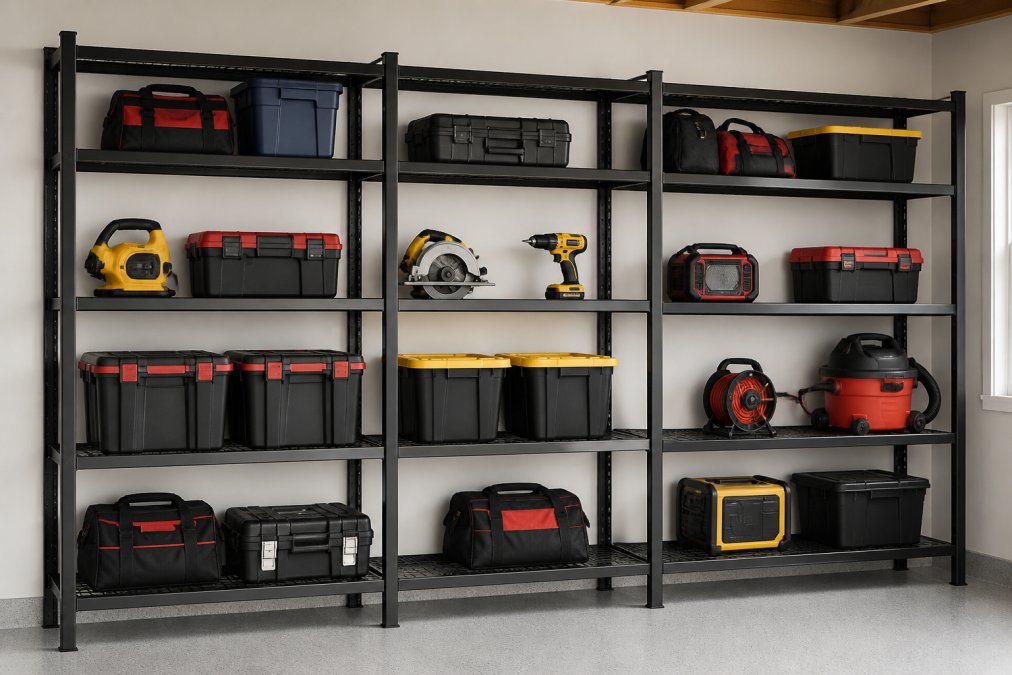
For teams or households needing mobile storage alongside wall-mounted solutions, the 5Tier Heavy Duty Foldable Metal Storage Rack With Wheels at $57.99 provides flexibility. The stainless steel construction resists corrosion, while wheels allow you to reposition the unit as your garage layout evolves. This works particularly well in smaller garages where you need temporary access to items without permanent wall mounting.
The Heavy Duty Stainless Steel Storage Rack at $93.99 offers three-tier capacity in a compact footprint. Stainless steel construction handles moisture better than standard steel, making it ideal for garages in humid climates. The fixed configuration provides maximum stability for heavy items that won't move frequently.
What separates true heavy-duty shelving from standard options is the mounting depth and the quality of fasteners used. Professional-grade systems use lag bolts or through-bolts that anchor directly into wall studs, distributing weight across multiple connection points. This prevents the gradual hardware fatigue that causes shelves to sag over months or years.
Comparison Table: Weight Capacity and Load-Bearing Limits
| System Type | Typical Load Per Shelf | Mounting Method | Best For | Hardware Durability |
|---|---|---|---|---|
| Slatwall panels | 25-50 lbs | Stud mounting with lag bolts | Light to medium items | 5-7 years |
| Rail-based systems | 50-150 lbs | Multiple stud attachment points | Heavy tools and equipment | 7-10 years |
| Fixed wall shelving | 100-300 lbs | Direct stud bolting | Maximum weight capacity | 10+ years |
| Pegboard systems | 10-25 lbs | Stud mounting with hooks | Frequently accessed tools | 3-5 years |
Weight capacity varies dramatically based on mounting quality and stud spacing. A shelf rated for 100 pounds on 16-inch stud spacing might only handle 60 pounds on 24-inch spacing. This is where installation precision matters, proper anchoring directly impacts long-term safety and performance.
Garage Wall Organization Ideas for Small Spaces
Small garages demand intelligent use of vertical space. Wall mount garage storage systems transform tight layouts by eliminating floor clutter and creating accessible tool zones. The key is vertical thinking: instead of spreading items across the floor, stack them on walls.
Start by categorizing items into usage frequency. Daily-use tools should occupy eye-level space within arm's reach. Seasonal items and backup supplies go higher up. Heavy items stay lower to reduce strain and improve safety. This hierarchy prevents constant reorganization and makes finding what you need intuitive.
Slatwall panels work exceptionally well in small spaces because they maximize wall real estate without taking up floor space. A single 4-by-8-foot panel can hold dozens of tools, accessories, and storage baskets. Combine this with adjustable shelving above or below the slatwall for maximum flexibility. The modular nature means you can add accessories gradually as your needs evolve.
Corner spaces often go unused in small garages. Specialized corner shelving units or angled slatwall installations capture this wasted area. A corner unit holding automotive supplies or gardening tools frees up linear wall space for other storage. Similarly, wall space above garage doors provides prime real estate for ceiling-mounted racks or high shelves storing off-season items.
The psychological benefit of wall-mounted organization shouldn't be overlooked. When tools and equipment are visible and organized, you're more likely to use them and less likely to duplicate purchases. Small garages feel larger when clutter moves off the floor.
How to Install Garage Wall Storage Systems
Proper installation determines whether your wall mount garage storage system performs reliably for years or fails prematurely. The process involves three critical phases: locating studs, preparing the wall, and securing fasteners.
Stud Mounting and Anchoring Requirements
Locating wall studs is the foundation of safe installation. Use a stud finder to identify framing, then verify by tapping the wall, studs produce a solid sound while hollow areas between studs sound hollow. Mark stud locations with a pencil. Most homes have studs spaced 16 inches on center, but verify this by measuring between multiple studs.
Drill pilot holes slightly smaller than your fastener diameter. This prevents wood splitting and ensures bolts seat properly. Use lag bolts (minimum ½-inch diameter) for heavy-duty applications. These create mechanical locks in the wood rather than relying on friction alone. For anchoring into concrete blocks or masonry walls, use concrete anchors rated for your expected load.
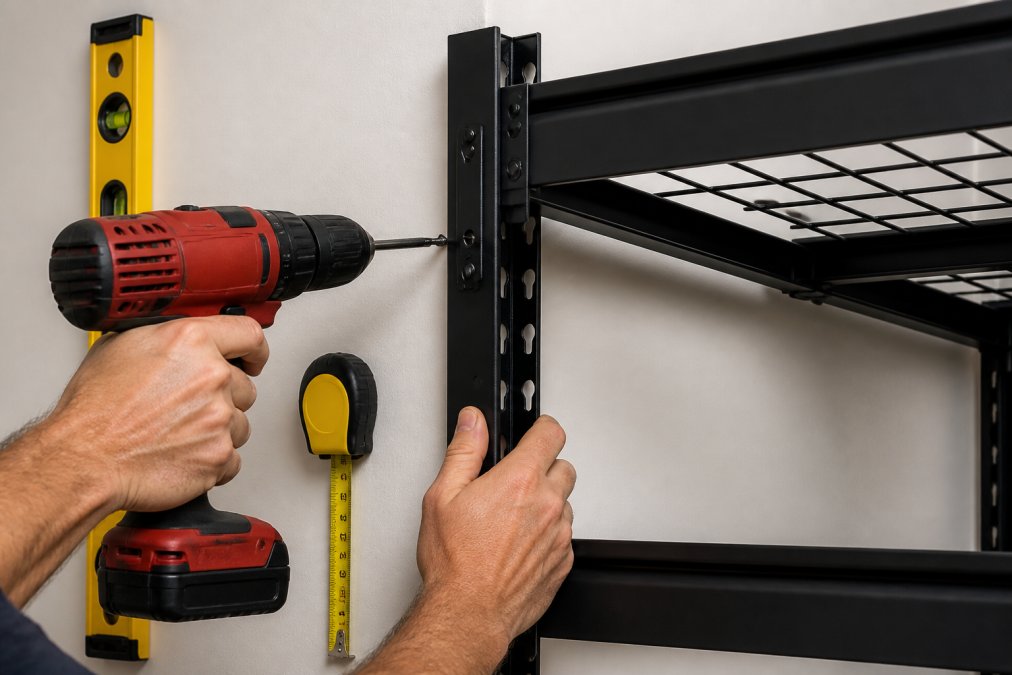
The fastener itself matters more than most people realize. Budget fasteners use soft metal that corrodes or strips under vibration. Premium fasteners use hardened steel with corrosion-resistant coatings. Over months of temperature fluctuations and vibration from heavy equipment stored above, inferior fasteners gradually loosen. This is the "long-term hardware fatigue" that causes shelves to sag or fail without obvious warning.
Install a level check after tightening each fastener. Shelving that's even slightly off-level causes items to slide and creates uneven weight distribution. This uneven loading accelerates fastener failure on one side while leaving the other side underutilized.
DIY vs. Professional Installation Cost-Benefit Analysis
DIY installation typically costs $50-150 in tools and materials beyond the shelving unit itself. You'll need a stud finder ($20-40), a level ($15-30), a drill ($50-100 if you don't own one), and fasteners ($20-50). The time investment runs 2-4 hours for a typical single-wall installation.
Professional installation costs $200-500 depending on complexity and local labor rates. This includes stud location verification, wall preparation, fastener selection appropriate to your specific wall type, and final leveling. Professionals catch issues DIYers miss: hidden plumbing, electrical wiring, or structural damage that requires different mounting approaches.
The cost-benefit calculation shifts based on several factors. If you're comfortable with basic tools and your wall is straightforward (standard studs, no obstacles), DIY makes financial sense. If your garage has concrete walls, multiple obstacles, or you're installing a complex multi-unit system, professional installation prevents costly mistakes. A single installation failure, shelf collapse, wall damage, or injury, quickly exceeds professional installation costs.
Many homeowners choose a hybrid approach: DIY installation for straightforward slatwall panels or simple shelving, professional installation for complex rail systems or high-load applications. This balances cost with safety.
Material Durability and Corrosion Resistance
Garage environments are harsh. Temperature swings, humidity, moisture from vehicles, and chemical exposure from automotive products all accelerate material degradation. The best wall mount garage storage systems use materials specifically chosen to withstand these conditions.
Steel construction dominates heavy-duty garage storage because it provides strength at reasonable cost. However, not all steel is equal. Bare steel rusts quickly in garage humidity. Powder-coated finishes create a protective barrier that resists corrosion for 5-7 years in typical garages. Stainless steel (like the 300-series stainless used in Superior Tool Garage and Outdoors products) resists corrosion significantly longer because the material itself resists oxidation.

Galvanized steel, steel coated with zinc, offers a middle ground. Zinc corrodes preferentially to steel, sacrificing itself to protect the underlying metal. Galvanized finishes typically last 7-10 years in garage environments (galvanizeit.org). This is why professional-grade systems often specify galvanized hardware even if the shelves themselves use powder-coated steel.
The fasteners matter as much as the shelving. Stainless steel bolts won't corrode, but they're more expensive than galvanized alternatives. Cheap zinc-plated bolts fail within 2-3 years in humid garages. The $5 difference between cheap and quality fasteners prevents $500+ shelf replacement costs down the line.
Paint and sealant quality directly impacts longevity. Industrial-grade powder coating bonds at the molecular level, creating a finish that resists chipping and peeling. Consumer-grade paint applied with a brush or roller fails within months under vibration and temperature cycling. This is where premium systems command higher prices, the durability justifies the investment.
Customization and Modularity for Long-Term Use
The best wall mount garage storage systems adapt as your needs change. Modular designs let you add, remove, or reconfigure components without replacing the entire system.
Slatwall systems excel at modularity. You can start with a single 4-by-8-foot panel and add more panels as your storage needs grow. Hooks, baskets, and shelves attach anywhere on the grooved surface, and you can reposition them anytime. This flexibility means your system grows with your garage and your projects.
Rail-based systems offer similar adaptability. Brackets slide along horizontal rails, so you can adjust shelf height and quantity without additional wall damage. Some systems use modular rail sections that connect together, letting you expand horizontally or create L-shaped configurations in corners.
Fixed shelving is less flexible but more stable. Once installed, adjusting shelf height requires removing the entire unit and remounting at different stud locations. This permanence is a trade-off for maximum weight capacity and stability.
Future-proofing your storage system means choosing components that won't become obsolete. Proprietary systems from niche manufacturers may offer excellent performance today but become impossible to expand or repair in five years when the company discontinues product lines. Standard systems using universal fasteners and common dimensions remain expandable indefinitely.
The modularity question also applies to smart home integration. Some newer garage storage systems incorporate LED lighting integrated into shelves or motion-activated lighting. While convenient, these systems add cost and complexity. Standard systems pair easily with aftermarket lighting solutions, offering flexibility without premium pricing.
Frequently Asked Questions
Q: What is the best wall-mounted storage system for a garage?
A: The best wall mount garage storage system depends on your space and needs. Steel construction with powder-coated finishes offers corrosion resistance and durability. Look for modular systems with adjustable shelving that let you customize configuration as your needs change. Heavy-duty options with 50+ pound weight capacity per shelf work well for tools and equipment. The 72" Adjustable Metal Shelving from Superior Tool offers no-fuss installation and multiple uses across your garage, workshop, or storage space.
Q: How much weight can wall-mounted garage storage systems hold?
A: Weight capacity varies by system design and installation quality. Most heavy-duty garage wall shelving supports 30-50+ pounds per shelf when properly mounted to wall studs. Load-bearing limits depend on stud spacing, anchor type, and shelf material. Stainless steel and steel construction typically handle more weight than plastic alternatives. Always verify the manufacturer's weight limit and ensure studs are properly located before mounting. Distributing weight evenly across shelves prevents hardware fatigue and extends system life.
Q: Can I install wall-mounted garage storage myself, or do I need a professional?
A: Most homeowners can install wall-mounted garage storage with basic tools and stud-finding skills. DIY installation saves on labor costs but requires locating studs, drilling pilot holes, and using proper anchoring hardware. Professional installation guarantees correct stud placement and safety anchoring, especially for heavy-duty systems. For small to medium shelving units, DIY is cost-effective. For complex multi-unit systems, professional installation may be worth the investment for long-term safety and peace of mind.
Q: What garage wall organization ideas work best for small spaces?
A: Maximize small garages by using vertical storage and wall-mounted systems that preserve floor space. Install shelving units at different heights to fit various tool sizes. Use modular, customizable configurations so you add or remove sections as needs change. Combine wall shelving with hanging accessories like hooks and baskets to organize frequently used items. The 72" Adjustable Metal Shelving from Superior Tool works well for small garages because its adjustable design lets you fit it into tight spaces while keeping tools and equipment off the floor.
Superior Tool Garage and Outdoors provides the heavy-duty storage solutions that transform disorganized garages into functional workshops. Our 72" Adjustable Metal Shelving and stainless steel storage racks deliver the durability and weight capacity your tools and equipment deserve. Choose systems built for long-term performance, not quick fixes. Shop our collection today to organize your garage with confidence and get the job done right.