


Table of Contents
- Garage Workshop Safety Checklist: Start Here Before You Touch a Tool
- Workshop Safety Equipment You Actually Need
- Power Tool Safety Tips for Beginners
- Workshop Ventilation and Dust Control That Works
- Electrical Safety and Fire Prevention in a Garage Workshop
- Tool Storage and Workspace Organization for Safety
- Frequently Asked Questions
Last Updated: October 8, 2026
Garage Workshop Safety Checklist: Start Here Before You Touch a Tool
Garage workshop safety starts with a repeatable routine, not a one-time cleanup. At Superior Tool Garage and Outdoors, we tell every beginner the same thing: walk through the space before you plug anything in. Most garage injuries come from clutter, bad lighting, and skipped inspections, not from exotic accidents.
The 10-Point Pre-Project Walkthrough
Run this checklist every single time you start a project. It takes two minutes and prevents the mistakes that send people to the emergency room.
- Clear the floor of cords, scraps, and offcuts
- Check that your work light reaches the whole bench
- Confirm the fire extinguisher is visible and charged
- Inspect power cords for cracks or exposed wire
- Verify the blade or bit is sharp and correctly seated
- Put on eye and ear protection before starting
- Open the garage door or a window for airflow
- Keep children and pets out of the work zone
- Stage your tools within arm's reach, not on the floor
- Know where the breaker panel and shutoff are
That last point matters more than beginners expect. If a tool jams or sparks, you want to kill power in seconds, not hunt for the panel.
U.S. Consumer Product Safety Commission home workshop safety guidance
Workshop Safety Equipment You Actually Need
The essential workshop safety equipment for a beginner garage is eye protection, hearing protection, and a respirator, plus a fire extinguisher and a first aid kit. You do not need a full industrial setup. You need the gear that matches the tools you actually own.
Eye, Ear, and Lung Protection: The Non-Negotiables
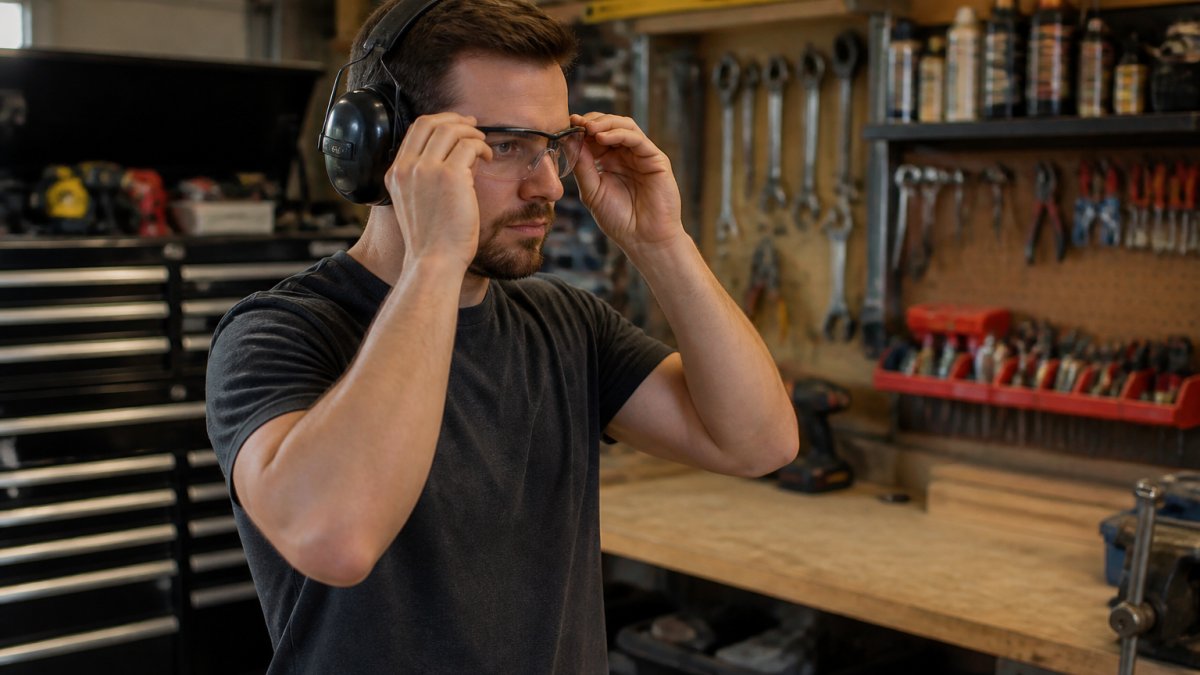
Safety glasses with side shields stop the debris that flies sideways off a grinder or drill. Standard prescription glasses are not enough; they leave gaps at the temples and brow.
Ear protection comes in two forms. Foam plugs are cheap and effective for short jobs. Over-ear muffs are easier to put on and off and last for years. Keep both on a hook by the bench.
For dust, a basic N95 or P100 respirator handles sanding and cutting. Read the label and match the filter to the job. If you can smell the material through the mask, it is not sealing correctly.
Power Tool Safety Tips for Beginners
Power tool safety tips for beginners come down to one rule: inspect before you start. A five-second check of the cord, blade, and guard prevents the majority of shop accidents. Never bypass a guard, even for a "quick cut."
Before You Pull the Trigger: Inspection Routine
Walk through this routine for every power tool, every time.
- Unplug the tool or remove the battery before inspecting
- Check the cord for nicks, cracks, or taped repairs
- Confirm the guard moves freely and returns to position
- Check that the blade, bit, or disc is sharp and tight
- Verify the switch clicks cleanly on and off
- Test the tool in open air before touching material
A dull blade is more dangerous than a sharp one. It forces you to push harder, which increases the chance of kickback. If a cut starts smoking or the tool bogs down, stop and change the blade.
Our Cordless Angle Grinder ships with two batteries and a charger, so you can swap power instead of rushing a cut. It runs at 16800 RPM with a compact 3-inch body for tight spaces.

Workshop Ventilation and Dust Control That Works
Workshop ventilation and dust control keep fine particles out of your lungs and off every surface in the garage. The goal is moving air, not just filtering it. Open the garage door, run a box fan at the threshold, and add a shop vacuum with a HEPA filter at the point where you cut or sand.
Three habits make the biggest difference:
- Cut and sand near the open door, never in a closed corner
- Hook a shop vac to the tool's dust port when one exists
- Sweep or vacuum after every session, not once a month
Sawdust piles up fast and creates a fire risk when it collects near outlets, heaters, or a water heater pilot light. Empty the shop vac after each use rather than letting the canister fill.
Screwdriver Set Insulated Magnetic Screwdrivers 100 pcs →
Electrical Safety and Fire Prevention in a Garage Workshop
Electrical safety in a garage workshop means respecting the limits of your circuits. Garages often share a circuit with outdoor outlets and lighting, and older wiring may not handle a table saw, shop vac, and space heater running at once.
Follow these rules:
- Use GFCI outlets or a portable GFCI adapter near any water source
- Keep cords off the floor where they can be cut or tripped over
- Never daisy-chain extension cords or power strips
- Match the extension cord gauge to the tool's amperage
- Store flammable finishes in a closed metal cabinet away from ignition sources
Mount a fire extinguisher rated for electrical and flammable liquid fires near the door, and check the gauge monthly. NFPA home fire safety resources covers extinguisher placement and inspection basics for home workshops.
Tool Storage and Workspace Organization for Safety
Tool storage and workspace organization are safety equipment, not just tidiness. A clear bench and labeled storage cut the time you spend hunting for a tool, which cuts the odds you grab the wrong one or leave a blade exposed.
Start with vertical and mobile storage:
- A 5-Tier Heavy Duty Foldable Metal Storage Rack with Wheels keeps bins and cases off the floor and rolls out of the way between projects
- 72" Adjustable Metal Shelving holds heavier items at bench height so you are not lifting from the ground
- A 50 Piece General Household Toolbox keeps hand tools sorted and portable, with a compact case that stows in a locker or car trunk
- An Insulated Magnetic Screwdriver Set keeps drivers on a rail or magnetic strip instead of loose in a drawer
If your garage is genuinely too small for everything, a 10x10 FT Outdoor Storage Shed moves seasonal gear and bulky equipment out of the work zone entirely. It has a lockable door, ventilation, and a sloped roof for drainage.

The rule we give beginners: nothing lives on the floor except the bench and the racks. Every tool has a marked home, and every sharp edge gets a cover.
OSHA guidance on hand and power tool safety
Frequently Asked Questions
What safety gear do beginners need in a garage workshop?
At minimum, you need safety glasses, hearing protection, and a respirator for dust and fumes. Keep all of it in one bin near the door so gearing up becomes automatic, not a decision you skip when you are in a hurry.
How do you make a garage workshop safer for a beginner?
Start with the garage workshop safety checklist: clear the floor of cords and debris, mount a fire extinguisher within reach, and set up a dedicated finishing area away from ignition sources. Add ventilation before you cut or sand anything. Label where each tool lives so you never hunt for a wrench with a running saw behind you. Most beginner accidents come from tripping, reaching, or rushing, not from the tool itself.
What should you check before using a power tool?
Inspect the cord and plug for cracks or exposed wire, confirm the guard is in place and moves freely, and check that the blade or bit is sharp and correctly tightened. Test the switch and make sure it returns to off on its own. For cordless tools like an angle grinder, verify the battery is seated and the disc is rated for the RPM. If anything looks damaged, tag it and do not use it until it is repaired.
How do you safely handle dust and fumes in a garage workshop?
Set up workshop ventilation and dust control before you make the first cut. Open the garage door and use a box fan pushing air outward, not inward, so dust exits rather than recirculates. Connect a shop vacuum to your sander or saw when possible, and wear a respirator rated for fine particles. For finishes and solvents, work near the open door and keep containers sealed when not in use. Never rely on a single open window in an attached garage.
What are the most common workshop safety mistakes beginners make?
Wearing loose sleeves or jewelry near spinning tools, removing blade guards because they feel inconvenient, and skipping eye protection for a quick cut are the top three. Others include storing flammables next to a water heater, using a dull blade that forces you to push harder, and working tired at the end of the day. Each of these turns a routine task into a hospital visit. Build the habit of a two-minute pre-check and most of these disappear.
A safe garage workshop is built one habit at a time: the walkthrough, the inspection, the mask, the cleared floor. Superior Tool Garage and Outdoors stocks the storage and tools that make those habits easy, from heavy-duty shelving and mobile racks to insulated screwdriver sets and cordless power tools built for home shops. Shop now and set up a workspace you can use with confidence.