


Table of Contents
- Declutter and Sort by Frequency of Use
- Small Garage Storage Ideas: Vertical Shelving and Wall-Mounted Racks
- Garage Wall Storage Ideas: Hooks, Pegboards, and Slat Walls
- Overhead Garage Storage: Ceiling Racks and Suspended Systems
- Small Garage Tool Storage: Compact Toolboxes and Drawer Systems
- Bins, Baskets, and Enclosed Storage for Seasonal Items
- Maintenance and Climate Protection for Long-Term Organization
- Frequently Asked Questions
Last Updated: October 14, 2026
Declutter and Sort by Frequency of Use
The first step to garage organization small spaces is honesty about what you actually use. Before buying a single shelf or hook, sort everything into three categories: daily use, seasonal, and rarely used.
Daily-use items live at eye level or arm's reach: tools you grab weekly, regular sports gear, routine automotive supplies. Seasonal items, holiday decorations, winter tires, gardening equipment, go higher or deeper.
Small Garage Storage Ideas: Vertical Shelving and Wall-Mounted Racks
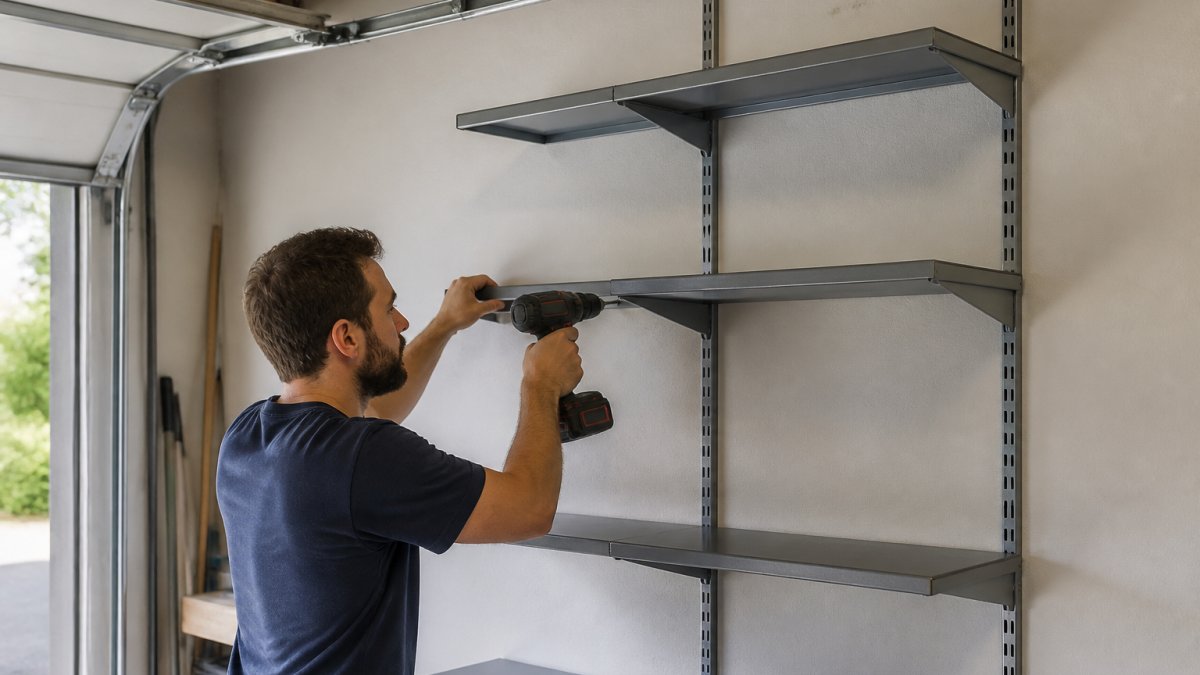
Vertical space is your secret weapon in a small garage. Floor space is finite, but walls run floor to ceiling, and most garages leave that upper real estate empty. Plan the wall like a floor plan, with measurements, before buying a bracket.
Start with a measured layout, not a shopping list
Sketch your garage footprint. Three common small-garage shapes drive different wall strategies:
- Narrow single-car (roughly 10-12 ft wide, 20-22 ft deep): Reserve one long side wall for a continuous shelving run and keep the opposite wall clear for the car door swing. A 12-16 in deep shelf unit along a 10 ft wall gives you 10-13 sq ft of storage without touching the parking bay.
- One-car with a bump-out or alcove: Treat the alcove as a dedicated storage bay. A 24 in deep, 36 in wide rack fits most bump-outs and keeps bulky items out of the driving lane.
- Shared two-car (roughly 20-24 ft wide): Split the back wall into two zones, one per driver, and run vertical storage up the center strip between the two parking bays. A 24 in wide tower between bays rarely blocks either door.
Leave a 30 in walkway wherever you carry items, and 36 in of clearance in front of any shelf you'll open or crouch at. Measure your car door's opening arc (typically 24-36 in) and subtract it from your usable wall run before planning shelves.
Match shelf spacing to what you're storing
Adjustable shelving earns its keep because you set the gaps. Starting points:
- 6-8 in: small parts bins, paint cans, spray cans, hand tools on a shallow shelf.
- 12-16 in: power tools in cases, stacked totes, automotive fluids.
- 18-24 in: coolers, camping gear, bulky seasonal boxes.
Set your first shelf at 36-48 in so you're not bending for everyday items, and cap the top shelf at 72 in, the safe reach limit from a step stool for most adults. Anything higher belongs overhead.
Anchor to studs, and know your load limits
A shelf is only as strong as what holds it to the wall.
- Find the studs first. Use a stud finder or knock-test with a finish nail. Studs are typically 16 in on center, sometimes 24 in in older construction. Mark each with painter's tape before drilling.
- Lag bolts beat drywall anchors every time. A bracket fastened into a stud with a lag bolt or structural screw carries far more than one held by a plastic or toggle anchor. Reserve drywall anchors for light items only.
- Respect the shelf's rating, not your optimism. Most metal shelving publishes a per-shelf capacity (200-800 lb for heavy-duty steel, far less for wire and particleboard). Stay well under it and load the heaviest items on the bottom shelf.
Renter-friendly and low-cost alternatives
If you can't drill extensively, renting, or avoiding permanent holes, you still have options:
- Freestanding shelving units need no wall anchoring. Bolt them together for stability and use the bottom shelf for heavy items.
- Adjustable tension poles fit floor-to-ceiling and hold surprising weight when loaded low. Fully reversible.
- Over-the-door organizers hang from existing hardware and come down in seconds.
No custom cabinetry required.
A quick vertical plan you can copy
For a narrow single-car garage: bottom shelf at 12 in for heavy totes, second at 36 in for power tools, third at 54 in for hand tools and bins, top at 72 in for light seasonal boxes.
Garage Wall Storage Ideas: Hooks, Pegboards, and Slat Walls
Simple hooks work best for items with handles: rakes, shovels, hoses, extension cords. Install them 6-8 inches apart to free floor and shelf space.
The real benefit is visibility: every tool at a glance. That saves time digging through a toolbox and discourages duplicate purchases.
Mount hooks at varying heights, lower for everyday items, higher for seasonal gear, and leave at least 12 inches between rows so items don't tangle.
Overhead Garage Storage: Ceiling Racks and Suspended Systems
Overhead storage is the final frontier in a small garage, and the one most likely to go wrong. The space above your car is free real estate, but a bad install can drop a box onto a windshield. Do the math before you hang anything.
Measure clearance before you measure storage
Start with two numbers: ceiling height and vehicle height.
- Standard garage ceiling: 8 ft (96 in) is common; some are 9-10 ft, and older garages can be lower.
- Typical sedan: about 5 ft (60 in) tall. Typical SUV or pickup: 6-6.5 ft (72-78 in).
- Minimum clearance: leave at least 24 in between the top of your vehicle and the bottom of the rack, enough to walk under, load, and see what you're doing.
An 8 ft ceiling minus a 6 ft SUV leaves about 24 in, your entire overhead budget, enough for a low-profile rack of flat, lightweight items. If your ceiling is 8 ft and you drive a tall truck, overhead storage may not be safe; prioritize wall and floor storage instead.
Also account for the garage door: when up, its tracks and panels occupy the ceiling zone along its path. Measure the door's travel and keep your rack clear of that envelope.
Understand what a ceiling can actually hold
Ceiling joists are designed to hold up a roof or floor above, not necessarily a rack full of stored goods. Two things matter:
72" Adjustable Metal Shelving →
- Joist direction and spacing. Joists typically run 16 in or 24 in on center. A rack spanning multiple joists distributes load far better than one bolted to a single joist.
- Per-joist capacity. Contractors commonly estimate a typical residential ceiling joist can carry 20-40 lb per linear foot of span, but this varies widely. Consult a licensed contractor or structural engineer, don't guess.
Practical implications:
- Spread the load across at least three joists whenever possible. Use a rack designed to span joists rather than hang from one.
- Keep total load modest. Overhead storage is for bulky-but-light items: holiday decorations, empty coolers, sleeping bags, pool floats, vacuum-bagged clothing. Not tires, engine blocks, paint, or anything heavy and dense.
- Use the right fasteners. Lag bolts or structural screws into the joist, not drywall anchors or deck screws into thin strapping. Pre-drill to avoid splitting.
Choose the right system for your ceiling
- Fixed overhead racks are simplest and cheapest, holding the same items year-round. Good for decorations you pull down once a year.
- Pulley systems raise and lower a platform on cables, ideal for seasonal swaps and anyone who shouldn't climb a ladder. They cost more and require careful installation; cable, pulleys, and ceiling anchors must all be rated for the load.
- Suspended hooks and straps work for bikes, ladders, and long-handled tools. A bike hung flat against the ceiling takes almost no vertical space.
Safe access is part of the design
A rack you can't safely reach is one you won't use, or one you'll fall off a chair trying to reach.
- Keep a stable step stool or small ladder dedicated to the garage. Never stand on a bucket, cooler, or rolling chair.
- Store the most-used overhead items closest to the access point so you're not reaching across the rack.
- Label every overhead bin on the outward-facing side so you can identify contents without pulling it down.
A realistic overhead plan for a small garage
For an 8 ft ceiling with a sedan, a low-profile rack spanning three joists along the back wall, roughly 4 ft wide by 2 ft deep, holds a season's worth of light decorations and empty luggage.
Small Garage Tool Storage: Compact Toolboxes and Drawer Systems
Tools need a home that's compact, organized, and portable.
For more tools, the Auto Repair Tool Kit ($111.99) offers a broader range with a larger, more durable storage box.
Drawer systems work well with a workbench. A rolling toolbox under or beside it keeps frequently used tools within arm's reach and off the work surface.
The rule: anything you use regularly needs a dedicated home within 3 feet of where you use it.
Bins, Baskets, and Enclosed Storage for Seasonal Items
Seasonal items need protection from dust, temperature swings, and pests. Clear bins show contents without opening; opaque bins hide clutter and look neater.
Enclosed cabinets protect items from humidity and pests better than open shelves.
Stack heavy bins low and light bins high. Group similar items, holiday decorations in one corner, gardening supplies in another, to speed seasonal swaps and reduce forgotten items.
Maintenance and Climate Protection for Long-Term Organization
Organization only works if you maintain it. Set a quarterly review, spring, summer, fall, winter, and spend 30 minutes returning items to their homes.
Climate control matters more than most homeowners realize. Temperature swings and humidity damage tools, electronics, and seasonal items.
Pests are another threat. Seal gaps around doors and windows and store food items (pet supplies, fertilizers) in sealed containers.
Create a simple maintenance checklist:
- Return tools to their homes after every project
- Wipe down metal tools monthly to prevent rust
- Check bins quarterly for moisture or pest damage
Frequently Asked Questions
How can I effectively organize my small garage without making it feel cramped?
Start by removing items you don't use regularly, then prioritize vertical and overhead storage to keep the floor clear. Wall-mounted shelving, pegboards, and ceiling racks maximize space without eating into parking or workspace. Group similar items together, tools in one area, seasonal gear in another, so everything has a designated spot. This approach keeps your garage functional and clutter-free while preserving valuable floor space.
What are the best small garage storage ideas for tools and equipment?
Compact toolboxes like the 50 Piece General Household Toolbox ($33.99) store essentials in minimal space. Wall-mounted pegboards and slat walls hold frequently used hand tools at eye level. For larger equipment, adjustable metal shelving units like the 72" Adjustable Metal Shelving ($101.99) offer flexible organization. Store tools by frequency of use: daily items at arm's reach, occasional tools on upper shelves. This keeps your workspace organized and tools accessible.
Can I organize a small garage and still fit my car inside?
Yes, by focusing on overhead and wall storage rather than floor-based solutions. Ceiling-mounted racks store bikes, seasonal items, and rarely used equipment. Wall shelving, hooks, and pegboards maximize vertical space. A mobile foldable rack like the 5Tier Heavy Duty Foldable Metal Storage Rack With Wheels ($57.99) can be moved aside when needed. Measure your parking space first, then plan storage around it to ensure your vehicle always fits comfortably.
What should I not store in my garage, and how does that help with organization?
Avoid storing electronics, important documents, paint, and items sensitive to temperature and humidity. Garages experience moisture and temperature swings that damage these items. Removing them immediately creates more usable space for tools, equipment, and seasonal gear that actually belong there.
Getting your small garage organized takes planning and the right storage solutions, but the payoff is immediate. You'll park your car inside, find tools without hunting, and actually enjoy working in your space. Superior Tool Garage and Outdoors offers the shelving, racks, and tool storage you need to make it happen, from adjustable metal shelving to compact toolboxes that keep everything organized and accessible. Shop now and transform your garage into a functional, clutter-free space.