


Table of Contents
- What You'll Need Before You Start
- Step-by-Step: How to Clean Concrete Garage Floors
- Removing Oil Stains From Concrete
- Choosing the Best Garage Floor Degreaser
- How to Pressure Wash Garage Floor
- Troubleshooting Common Stains and Issues
- Sealing Your Concrete Floor After Cleaning
- Safety Protocols for Chemical Mixing
- Frequently Asked Questions
Last Updated: September 13, 2026
What You'll Need Before You Start
Cleaning a concrete garage floor starts long before you touch a scrub brush. Concrete is a porous surface, which means oil, grease, and dirt soak into the slab rather than sitting on top of it. That single fact explains why a quick mop job rarely works and why the right supplies matter more here than almost anywhere else in your home.
This guide from Superior Tool Garage and Outdoors breaks the job into clear steps, from surface preparation through sealing. Below, we'll show you exactly how to clean concrete garage floors without damaging the slab or wasting a weekend.
Gather these before you begin:
- Safety goggles and protective gloves
- Stiff bristle brush or scrub brush with a long handle
- Heavy-duty cleaner or concrete degreaser
- Two buckets (one for cleaner, one for rinse water)
- Absorbent material such as cat litter or sawdust
- Baking soda and dish soap for spot treatment
- Pressure washer or garden hose with a spray nozzle
- Squeegee and rags for drying
Step-by-Step: How to Clean Concrete Garage Floors
The full process takes two to four hours for a standard two-car garage, plus drying time. Work in sections so cleaner doesn't dry before you scrub it.

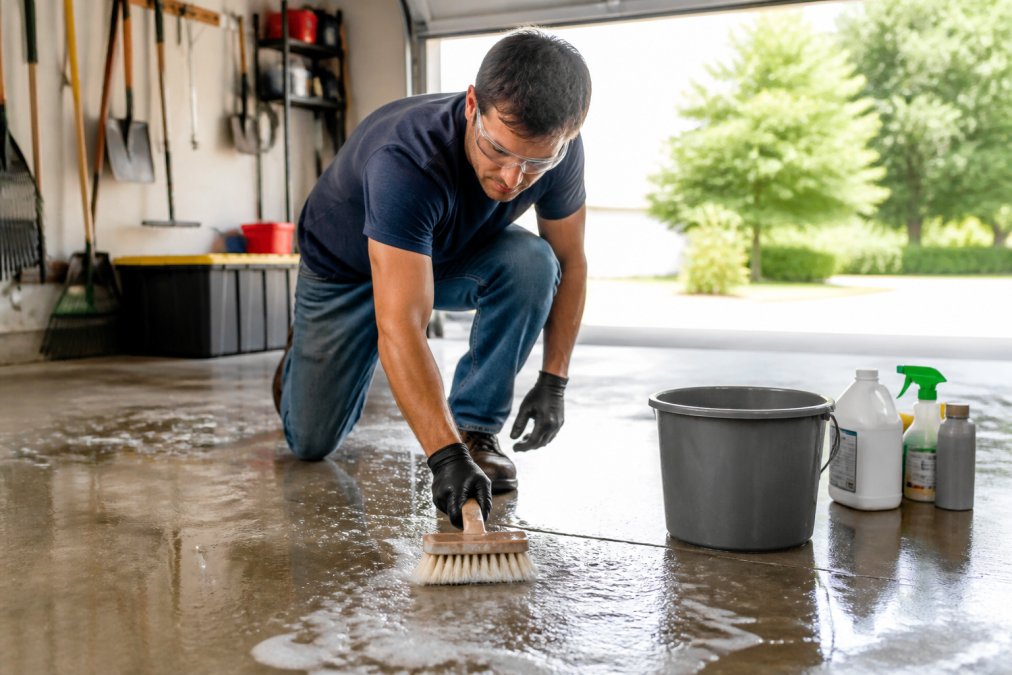
Step 1: Clear the Space and Prep the Surface
Move everything out, then sweep or vacuum loose dirt, grit, and debris. For oil spots, spread cat litter or another absorbent material over the stain and grind it in with your shoe. Let it sit for several hours, then sweep it up. This pulls surface oil out before you add water, which would otherwise spread the stain.
Step 2: Apply Cleaner and Scrub
Mix your degreaser according to the label, then apply it to a manageable section, roughly 10 feet by 10 feet. Let it soak for the recommended dwell time so the detergent can break the bond between grease and concrete. Scrub with a stiff bristle brush using circular motion and real pressure. Agitation is what lifts grime out of the pores, not the soap alone.
Step 3: Rinse and Dry
Rinse with a hose or pressure washer, pushing dirty water toward the garage door and out. Repeat on stubborn areas rather than scrubbing harder. Once the floor is clean, squeegee standing water out and let the slab air dry completely, usually several hours. Sealer and most cleaners won't perform on a wet surface.

| Step | Time Estimate | Key Tool |
|---|---|---|
| Clear and prep | 30-45 min | Broom, cat litter |
| Apply and scrub | 60-90 min | Degreaser, bristle brush |
| Rinse and dry | 30-60 min | Hose or pressure washer |
Removing Oil Stains From Concrete
Removing oil stains from concrete requires pulling the oil out of the pores, not just wiping the surface. Fresh stains respond well to absorbent material and dish soap. Older, deep-set stains often need a dedicated degreaser and repeat applications.
A common mistake is scrubbing a wet oil stain immediately. Water carries the oil deeper into the slab. Blot and absorb first, then treat.
For stubborn spots, make a paste from baking soda and a little hot water, spread it over the stain, and let it sit before scrubbing. For heavy buildup, a commercial concrete degreaser with a longer soak time does more work than extra elbow grease. If a stain has been there for years, expect to treat it two or three times with drying time in between.
Choosing the Best Garage Floor Degreaser
The best garage floor degreaser depends on what you're removing. Light grease from lawn equipment calls for a general-purpose detergent. Engine oil, transmission fluid, and years of drips call for a heavy-duty, alkaline degreaser built for concrete.
Read the label for two things: whether it's safe on concrete and whether it needs dilution. Some concentrates work at full strength on stains and diluted on general cleaning. Citrus-based formulas are gentler but slower; solvent-based formulas cut grease faster but need better ventilation.
Whichever product you choose, give it dwell time. Most people scrub too soon and rinse too early, then blame the cleaner.
How to Pressure Wash Garage Floor
Pressure washing is the fastest way to rinse a large concrete slab, but the pressure setting matters more than the machine. Concrete is durable, yet too much pressure etches the surface and drives water into cracks, which can worsen freeze-thaw damage.
For a garage floor, use a 25-degree or 40-degree nozzle and keep the wand moving. Hold the tip at a consistent distance, around 12 to 18 inches, and work in overlapping passes. A gas unit like the Gas Pressure Washer 3500PSI handles a full two-car slab without stopping, while a cordless option such as the 21V Portable Cordless Pressure Washer suits smaller jobs and quick touch-ups.
Never pressure wash without eye protection, and never point the wand at a person or pet. Direct the runoff toward a drain or the driveway, not into a storm sewer if local rules restrict it.
Troubleshooting Common Stains and Issues
Not every stain behaves the same, and treating them identically wastes time and can set a stain permanently. The key is understanding what you're actually removing, an oil, a metal oxide, a biological growth, or a mineral deposit, because each one responds to a different mechanism.
Oil and grease (the most common)
Oil soaks into the pores and bonds to the concrete. Degreasers work by emulsifying the oil so water can carry it away, which is why dwell time matters more than scrubbing force. For fresh drips, cover with cat litter or sawdust, grind it in with your shoe, and let it sit several hours before sweeping up. For older stains, apply an alkaline degreaser, let it dwell per the label (often 5-10 minutes), agitate with a stiff bristle brush, and rinse. Repeat with drying time between rounds, two or three passes is normal for a years-old stain.
Rust stains
Rust is iron oxide, and it needs an acid to dissolve, not a degreaser. Look for a commercial rust remover, or a product containing oxalic acid or phosphoric acid. Apply to a small test area first, because acids can etch or discolor concrete if left too long. Keep the area wet with the product, scrub, then rinse thoroughly and neutralize if the label calls for it. Never use bleach on rust; it can set the stain.
Mildew and mold
These are biological, so they need a biocide, not a detergent. A diluted bleach solution (typically 1 part bleach to 10 parts water) or a dedicated mildewcide works (the EPA). Scrub, rinse, and, critically, dry the slab completely. Mildew returns when moisture stays trapped, so if it keeps coming back, the real problem is water intrusion, not cleaning.
Efflorescence
That white, chalky residue is mineral salt pushed to the surface by moisture moving through the slab. Brush it off dry first, adding water just dissolves it back into the concrete. Then address the water source (grading, downspouts, vapor barrier) or it will return. A sealer applied after the slab is dry helps block the migration path.
Paint, adhesive, and tire marks
Paint and adhesive need a dedicated remover matched to the coating type (latex vs. oil vs. epoxy), applied per label, then cleaned with detergent. Tire marks are usually rubber transfer, a degreaser plus a stiff brush, or a specialty tire-mark remover, handles most of them. Don't reach for a wire brush on any of these; it scratches the surface and gives dirt more places to hide.
When to stop and seal instead
If a stain won't lift after two rounds with the correct chemistry, more scrubbing won't help, the contaminant has soaked too deep. At that point, sealing the floor is the better move: it locks in the residual stain and prevents the next one from soaking in.
Sealing Your Concrete Floor After Cleaning
Sealing is the step most guides skip, and it's the one that keeps your floor clean longer. A sealer fills the pores so oil and water sit on the surface instead of soaking in, turning a future deep clean into a quick wipe. It also blocks the moisture migration that causes efflorescence and mildew.
The three main sealer types
- Acrylic (film-forming): Cheapest and easiest to apply, dries fast, and gives a glossy or matte finish. Downside: it wears under hot tires and needs reapplication every 1-3 years. Best for light-use garages and budget projects.
- Epoxy (film-forming, two-part): The most durable and stain-resistant option, and the one most people picture when they think "garage floor coating." It's also the most demanding: the slab must be fully cured (typically 28 days for new concrete), clean, and often etched or profiled so the epoxy can bond. Hot tires can still leave marks on some epoxies, and UV exposure yellows them, so they're best for fully enclosed garages.
- Penetrating silane/siloxane (not film-forming): Soaks into the pores and chemically reacts with the concrete rather than sitting on top. It won't peel or wear off, leaves no gloss, and is breathable, so it doesn't trap moisture. It resists water, salt, and de-icing chemicals well but offers less protection against oil than epoxy. Best for garages that see road salt and wet vehicles.
How to choose
Match the sealer to the use, not the marketing. A garage that parks daily drivers through winter benefits most from a penetrating sealer. A workshop or show garage where appearance and chemical resistance matter most justifies the cost and prep of epoxy. A rental or low-traffic space is fine with acrylic.
Application basics
Wait until the slab is completely dry, moisture trapped under a film-forming sealer causes it to blister and peel. Apply in thin, even coats with a roller or sprayer, following the label's coverage rate (typically 200-400 sq ft per gallon for film-forming products, more for penetrating sealers). Most film-forming products need two coats; penetrating sealers are usually one application. Respect the recoat window, too soon and the first coat hasn't cured; too late and the second coat won't bond.
Cure time before you park
This is where most people jump the gun. Acrylic sealers often allow foot traffic in 24 hours and vehicle traffic in 24-72 hours. Epoxy typically needs 24 hours for foot traffic and 72 hours to 7 days before vehicles, depending on temperature and formula. Penetrating sealers usually cure in 24-48 hours. Cool, humid conditions extend all of these. Check the label, cure time varies by product, and parking too early can permanently mar the finish.
Maintenance after sealing
A sealed floor needs far less work: sweep regularly, mop with a pH-neutral cleaner, and avoid harsh acids or solvents that break down the sealer. Reapply acrylic every few years, and top up penetrating sealers when water stops beading on the surface, that beading is your indicator the protection is still working.
Safety Protocols for Chemical Mixing
Chemical mixing causes more garage injuries than the cleaning itself. Follow these rules every time:
- Never mix bleach and ammonia, or bleach and vinegar.
- Add chemicals to water, not water to chemicals, when diluting acids.
- Wear safety goggles and protective gloves, even for "mild" products.
- Keep the garage door open or use a fan for ventilation.
- Store products in original labeled containers, away from heat.
- Rinse skin contact immediately with cool water.
Frequently Asked Questions
What should you never use to clean concrete floors?
Avoid acidic cleaners like vinegar or lemon juice on concrete, as they can etch the surface. Never mix bleach with ammonia or vinegar, since that creates toxic fumes. Skip harsh wire brushes that gouge the concrete, and don't use a pressure washer above 3,500 PSI, which can damage the surface. Stick to pH-neutral or alkaline degreasers made for concrete.
Can you use Dawn dish soap to clean a garage floor?
Dawn works for light dirt and grease, but it isn't a heavy-duty solution. For small spots, mix a few drops with hot water and scrub with a bristle brush. For larger oil stains or deep grime, you'll need a dedicated concrete degreaser. Dish soap can leave residue that attracts dirt, so always rinse thoroughly after use.
How do you remove stubborn oil stains from a garage floor?
Start by blotting fresh oil with cat litter or an absorbent material. For set-in stains, apply a commercial degreaser or a baking soda paste, let it soak for 30 minutes, then scrub with a stiff brush. For deep stains, use a pressure washer with a degreaser. Repeat the process if needed, and consider sealing the concrete afterward to prevent future absorption.
Is pressure washing safe for all concrete garage floors?
Not always. Older or cracked concrete can be damaged by high pressure. Use a pressure washer under 3,500 PSI with a 25- or 40-degree nozzle to avoid etching. Test a small area first. If the surface is fragile, use a garden hose and a scrub brush instead. Always wear safety goggles and protective gloves when pressure washing.
A clean concrete garage floor is a weekend project, but keeping it clean comes down to prep, the right degreaser, and a sealer that stops stains before they start. Superior Tool Garage and Outdoors carries the pressure washers, brushes, and heavy-duty gear to handle the whole job, from the first sweep to the final rinse. Shop now and get the tools that make your garage floor easier to maintain all year.