


Table of Contents
- Assess and Sort Your Seasonal Outdoor Gear
- Clean and Maintain Gear Before Storage
- Garage Storage Systems for Outdoor Gear
- Maintaining Outdoor Equipment for Long-Term Storage
- How to Store Camping Gear in a Small Space
- Label and Implement Digital Inventory Tracking
- Execute Seasonal Rotation and Maintain Gear Readiness
- Frequently Asked Questions
Last Updated: August 29, 2026
Assess and Sort Your Seasonal Outdoor Gear
Most people store gear haphazardly, mixing summer camping equipment with winter climbing gear and wasting storage space while making items impossible to find when needed. Start by pulling everything out into one space where you can see it all at once.
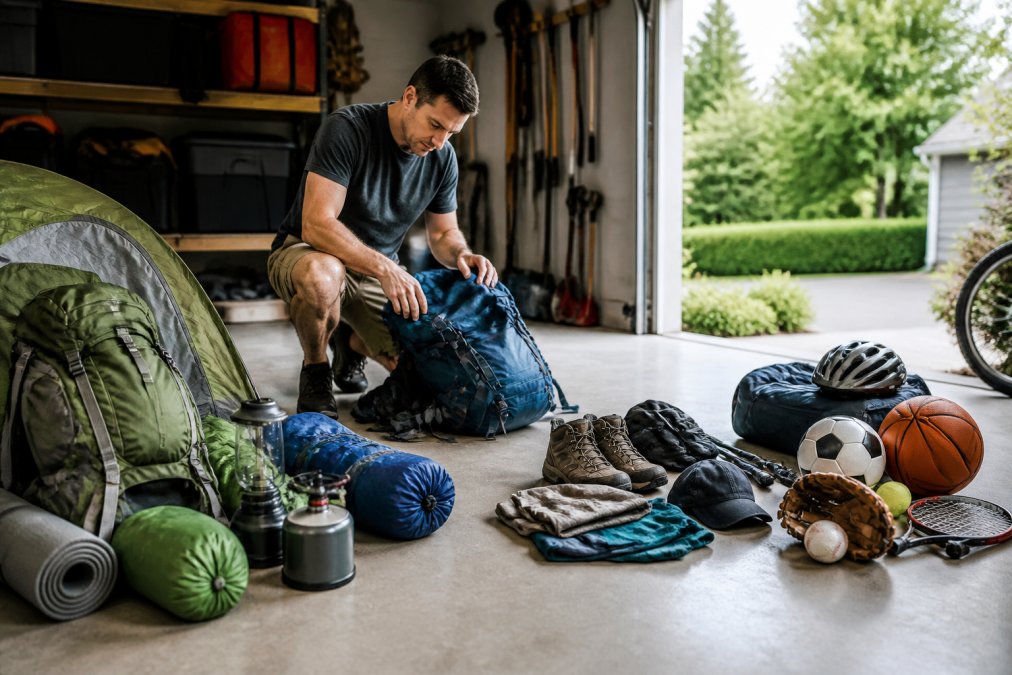
Create sorting piles by activity type
Organize gear by how you actually use it: camping, hiking, climbing, water sports, winter activities, and other relevant categories. Within each activity pile, subdivide further, for camping, separate shelter, sleep system, and cooking gear. For hiking, split footwear, layering, and navigation tools. Label your piles with a marker and cardboard, or take phone photos of each pile for later reference.
Cull gear you no longer use
If you haven't used a piece of gear in two years, you won't use it (the NIH). Be honest about condition: gear with small tears, missing zippers, or worn straps that you haven't fixed by now won't get fixed. Create three piles: keep, repair, and donate. Move the donate pile out the same week so it doesn't linger.
Clean and Maintain Gear Before Storage
Storing dirty gear invites mold, mildew, and pest damage. Clean equipment lasts longer and takes up less space.
De-grime equipment and inspect for damage
Shake out tent debris, wipe the interior with a damp cloth, and let it dry completely before checking seams and floor for damage. Spot-clean sleeping bags with cool water and mild soap, then air-dry completely and check zippers for snags. Wipe climbing equipment clean of dirt and salt, inspect ropes for fraying or cuts, and check harnesses for worn webbing. Wash camp kitchen gear thoroughly, dry completely, and check for rust. Clean hiking boots, dry them, and inspect for sole separation or damage.
Set up a repair and maintenance station
Create a dedicated corner with basic tools and supplies: tent repair patches and seam sealer, zipper repair kits, needle and heavy-duty thread, fabric glue, climbing gear inspection checklist, replacement carabiners or webbing, and cleaning supplies. Move damaged gear directly to this station during sorting and tackle repairs before storage season. Document what you repair to identify patterns in gear failure.
Garage Storage Systems for Outdoor Gear
Choose the right storage containers
Clear plastic containers are ideal for most outdoor gear, you can see contents without opening them, they stack efficiently, and they protect from dust and pests. Label each container clearly on the lid and front. For items that don't fit in standard bins, use vacuum-seal bags or dedicated storage sacks. Vacuum-seal bags compress gear to about one-third its normal size but should be used for seasonal items only, not climbing gear or anything requiring regular inspection (peer-reviewed research). Hanging storage works well for frequently-accessed items like climbing harnesses and carabiners.
Consider Superior Tool Garage and Outdoors' storage solutions for larger collections. The 80 cu.ft Waterproof Garbage Can Organizer ($205.99) provides secure, weatherproof storage for quick-access items, while the 10x10 FT Outdoor Storage Shed ($273.99) offers space for larger collections. For serious enthusiasts, the 10x12FT Outdoor Metal Storage Shed ($864.99) provides dedicated space without consuming garage real estate.


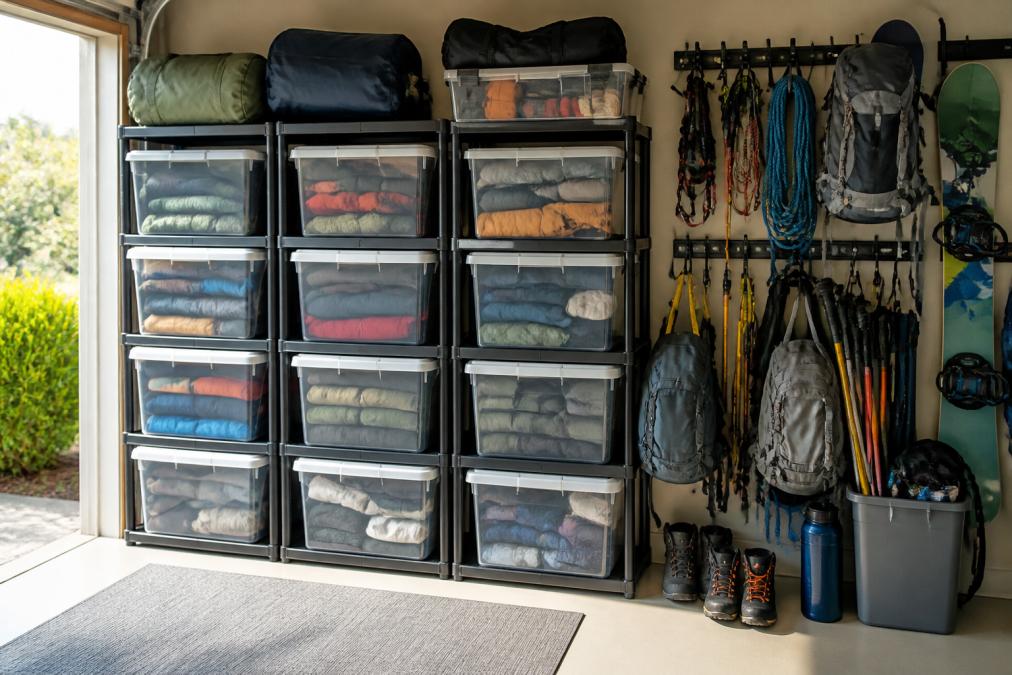
Maximize vertical storage and shelving
Install wall-mounted shelving units from floor to ceiling with adjustable shelves. Store heavier items on lower shelves and lighter items on upper shelves. Keep frequently-accessed items at eye level. Use pegboards for hanging smaller items like carabiners, rope, first aid kits, and multi-tools, organized by activity type. Install horizontal racks or wall-mounted PVC pipe holders for long items like fishing rods, tent poles, or climbing ropes.
Maintaining Outdoor Equipment for Long-Term Storage
Control moisture and protect from pests
Ensure all gear is completely dry before sealing in containers. Use desiccant packs (silica gel or calcium chloride) inside every sealed container and replace them every 3-6 months (the CDC). Use only plastic bins with tight-fitting lids, never cardboard. Place mothballs or cedar blocks nearby for extra pest protection, but not directly on gear.
Climate-controlled vs. non-climate storage
Climate-controlled storage maintains stable temperature and humidity year-round, ideal for expensive or sensitive gear like climbing equipment and premium sleeping bags. Non-climate storage works for hardy items but gear lasts longer in stable conditions. The Outdoor Metal Storage Shed with Window ($1,082.99) provides weatherproof, temperature-buffered storage that protects gear.

How to Store Camping Gear in a Small Space
Optimize space with hanging racks and pegboards
Install ceiling-mounted hooks for sleeping bags in stuff sacks and wall-mounted racks for tents. Use pegboards to organize small equipment. Consider under-shelf baskets that hang from existing shelving to create additional storage layers. Rolling carts with multiple shelves provide mobile storage you can tuck into corners. For very small spaces, use vacuum-seal bags aggressively and stack them vertically on shelves or in closets.
Use clear containers for quick accessibility
Clear containers let you see exactly what's in each bin without opening it. Label containers on all visible sides. Store related items together in single containers, don't mix camping and hiking gear. Stack containers strategically with heavier containers on lower shelves and lighter ones on top.
Label and Implement Digital Inventory Tracking
Apply waterproof labels for quick identification
Use waterproof labels on every container including activity type, contents list, and last-used date. For items stored outdoors or in damp spaces, laminate labels for extra durability. Create a consistent labeling system using color-coded labels for different activity types: blue for camping, red for hiking, green for climbing.
Set up digital inventory management
Use a spreadsheet or dedicated app to track gear inventory: item name, category, purchase date, condition, location, and last-used date. Update after every trip and during annual maintenance. Take photos of your gear collection and store them digitally for insurance documentation.
Execute Seasonal Rotation and Maintain Gear Readiness
Plan your seasonal rotation schedule
Create a calendar for seasonal gear rotation. In spring, move winter gear into deep storage and bring summer gear to accessible locations. In fall, reverse the process. Before rotating gear, inspect it for damage, moisture, or pest activity. Document your rotation schedule to reveal patterns in gear maintenance and wear.
Keep gear accessible and clutter-free
Keep current-season gear at eye level and within arm's reach. Maintain a "ready to go" section for frequently-used items. Every three months, spend 30 minutes checking containers for damage, moisture, or pest activity, replacing damaged labels and reorganizing as needed.
Organizing seasonal outdoor gear transforms your garage into a functional space where equipment is protected and accessible. The system starts with honest sorting and culling, continues through proper cleaning and maintenance, and sustains itself through regular rotation and digital tracking.
At Superior Tool Garage and Outdoors, we understand that outdoor enthusiasts need reliable storage solutions that protect expensive gear while keeping it organized and accessible. Our premium storage systems, from weatherproof containers to dedicated outdoor sheds, are designed to handle the demands of serious gear collections. Whether you're storing a small collection in a garage corner or managing a comprehensive outdoor equipment library, the right storage approach ensures your gear stays in condition for years of adventures. Shop our collection today to find the storage solutions that match your space and your gear.
Frequently Asked Questions
What is the best way to organize seasonal outdoor gear?
Start by sorting gear by activity type, then clean and inspect each item before storage. Use clear storage bins to keep everything visible, apply waterproof labels for quick identification, and store items by season in a suitable space if possible. Vertical shelving and hanging racks maximize space, while desiccant packs control moisture. Implement a digital inventory system to track what you have and where it's stored, making seasonal rotation simple and keeping your gear ready for the next adventure.
How do you keep seasonal gear from getting damaged in storage?
Clean and de-grime all equipment before storing it, removing dirt, salt, and debris that can cause deterioration. Store items in an environment that helps prevent temperature and humidity fluctuations that damage materials. Use desiccant packs inside storage containers to absorb excess moisture, and choose waterproof containers to protect against spills and pests. Store gear on shelving units or hanging racks to keep it off the ground, and avoid stacking heavy items that can crush delicate equipment. Inspect gear periodically to catch any damage early.
How do you organize camping and hiking gear in a garage?
Sort camping and hiking gear into logical categories: sleep systems, camp kitchen equipment, climbing gear, and personal items. Use clear storage bins to keep each category separate and visible. Label containers with waterproof labels and store them at eye level on shelving units for easy access. Hang lightweight items like backpacks and sleeping bags on pegboards or hanging racks to save floor space. Store heavier items lower and lighter items higher. Implement a digital inventory to track what's in each bin, making it easy to find specific items during seasonal rotation.
Should outdoor gear be stored in plastic bins or cardboard boxes?
Plastic bins are the better choice for long-term outdoor gear storage. Clear plastic containers allow you to see contents without opening them, making inventory management easier. Plastic is waterproof and rodent-resistant, protecting gear from moisture and pests, cardboard boxes fail on both counts. Plastic bins stack securely on shelving units, maximizing vertical storage space. Cardboard absorbs moisture, deteriorates over time, and attracts insects. For optimal protection, choose bins with tight-sealing lids and store them in a suitable space with desiccant packs inside to control humidity.