


Table of Contents
- Step 1: Start With a Garage Decluttering Checklist
- Step 2: Assess Your Small Garage Layout Ideas
- Step 3: Install Garage Wall Storage Systems
- Step 4: Use Vertical Storage and Overhead Racks
- Step 5: Organize Tools and Create Functional Zones
- Step 6: Maintain Your Organized Garage Space
- Common Garage Organization Mistakes to Avoid
- Frequently Asked Questions
Last Updated: August 23, 2026
Step 1: Start With a Garage Decluttering Checklist
Before installing shelves or buying storage, purge ruthlessly. Most garages become dumping grounds for items nobody uses. Categorize everything into four piles: keep, donate, sell, and trash. The "keep" pile should contain only items you use regularly or genuinely need. Tools untouched in years, broken equipment, and duplicates belong elsewhere.
Create a decluttering checklist to stay on track:
- Pull everything out and sort into four categories
- Measure dimensions of items you're keeping
- Photograph valuable items you plan to sell
- Schedule donation pickup for items in good condition
- Dispose of broken or hazardous materials properly
- Sweep the empty garage floor thoroughly
- Document what remains and estimate storage volume needed
Avoid keeping "just in case" items. That extension cord you might need someday or old paint cans take up premium floor space. Be specific about what stays. If you can't name the last time you used something, it goes.
The garage floor should be completely empty before moving to the next step. This gives you a clean slate to assess your layout and plan storage placement strategically.
Step 2: Assess Your Small Garage Layout Ideas
With an empty garage, measure everything: dimensions, ceiling height, door openings, structural elements like support beams, electrical outlets, and workspace needs. Note whether you're parking a vehicle inside or using the space purely for storage and projects.
Sketch your garage on paper or use a digital tool. Mark fixed elements: doors, windows, utility systems, and vehicle space if applicable. Consider functional zones based on how you use the space. A workshop zone needs a sturdy workbench and tool access. A sports equipment zone works well near the door. A seasonal storage area can occupy overhead or back-wall space.
Small garage layouts fail when they ignore traffic flow. You need a clear path from the door to your vehicle or workspace. Storage shouldn't block that path.
Ceiling height matters significantly. Eight feet or more allows overhead racks and wall-mounted storage (osha.gov). Lower ceilings limit vertical options and require more floor-based solutions. Know your constraints before buying anything.
Step 3: Install Garage Wall Storage Systems
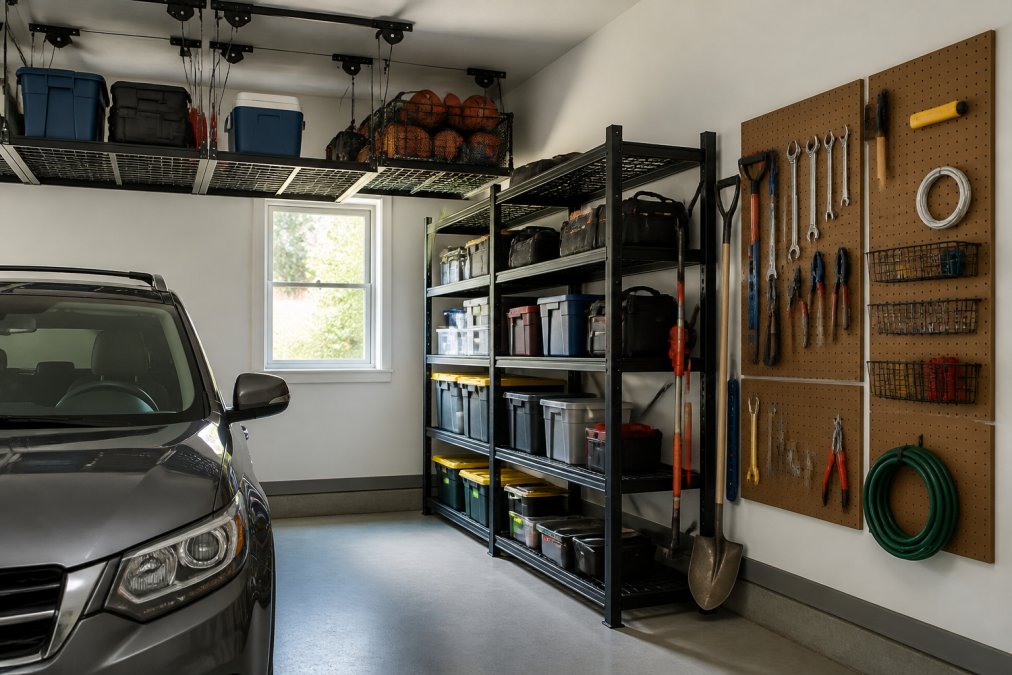
Vertical wall space is your most valuable real estate in a small garage. Wall-mounted storage systems keep items off the floor and make the space feel larger. Pegboards, slat walls, and heavy-duty shelving are the main options.
Pegboards are versatile and affordable, accepting hooks, baskets, and shelves in customizable arrangements. They work best for frequently accessed tools and small items but have moderate weight capacity. Slat walls offer more flexibility, with horizontal rails mounted to studs that accept various accessories at any height and handle heavier loads. Heavy-duty shelving mounted directly to studs provides maximum weight capacity for bins, equipment, and bulk items.
When mounting wall storage, locate and mark studs in your garage walls. Fasteners must go into studs to handle weight safely. Never rely on drywall anchors alone for heavy loads (the CDC). Use a stud finder before drilling.
Distribute wall storage around the perimeter of your garage to keep the center space open for vehicles or workspace. Front walls near doors work well for frequently accessed items. Back walls are better for seasonal or infrequently used equipment.
The Superior Tool Garage and Outdoors 72" Adjustable Metal Shelving provides sturdy wall-mounted storage at $101.99. Adjustable shelves accommodate different item sizes without wasting vertical space, and metal construction handles heavy tools reliably.

Step 4: Use Vertical Storage and Overhead Racks
Overhead racks, wall-mounted systems, and tall shelving units pull items up and away from floor space, transforming small garages by using height most people ignore.
Overhead racks are ceiling-mounted systems that hold bulky items like seasonal decorations and sports equipment. Pulley systems lower items safely without requiring a ladder every time. Fixed racks are simpler but require climbing to access items. Know your ceiling structure, drywall ceilings need reinforcement, while concrete or wood beams handle loads directly. Overhead racks typically handle 50 to 150 pounds depending on construction (the CDC).
Vertical shelving units against walls maximize storage without taking floor space. These tall units work especially well in corners. Stack storage bins on shelves to create organized zones for different categories.
Bike racks mounted on walls or overhead keep bicycles out of the way. A family of four bikes takes up significant floor space if leaned against walls. Wall-mounted or overhead racks solve this instantly.
Keep frequently accessed items at reachable heights. Items you use weekly should be at eye level or slightly below. Seasonal or emergency items can go higher.
Step 5: Organize Tools and Create Functional Zones
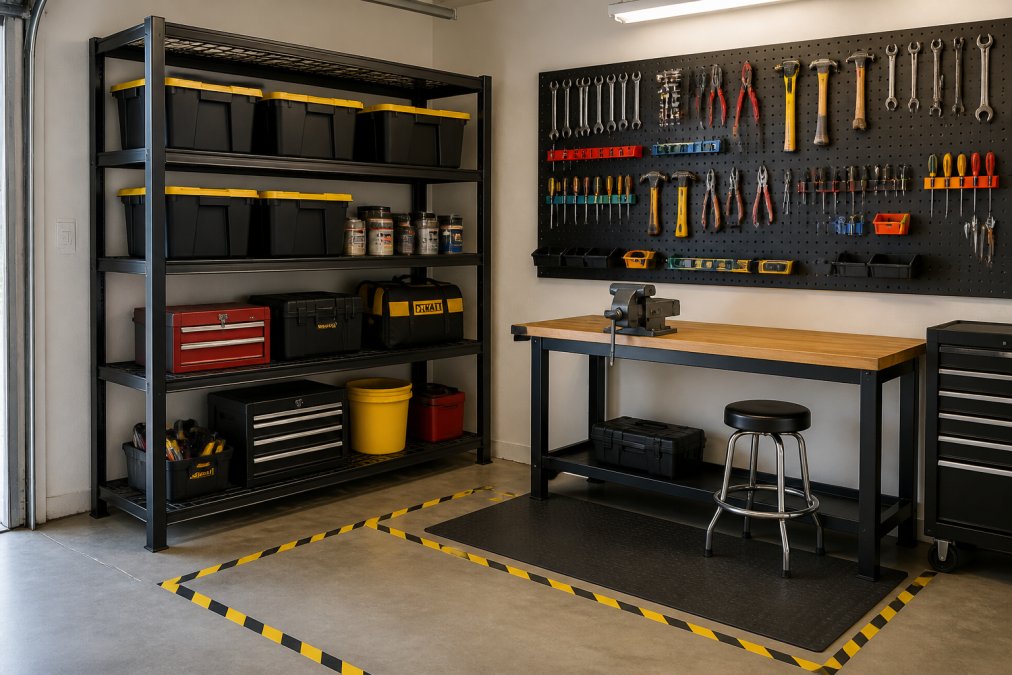
Tools scattered across a garage are useless. Create zones based on activity: a workspace zone for projects, a tool storage zone, a seasonal storage zone, and a vehicle parking zone if applicable.
The workspace zone needs a sturdy workbench and good lighting. Position the workbench against a wall to save floor space. Mount pegboards or slat walls above the workbench for tool access.
The tool storage zone keeps frequently used tools organized and visible. Group similar tools together: hand tools in one area, power tools in another, fasteners and small items in labeled bins. Labeling is critical, you'll forget where things are otherwise.
Heavy-duty shelving works well for tool storage. The Superior Tool Garage and Outdoors 5Tier Heavy Duty Foldable Metal Storage Rack With Wheels provides mobile storage at $57.99. Wheels allow repositioning as needs change, and five tiers maximize vertical capacity.

The seasonal storage zone keeps items you use only part of the year: holiday decorations, summer lawn equipment, winter tools. Overhead racks work perfectly here. Label boxes clearly so you know what's stored without opening them.
Accessibility determines whether organization actually works. Arrange items so the most-used ones are easiest to reach. Keep pathways clear for safe movement.
Step 6: Maintain Your Organized Garage Space
Organization fails without maintenance. Most garages deteriorate within months because people stop putting items back where they belong.
Establish a simple routine: every Friday evening, spend 15 minutes returning items to their designated zones. Wipe down work surfaces. Sweep the floor. This prevents small messes from becoming big problems.
Seasonal maintenance is important too. In spring, clean overhead racks and check weight distribution. In fall, inspect wall-mounted storage for rust or damage. Replace damaged items before they fail.
Review your organization quarterly. What's working? What isn't? If you consistently can't find something, move it to a more accessible location. Organization should adapt to how you actually use the space.
Document your system with photos. When everything is organized, take pictures from multiple angles. These become reference images if someone else needs to use the garage or if you reorganize later.
Quality storage systems don't need constant replacement. Invest in heavy-duty options upfront to reduce maintenance headaches. Climate control extends storage system life. If your garage experiences extreme temperature or humidity swings, consider a dehumidifier or insulation.
Common Garage Organization Mistakes to Avoid
Most garage organization attempts fail for predictable reasons.
Buying storage before decluttering is the biggest error. Declutter first, measure second, buy storage third. This sequence ensures you buy the right amount and type of storage.
Ignoring vertical space wastes the garage's greatest asset. Small garages especially need vertical solutions. Overhead racks and wall-mounted systems multiply your storage capacity without reducing floor space.
Poor accessibility makes organization useless. Frequently used items must be easy to access. Infrequently used items can occupy less convenient locations.
Inadequate lighting prevents you from finding items and creates safety hazards. Add work lights, LED strips under shelves, or motion-activated lights near storage areas.
Mixing incompatible items creates confusion. Keep categories separate and clearly labeled. This speeds up finding what you need and prevents tools from getting damaged.
Overloading shelves and racks causes failure. Know the weight capacity of your storage and distribute loads appropriately. Heavy items go on lower shelves, lighter items higher up.
Neglecting drainage and moisture damages stored items. Use waterproof storage bins for moisture-sensitive items. Elevate bins slightly off the floor to allow air circulation.
Not labeling anything defeats organization. Use a label maker or write directly on bins. Include the date for items with expiration dates.
Organizing a small garage space requires honest assessment, strategic planning, and commitment to maintenance. Start by decluttering ruthlessly. Assess your actual layout and how you use the space. Install vertical storage systems that maximize available height. Create functional zones for different activities. Maintain the system consistently so organization doesn't deteriorate.
Superior Tool Garage and Outdoors provides the heavy-duty storage solutions that make small garage organization work. Quality shelving, racks, and bins designed for durability ensure your organization system lasts years. Get started with Superior Tool Garage and Outdoors and transform your garage into a functional, organized space where you can actually find what you need.
Frequently Asked Questions
What are the 5 steps to organize a garage?
Start by decluttering and removing items you don't use. Next, assess your layout and plan zones for different activities. Install wall storage systems like pegboards or slat walls. Add vertical storage with shelving and overhead racks to maximize space. Finally, organize tools into labeled bins and establish a maintenance routine. This systematic approach transforms even the smallest garage into a functional, clutter-free space.
How do you maximize storage in a tiny garage?
Maximize tiny garage storage by going vertical: install wall-mounted pegboards, slat walls, and heavy-duty shelving units. Use overhead racks and pulley systems for seasonal items or rarely used equipment. Choose foldable or mobile storage racks that can be moved when you need floor space. Stack storage bins vertically and label everything for quick access. This approach preserves valuable floor space while dramatically increasing storage capacity without expensive renovations.
What is the best way to store tools in a small garage?
Store tools using wall-mounted pegboards or slat walls for frequently used items, keeping them visible and accessible. Use labeled storage bins on shelving for smaller tools and hardware, organized by category. Consider a mobile tool cart or foldable metal storage rack that can be wheeled aside when not in use. Keep your most-used tools at arm's reach on the workbench or wall, and store heavy items on lower shelves for safety and stability.
What are common garage organization mistakes to avoid?
Avoid overcrowding your space by keeping only items you actually use. Don't ignore vertical space, this is where small garages gain the most storage. Skip poor labeling, which leads to forgotten items and wasted money on duplicates. Avoid installing storage systems before planning your layout and zones. Don't place heavy items on high shelves where they're unsafe to retrieve. Finally, neglecting maintenance schedules causes clutter to creep back quickly.