


Table of Contents
- Why Rust Forms on Tools and How to Stop It
- Step 1: Clean and Dry Tools After Every Use
- Step 2: Choose the Best Rust Inhibitor for Tools
- Step 3: Control Humidity in Your Storage Space
- Step 4: Select Proper Storage Containers and Locations
- Step 5: Establish a Routine Maintenance Schedule
- How to Remove Rust From Tools
- Common Mistakes to Avoid
- Frequently Asked Questions
Last Updated: August 30, 2026
Why Rust Forms on Tools and How to Stop It
Rust is the oxidation of ferrous metal when exposed to moisture and oxygen, a process that degrades tool performance and shortens lifespan. Understanding how rust develops is the first step toward preventing it. Iron and steel tools corrode when water penetrates protective barriers, triggering a chemical reaction that creates iron oxide. This happens faster in humid environments, near salt water, or when tools are stored without proper protection.
The good news: rust is entirely preventable with consistent maintenance and smart storage choices. Most rust damage occurs not because tools are inherently weak, but because storage conditions and maintenance routines are overlooked. The difference between tools that last decades and those that deteriorate within years often comes down to one simple habit: removing moisture immediately after use.
The steps that follow address the core causes of rust and provide actionable solutions you can implement today. Whether you're storing hand tools in a garage, outdoor power equipment in a shed, or automotive tools in a workshop, these methods work across all environments.

Step 1: Clean and Dry Tools After Every Use
Moisture is rust's primary accelerant. If water sits on metal surfaces, oxidation begins within hours. The most effective rust prevention strategy starts the moment you finish using a tool: clean it and dry it completely.
After each use, wipe down your tools with a dry cloth or rag. Pay special attention to crevices, joints, and areas where water collects. For tools exposed to wet conditions, garden tools, automotive equipment, or outdoor gear, use a slightly damp cloth first to remove soil and debris, then immediately follow with a dry cloth. Don't let moisture linger.

For tools that get heavy use or exposure to salt spray or corrosive environments, consider a more thorough cleaning. Use a degreaser to remove buildup that traps moisture, then dry completely. This removes the protective barrier that water needs to initiate corrosion.
Store cleaned tools in a dry location immediately. Leaving tools damp or wet in a tool box, garage corner, or shed accelerates rust formation dramatically. The longer moisture remains on the surface, the deeper oxidation penetrates.
Step 2: Choose the Best Rust Inhibitor for Tools
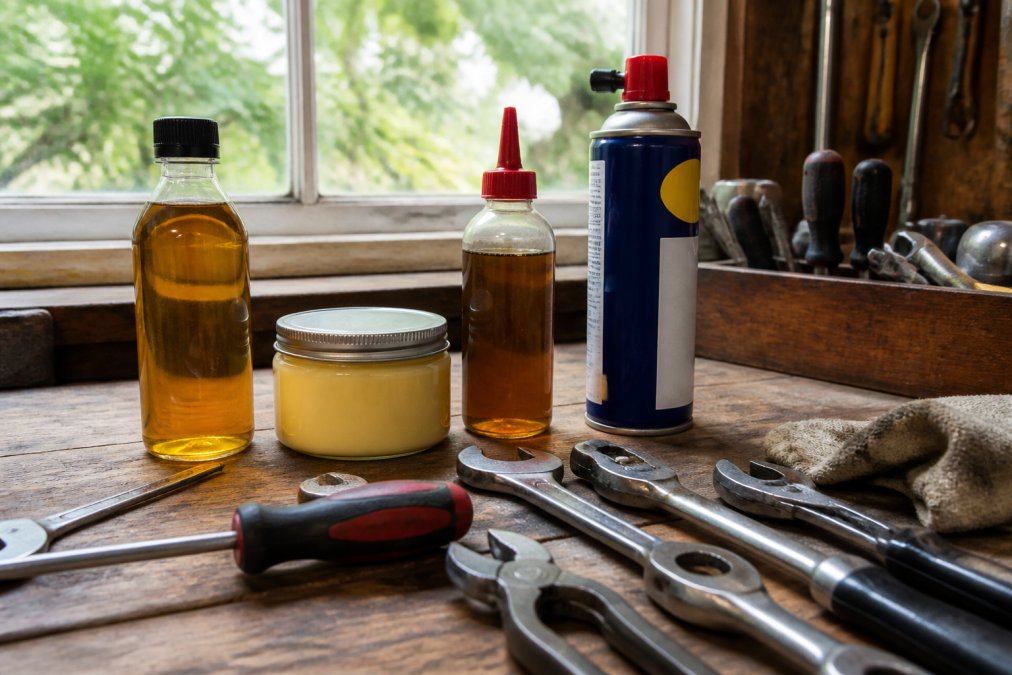
Once tools are clean and dry, apply a protective barrier. Rust inhibitors create a surface coating that blocks moisture and oxygen from reaching the metal. Different products work better for different storage scenarios and tool types.
Mineral Oil and Penetrating Oil Options
Mineral oil and penetrating oils are the most accessible rust inhibitors for home workshops. These thin, lightweight oils seep into tight spaces and joints where moisture hides. Penetrating oils like 3-in-1 oil or similar products work well for hand tools, fasteners, and moving parts because they don't gum up or attract dust.
Apply mineral oil sparingly with a cloth or light brush. A thin coat is more effective than a heavy one, excess oil attracts dirt and becomes sticky over time. For tools with moving parts (hinges, springs, pivot points), penetrating oil prevents corrosion while maintaining functionality.
Mineral oil works best for short-term storage (weeks to a few months) (peer-reviewed research). It evaporates gradually and provides moderate protection. For longer storage periods, it may need reapplication every few months depending on humidity levels in your storage space.
Paste Wax and Synthetic Oil Coatings
Paste wax and synthetic oil coatings provide heavier, longer-lasting protection. Paste wax creates a hard barrier that resists moisture and dust. It's ideal for hand tools, saw blades, and items stored for extended periods. Apply paste wax with a cloth, buff it to a shine, and the coating lasts for months without reapplication.
Synthetic oils offer similar benefits to mineral oil but with better longevity and heat resistance. They're effective for tools stored in temperature-fluctuating environments like garages or sheds. Synthetic coatings don't evaporate as quickly and maintain their protective properties through seasonal changes.
For automotive tools or equipment stored outdoors, vapor corrosion inhibitor products (VCI) are worth considering. These specialized coatings release protective compounds that coat the entire storage area, not just the tool surface. They're particularly useful for storing tools in metal containers or enclosed spaces.
Step 3: Control Humidity in Your Storage Space
Environmental humidity is the silent killer of tool collections. Even with protective coatings, tools stored in high-humidity spaces will eventually corrode. Controlling moisture in the air where tools are stored is as important as the tools themselves.
Using Desiccants and Silica Gel
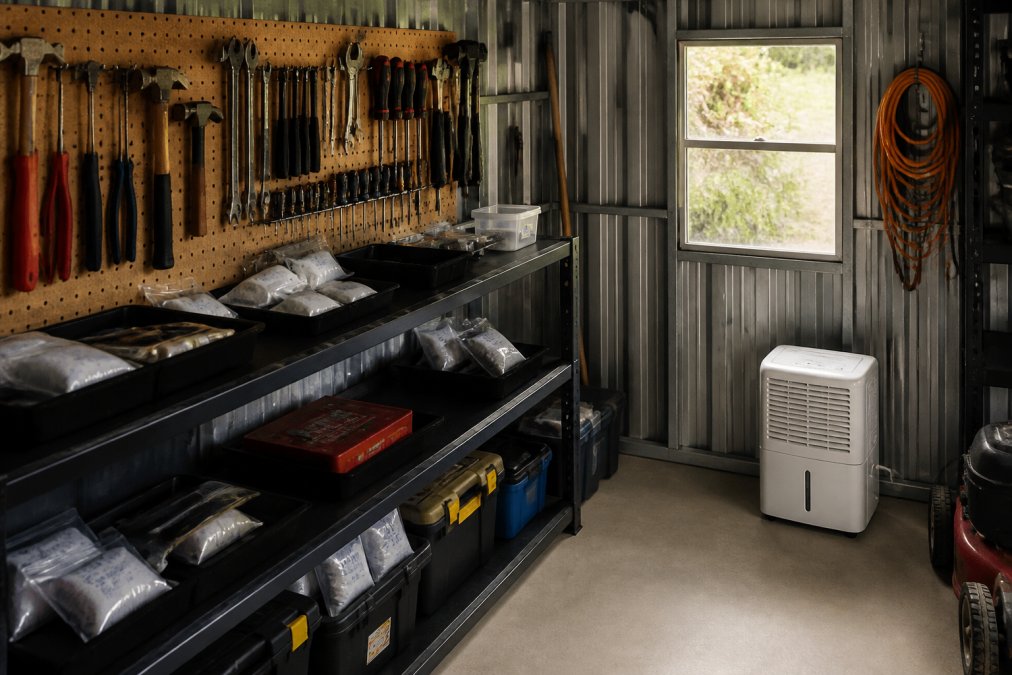
Desiccants absorb moisture from the air inside enclosed storage containers and tool boxes. Silica gel packets are inexpensive, reusable, and highly effective in small spaces. Place silica gel packets inside tool boxes, drawers, or storage containers. They absorb ambient moisture and prevent condensation from forming on metal surfaces.
When silica gel becomes saturated (usually indicated by a color change), dry it out in an oven at low temperature (around 250°F for 30-60 minutes) and reuse it (the EPA). A single set of silica gel packets costs under a few dollars and lasts indefinitely with periodic recharging.
For larger storage spaces, use bulk desiccant products or moisture-absorbing containers. These are designed for garages, sheds, and workshop areas. They work passively, no electricity required, and are particularly useful in damp climates or during humid seasons.
Dehumidifier and Ventilation Strategies
For larger storage areas like garages or outdoor sheds, a dehumidifier actively removes moisture from the air. Portable dehumidifiers are affordable and effective, especially in climates with high humidity or seasonal dampness. Run a dehumidifier during humid months or year-round if your storage area stays consistently damp.
Ventilation complements dehumidification. Ensure your storage shed or garage has functional vents that allow air circulation. Stagnant air traps moisture; moving air carries it away. Check that vents aren't blocked by debris or sealed shut. If your storage space lacks natural ventilation, consider adding vents or using a small fan to improve air movement.
The combination of desiccants for small containers plus a dehumidifier for the larger storage space creates multiple layers of moisture control. This redundancy is especially important in humid climates where environmental moisture is persistent.
Step 4: Select Proper Storage Containers and Locations
Where and how you store tools matters as much as what you apply to them. Metal storage containers provide security but can trap moisture if not properly managed. Airtight plastic containers work better for moisture-sensitive tools because they create a sealed environment. Whatever container you choose, ensure it's dry before placing tools inside.
Location is equally critical. Store tools in the driest part of your garage, shed, or workshop. Avoid areas near exterior walls, windows, or doors where temperature swings cause condensation. Don't store tools in basements or below-grade spaces unless you've actively controlled humidity, these areas are naturally damp.
For outdoor storage, Superior Tool Garage and Outdoors offers heavy-duty metal sheds specifically designed for tool protection. Our 10x10 FT Outdoor Storage Shed features waterproof construction, lockable doors, and ventilation to minimize moisture accumulation. The shed's sloped roof directs water away from stored items, and reinforced corners provide structural integrity against the elements.

If you're storing tools in a smaller space or need flexibility, the 8x4FT Triple Door Metal Storage Shed offers compact, secure storage with multiple access points. Its design allows airflow while protecting tools from direct weather exposure.
Keep tools off the ground. Use shelving, pegboards, or wall-mounted storage to elevate tools above any moisture that collects on floors. This simple practice prevents rust from spreading if floor moisture does accumulate.
Step 5: Establish a Routine Maintenance Schedule
Rust prevention isn't a one-time task, it's a habit. Establish a maintenance schedule that fits your usage patterns. For frequently used tools, inspect them monthly and reapply protective coatings as needed. For stored tools, check them quarterly.
During seasonal transitions (especially moving into humid summer months or damp fall/winter periods), inspect your storage environment. Test humidity levels with an inexpensive moisture meter. If humidity exceeds 50%, increase dehumidification efforts (the CDC). If it's below 40%, your current setup is likely sufficient.
Keep a simple log of when you last applied protective coatings to different tool sets. This prevents you from forgetting which tools need attention. Rotate through your collection, ensuring nothing sits untouched for months without inspection.
How to Remove Rust From Tools
Despite best efforts, some tools may develop rust. The good news: surface rust is reversible if caught early. Deep rust requires more aggressive treatment but is still manageable.
Surface Rust Removal Methods
Surface rust appears as a reddish-brown coating on the metal. It hasn't yet pitted the surface or compromised structural integrity. Remove surface rust with abrasive methods that don't damage the underlying tool.
Steel wool or fine abrasive pads work well for light surface rust. Use circular motions and moderate pressure, then wipe away rust debris with a cloth. For stubborn surface rust, use a wire brush or rotary tool with a wire wheel attachment. Work carefully to remove rust without gouging the tool's surface.
For hand tools with intricate shapes, soak them in white vinegar or a rust-dissolving solution for several hours. The acid breaks down rust without harming the underlying metal. After soaking, scrub with steel wool and dry completely.
After removing surface rust, immediately apply a protective coating to prevent recurrence. This is critical, newly exposed metal is highly susceptible to rapid re-oxidation.
Deep Rust Treatment and Prevention After Removal
Deep rust has pitted the metal surface and compromised the tool's integrity. Removal requires more aggressive abrasion. Use a rotary tool with a grinding wheel or sandpaper (80-120 grit) to remove rust down to clean metal. This is labor-intensive but necessary for tool salvage.
After grinding away rust, inspect the tool carefully. If pitting is severe or the tool is thin-walled, structural damage may make the tool unsafe to use. Deep rust removal often reveals how much material was lost to corrosion.
Once rust is removed, immediately seal the exposed metal. Apply a rust-inhibiting primer, then a protective coating like paste wax or synthetic oil. This prevents the rust cycle from restarting immediately.
For heavily rusted tools, consider whether replacement is more practical than restoration. Superior Tool Garage and Outdoors offers quality hand tools and socket sets at reasonable prices. Our 50 Piece General Household Toolbox provides essential tools with high-quality steel and protective finishes, starting at $33.99. Sometimes prevention on new tools is more efficient than restoration of damaged ones.
Common Mistakes to Avoid
Several mistakes accelerate rust formation. Avoid storing damp tools. This is the single biggest error, people put away wet tools, close the door, and rust develops within days. Always dry tools before storage.
Don't rely on a single protection method. A thin coat of oil in a humid garage without dehumidification will eventually fail. Layer your defenses: clean tools, apply protective coatings, control humidity, and maintain proper storage containers.
Avoid storing tools near sources of moisture or salt. Don't place tool boxes near AC condensation drains, under leaking gutters, or in basements prone to dampness. Salt environments (coastal areas, areas where road salt is used) accelerate corrosion dramatically, these tools need extra protection.
Don't forget about tools you don't use frequently. Stored tools need the same attention as frequently used ones. Inspect them regularly and refresh protective coatings even if they sit idle for months.
Neglecting ventilation in storage spaces is a common oversight. A sealed, unventilated tool box or shed becomes a humidity trap. Ensure air can circulate. Open tool box lids occasionally to let air flow through.
Finally, don't assume "waterproof" storage automatically prevents rust. A waterproof container still needs internal humidity management. Water doesn't enter from outside, but moisture from tools themselves or condensation can accumulate inside. Use silica gel or desiccants even in waterproof containers.
Protecting tools from rust requires attention to three core factors: moisture removal, protective barriers, and environmental control. The investment in proper storage solutions pays dividends over years of tool use. Superior Tool Garage and Outdoors provides the storage infrastructure you need, from compact sheds like our 10x8FT Steel Garden Storage Shed at $649.99 to larger systems that accommodate extensive tool collections. Pair quality storage with the maintenance habits outlined here, and your tools will remain rust-free and ready for years of reliable service.
Frequently Asked Questions
What is the best thing to put on tools to prevent rust?
Mineral oil, penetrating oil, and paste wax are effective barriers against rust. Mineral oil creates a thin protective layer that repels moisture, while paste wax offers longer-lasting protection for stored tools. Penetrating oils work well for frequently used hand tools. Apply a light coat after cleaning and drying your tools completely. For best results, wipe away excess to prevent sticky buildup.
How do I keep tools from rusting in a humid garage?
Storing tools in humid garage conditions requires controlling moisture. Use airtight storage containers or tool boxes with tight-fitting lids, and place silica gel packets or desiccants inside to absorb excess humidity. A small dehumidifier running in your garage can significantly reduce moisture levels. Ensure tools are completely dry before storage, and avoid leaving them exposed on open shelves where humidity settles.
How often should I oil my hand tools?
For frequently used hand tools, apply a light coat of protective oil or wax every 1-2 weeks, or after each use if the tool contacts moisture. For stored tools, inspect them monthly and reapply protection if you notice the coating wearing thin or if the tool feels dry. More frequent oiling is necessary in humid climates or unheated garages where moisture exposure is higher.
Does silica gel actually prevent tool rust?
Silica gel absorbs moisture from the air around your tools, reducing the humidity that causes rust formation. It works best in enclosed storage containers or small tool boxes where moisture can be trapped. Silica gel packets should be replaced or dried out when they become saturated (usually every 1-3 months depending on humidity). While silica gel alone won't prevent rust, it significantly reduces risk when combined with proper tool cleaning, oiling, and sealed storage.