


Table of Contents
- Assess Your Space and Current Inventory
- Create a Garage Decluttering Checklist Before You Organize
- Implement Vertical Storage Solutions for Garages
- Install Overhead Garage Storage Racks and Ceiling-Mounted Systems
- Organize Seasonal Gear by Zone and Frequency of Use
- Choose Storage Solutions: Bins, Shelving, and Cabinets
- Label and Maintain Your Seasonal Gear System
- Frequently Asked Questions
Last Updated: September 2, 2026
Assess Your Space and Current Inventory
Start by measuring your garage floor space and identifying what you actually have. Most homeowners underestimate how much seasonal gear accumulates over years, winter equipment, camping supplies, holiday decorations, garden tools, and sports gear all compete for the same square footage. At Superior Tool Garage and Outdoors, we've found that the biggest organizational failures happen when people skip this step and jump straight to buying storage solutions.
Measure your garage dimensions, note ceiling height, and identify structural features like wall studs, electrical outlets, and existing shelving. Take photos of the current state. This baseline matters because organizing seasonal gear in small garages requires precision, every inch of vertical storage, overhead space, and wall real estate must earn its place.
Next, inventory everything. Pull items from corners, shelves, and hidden spots. Separate into categories: winter gear (snow equipment, heavy coats), summer items (camping gear, patio furniture), holiday decorations, and tools. Be honest about what you actually use. That broken tent from 2019 doesn't belong in your organized system.
Create a simple spreadsheet or use your phone to document quantities and current conditions. Note damaged items, things you haven't used in two years, and gear that needs maintenance. This inventory becomes your baseline for deciding what storage solutions you'll need and where they'll go.
Create a Garage Decluttering Checklist Before You Organize
Before installing new storage systems, declutter ruthlessly. Organizing seasonal gear in small garages means you can't afford to store things you don't use. A decluttering checklist keeps you focused and prevents decision fatigue.
Use this framework:
- Identify items not used in the past 24 months
- Check for damage, rust, mold, or pest evidence
- Separate keep, donate, sell, and discard piles
- Document items worth selling online (used camping equipment, sports gear)
- Schedule donation pickup for items in good condition
- Dispose of hazardous materials (old paint, chemicals) according to local guidelines
- Verify that remaining items fit your actual lifestyle (if you haven't camped in three years, that tent might not stay)
- Measure the volume of items you're keeping to inform storage capacity needs
This process typically takes a weekend. After decluttering, you'll have a clear picture of what needs storage and roughly how much space it requires. This drives every decision that follows.
Implement Vertical Storage Solutions for Garages
Small garages demand vertical thinking. Floor space is precious, so moving storage upward is non-negotiable. Vertical storage solutions for garages include wall-mounted systems, pegboards, slat walls, and heavy-duty shelving that maximizes the unused wall real estate above eye level.
Start with your walls. Install adjustable metal shelving units to create dedicated zones without consuming floor space. The 72" Adjustable Metal Shelving from Superior Tool Garage and Outdoors ($101.99 per unit) provides flexible storage that adapts as your seasonal gear changes. These units are no-fuss to install and handle significant weight, making them ideal for storing bins of holiday decorations or camping equipment.
Wall hooks and rail systems work for frequently accessed items, fishing rods, bicycles, ladders. Pegboards offer flexibility because you can rearrange hooks as your needs change. Slat walls provide a cleaner look and distribute weight evenly across studs, which matters when you're stacking heavy items like winter tires or large coolers.
The key principle: items you access once or twice per year go higher up. Items you grab monthly or seasonally go at arm's reach (shoulder to waist height). Daily-use tools stay at eye level or lower.
Install shelving at 24-inch intervals vertically to accommodate storage bins of various heights. Leave at least 12 inches of clearance above bins so you can pull items without scraping your hands. This seems like a small detail, but it determines whether your system actually gets used or becomes a source of frustration.
Install Overhead Garage Storage Racks and Ceiling-Mounted Systems
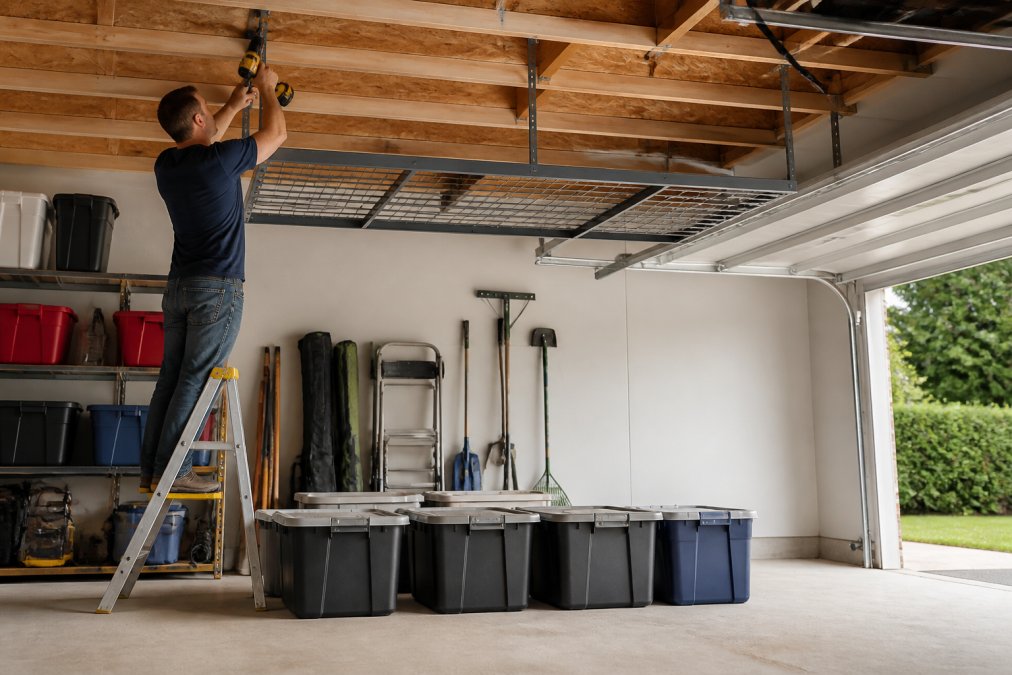
Ceiling-mounted systems unlock storage that would otherwise be wasted. Overhead racks are the most efficient use of space in small garages because they store items completely out of the way while keeping them accessible.
Overhead garage storage racks come in two types: motorized hoist systems (which lower items on demand) and fixed racks that require a ladder to access. Fixed racks suit items you store once per season and rarely need mid-season. Hoists work for gear you access more frequently or items too heavy to lift safely by hand.
Installation requires locating ceiling joists (typically 16 inches apart) and securing racks with lag bolts rated for the load you're storing. Don't estimate, verify your joist spacing and fastening requirements before purchasing.
Common overhead storage candidates include:
- Seasonal holiday decorations (wreaths, lights, inflatable displays)
- Off-season tires and wheels
- Camping equipment in sealed containers
- Rarely-used sports gear (skis, snowboards, surfboards)
- Seasonal clothing in vacuum-sealed bags
Avoid storing anything that requires frequent access overhead. Climbing a ladder multiple times per week is inefficient and creates safety risks. Reserve ceiling space for true seasonal items you touch once or twice annually.
Organize Seasonal Gear by Zone and Frequency of Use
Zoning creates a mental map of your garage. Instead of random storage, you assign specific areas for winter gear, summer equipment, holiday items, and tools. This system works because it matches how your brain naturally organizes information, you know exactly where to look.
Categorize Seasonal Items by Access Frequency
Frequency determines placement. Create three tiers:
Tier 1 (Monthly or more): Items you access year-round or multiple times per season. Examples: basic tools, frequently used camping gear, sports equipment you actively use. Store these at eye level or on lower shelves where you can grab them without a ladder.
Tier 2 (Seasonal, 2-4 times per year): Items you use during specific seasons but not constantly. Examples: holiday decorations, winter coats, summer patio furniture. Store on mid-height shelves or in accessible upper cabinets.
Tier 3 (Annual or less): Items you touch once per year or less frequently. Examples: holiday lights you hang in November, winter tires you swap in October, camping gear you use for one trip annually. These belong on overhead racks, high shelves, or in the back of a storage shed.

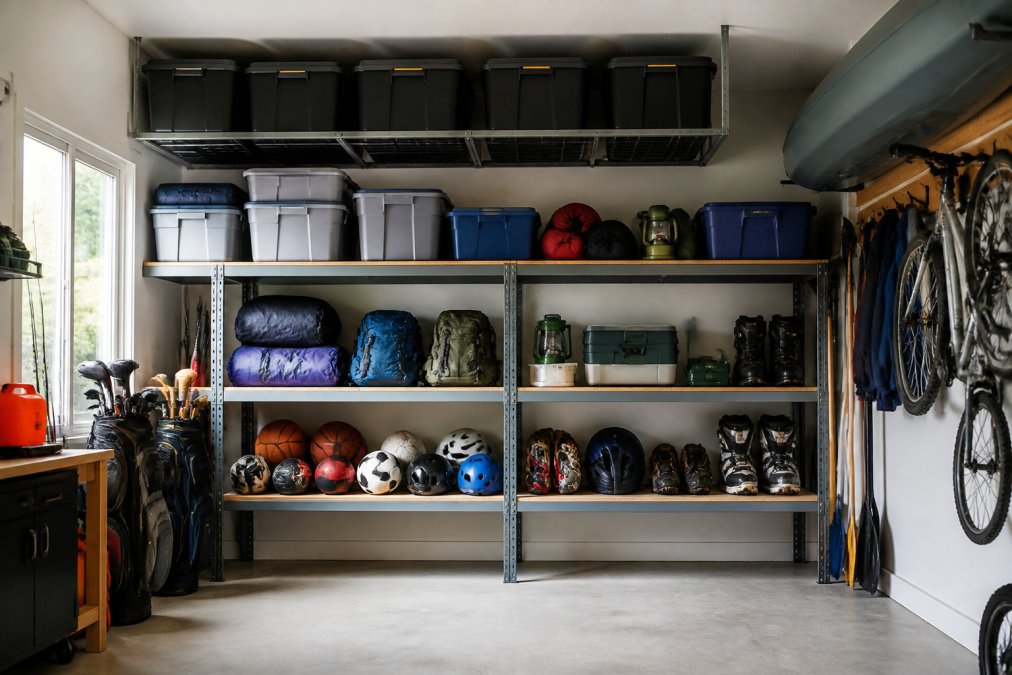
This tiering system prevents you from wasting valuable real estate on items you barely use. It also ensures that the gear you actually need is within arm's reach, not buried under boxes.
Protect Against Moisture and Climate Damage
Small garages often lack climate control, which creates problems for seasonal gear. Temperature swings, humidity, and moisture damage can ruin camping equipment, holiday decorations, and winter clothing faster than age alone.
Store moisture-sensitive items in sealed, waterproof containers. Plastic storage bins with tight-fitting lids work better than cardboard boxes, which absorb moisture and deteriorate (peer-reviewed research). Label containers clearly so you're not opening them unnecessarily, which introduces moisture each time.
Consider a small dehumidifier if your garage stays damp. Run it during humid months (spring and summer) to protect gear stored for winter use (noaa.gov). Check containers before the season starts, a small investment in moisture control prevents losing expensive equipment to mold or rust (the CDC).
For items like bicycles, fishing rods, or tools that can't be sealed in bins, apply a light coat of protective oil or use silica gel packets nearby to absorb ambient moisture. Winter tires stored in summer benefit from a dry corner or sealed container. Camping equipment should be completely dry before storage to prevent mildew.
Choose Storage Solutions: Bins, Shelving, and Cabinets
Your choice of containers and shelving directly affects how well your system works. Clear bins let you see contents without opening them, reducing unnecessary handling. Opaque bins hide clutter visually but require good labeling so you remember what's inside.
Heavy-duty plastic bins with handles suit most seasonal gear because they stack efficiently, seal against moisture, and survive years of use. Size them strategically: use large bins for bulky items like holiday decorations or camping gear, medium bins for seasonal clothing, and small bins for hardware, lights, or accessories.
Adjustable metal shelving handles weight better than particle board and lasts longer. The 72" Adjustable Metal Shelving from Superior Tool Garage and Outdoors ($101.99) provides 5 shelves per unit and adjusts to different heights as your needs change. For small garages, one or two units create substantial storage without overwhelming the space.
Cabinets with doors conceal items and protect them from dust. They work well for items you access less frequently or items you prefer hidden from view. Wall-mounted cabinets save floor space compared to freestanding options.
For larger seasonal storage needs that exceed garage capacity, consider an outdoor shed. The 10x10 FT Outdoor Storage Shed from Superior Tool Garage and Outdoors ($273.99) provides waterproof, rodent-proof storage that keeps seasonal gear protected from weather and pests. This option works if you have yard space and need overflow capacity beyond your garage's limits. The Outdoor Metal Storage Shed with Window ($1,082.99) offers premium protection for expensive equipment or climate-sensitive items.

Create a simple guide matching item types to storage solutions:
| Item Type | Best Storage | Why |
|---|---|---|
| Holiday decorations | Sealed plastic bins on high shelves | Protects from moisture, keeps floor clear |
| Winter coats/clothing | Vacuum-sealed bags in cabinets | Saves space, prevents pest damage |
| Camping gear | Clear bins on mid-shelves | Easy to see contents, accessible |
| Off-season tires | Sealed containers or shed | Protects from UV damage and moisture |
| Sports equipment | Wall hooks or pegboard | Frequent access, saves floor space |
| Garden tools | Pegboard or wall-mounted rack | Organized, easy to grab |
Label and Maintain Your Seasonal Gear System
A well-organized system fails without labeling. Use a label maker to create clear, waterproof labels for every bin and shelf. Include what's inside, the season it's for, and the date stored. This prevents the "What was in that box?" problem that kills organization systems.
Label both the front and top of bins so you can read them from different angles. Use consistent formatting, "Winter Coats 2025-2026" is clearer than "Winter stuff." Include a small inventory list on the label if the bin contains many different items.
Maintenance happens quarterly. Before each season, inspect stored items for damage, moisture, or pest evidence. Rotate items so older gear is used first. Check that labels remain legible. Reorganize if your access patterns have changed.
Keep a simple spreadsheet documenting what's stored where. Include bin contents, location (overhead rack, shelf 3, cabinet), and the season. This becomes invaluable when someone asks, "Where are the Christmas lights?" You know exactly.
The 80 cu.ft Waterproof Garbage Can Organizer from Superior Tool Garage and Outdoors ($205.99) provides weatherproof storage for items that need extra protection. Its metal construction and waterproof design make it ideal for storing seasonal gear that sits outside or in an unheated garage.

Maintenance also means respecting your system. If items start piling up outside their designated zones, that's a signal your system needs adjustment. Maybe you need larger bins, different shelving heights, or a different access strategy. Listen to these signals and adapt. A system that doesn't match your actual behavior will be abandoned.
Organizing seasonal gear in small garages works when you combine vertical thinking with honest decluttering and strategic placement. The goal isn't perfection, it's creating a system you'll actually maintain. Start by assessing your space and decluttering ruthlessly. Install vertical storage solutions that maximize wall and ceiling space. Zone your garage by access frequency so items you use often are easy to reach. Protect your gear from moisture and climate damage with sealed containers. Label everything clearly and maintain your system quarterly.
Superior Tool Garage and Outdoors provides the storage solutions that make this system work, from adjustable metal shelving to weatherproof outdoor sheds. Get started with quality storage that lasts, and transform your garage from cluttered chaos into organized, functional space. Shop now and reclaim your garage.
=== FAQ ANSWERS (audit these too, same rules) ===
[1] Q: How do you organize seasonal gear in a small garage? A: Start by decluttering and removing items you no longer use. Categorize seasonal gear by frequency, items used monthly go at eye level, less frequent items go overhead or in higher storage. Use vertical storage solutions like wall-mounted shelving and ceiling-mounted racks to maximize floor space. Store similar items together in labeled, moisture-resistant bins. This approach transforms even tight garages into functional storage spaces without requiring major renovations.
[2] Q: What are the best overhead garage storage racks for small spaces? A: Ceiling-mounted racks are ideal for small garages because they free up floor and wall space. Look for heavy-duty shelving rated for your gear's weight, camping equipment, winter tires, and holiday decorations can be heavy. Adjustable metal shelving like the 72-inch adjustable option allows you to customize shelf heights based on what you're storing. Install racks securely into ceiling joists, not drywall alone, to handle seasonal gear safely.
[3] Q: Should I use clear or opaque storage bins for seasonal items? A: Clear bins work best for seasonal gear because you can identify contents without opening them, saving time during seasonal transitions. However, opaque bins protect sensitive items like holiday decorations from dust and UV damage if your garage gets sunlight. Consider a hybrid approach: use clear bins for frequently accessed gear and opaque bins for delicate seasonal items stored in less-accessible overhead spaces. Label both types clearly to maintain your organizing system.
[4] Q: How do I protect seasonal gear from moisture in my garage? A: Moisture is a major threat to seasonal gear stored in garages. Use waterproof storage solutions, such as the 80 cu.ft. Waterproof Garbage Can Organizer, which keeps items dry and protected from humidity and temperature swings. Store moisture-sensitive items like camping gear, sports equipment, and holiday decorations in sealed bins with moisture-absorbing packets. Ensure your garage has adequate ventilation and consider a dehumidifier if moisture is a persistent problem in your climate.
Frequently Asked Questions
Q: How do you organize seasonal gear in a small garage?
A: Start by decluttering and removing items you no longer use. Categorize seasonal gear by frequency, items used monthly go at eye level, less frequent items go overhead or in higher storage. Use vertical storage solutions like wall-mounted shelving and ceiling-mounted racks to maximize floor space. Store similar items together in labeled, moisture-resistant bins. This approach transforms even tight garages into functional storage spaces without requiring major renovations.
Q: What are the best overhead garage storage racks for small spaces?
A: Ceiling-mounted racks are ideal for small garages because they free up floor and wall space. Look for heavy-duty shelving rated for your gear's weight, camping equipment, winter tires, and holiday decorations can be heavy. Adjustable metal shelving like the 72-inch adjustable option allows you to customize shelf heights based on what you're storing. Install racks securely into ceiling joists, not drywall alone, to handle seasonal gear safely.
Q: Should I use clear or opaque storage bins for seasonal items?
A: Clear bins work best for seasonal gear because you can identify contents without opening them, saving time during seasonal transitions. However, opaque bins protect sensitive items like holiday decorations from dust and UV damage if your garage gets sunlight. Consider a hybrid approach: use clear bins for frequently accessed gear and opaque bins for delicate seasonal items stored in less-accessible overhead spaces. Label both types clearly to maintain your organizing system.
Q: How do I protect seasonal gear from moisture in my garage?
A: Moisture is a major threat to seasonal gear stored in garages. Use waterproof storage solutions, such as the 80 cu.ft. Waterproof Garbage Can Organizer, which keeps items dry and protected from humidity and temperature swings. Store moisture-sensitive items like camping gear, sports equipment, and holiday decorations in sealed bins with moisture-absorbing packets. Ensure your garage has adequate ventilation and consider a dehumidifier if moisture is a persistent problem in your climate.