


Table of Contents
- Plan Your Garage Layout Before Installation
- How to Organize Small Garage Space Efficiently
- Best Garage Storage Systems for Heavy Tools
- DIY vs Professional Garage Storage Installation
- Step-by-Step Installation Process
- Decluttering and Inventory Management
- Maintenance and Long-Term Durability
- Frequently Asked Questions
Last Updated: September 1, 2026
Plan Your Garage Layout Before Installation
Before buying shelving or anchors, measure your space and identify storage needs. Walk through your garage, note wall dimensions, ceiling height, structural obstacles like water heaters or electrical panels, and the types of items you need to store.
A well-planned layout prevents costly mistakes. Sketch a simple floor plan marking wall-mounted cabinets, vertical storage, and overhead racks. Consider traffic flow so you can move through your garage without constantly navigating around storage.
Identify wall studs using a stud finder before committing to heavy-duty shelving locations. Studs, typically 16 inches apart, provide the structural support needed for wall-mounted systems. Anchoring directly into studs is non-negotiable for safety when storing heavy tools or equipment.
Store frequently used items at waist to eye level. Heavy tools belong on lower shelves, seasonal items in harder-to-reach overhead storage. This principle saves your back and makes your garage actually usable.
How to Organize Small Garage Space Efficiently
Small garages demand strategy. Vertical storage becomes your best friend, build upward instead of spreading items across the floor. Wall-mounted cabinets and shelving systems transform wasted wall space into functional storage.
Start by decluttering ruthlessly. Sort everything into three categories: keep, donate, and discard. Be honest about what you actually use. This step alone often reclaims 20-30 percent of your usable space (peer-reviewed research).
For small garages, modular storage solutions offer better flexibility than fixed installations. Superior Tool Garage and Outdoors offers a 5-tier heavy-duty foldable metal storage rack with wheels for $57.99, providing adjustable shelving without permanent wall anchoring.

Pegboard systems and track systems work exceptionally well in tight spaces, letting you customize storage around your specific tools and add hooks and baskets as needed. Use the space above your garage door for ceiling-mounted racks to store seasonal items and rarely-used equipment out of your way, maintaining clearance for the door to operate safely.
Best Garage Storage Systems for Heavy Tools
Heavy tools demand serious storage infrastructure. The right system combines load capacity, durability, and smart weight distribution.
Heavy-Duty Shelving and Weight Distribution
Metal shelving designed for heavy loads uses thicker gauge steel and reinforced frames. Quality heavy-duty shelving typically supports 200-500 pounds per shelf, depending on the system (peer-reviewed research).
The 72" adjustable metal shelving from Superior Tool Garage and Outdoors provides durability for serious tool storage at $101.99. This system offers multiple adjustable shelves with a metal frame that handles heavy loads and configurable shelf heights to match your tools.

Weight distribution matters as much as total capacity. Spread heavy items across multiple shelves and use the full depth of each shelf rather than piling everything in one corner. Shelving legs should sit on a level floor; shim legs if your garage floor slopes to ensure shelves sit perfectly horizontal.
Wall-Mounted Cabinets and Vertical Storage
Wall-mounted cabinets combine security with organized storage, keeping tools off the floor and protecting items from moisture and dust. Metal cabinets outperform wood for garages because they resist humidity and temperature swings.
When installing wall-mounted cabinets, anchor directly into studs using lag bolts rated for the cabinet's weight plus its contents. A typical wall-mounted cabinet holding 100 pounds of tools needs anchors rated for at least 200 pounds. Install cabinets at a height where you can comfortably reach contents without ladders, typically with cabinet bottoms at 18-24 inches above the workbench or floor.
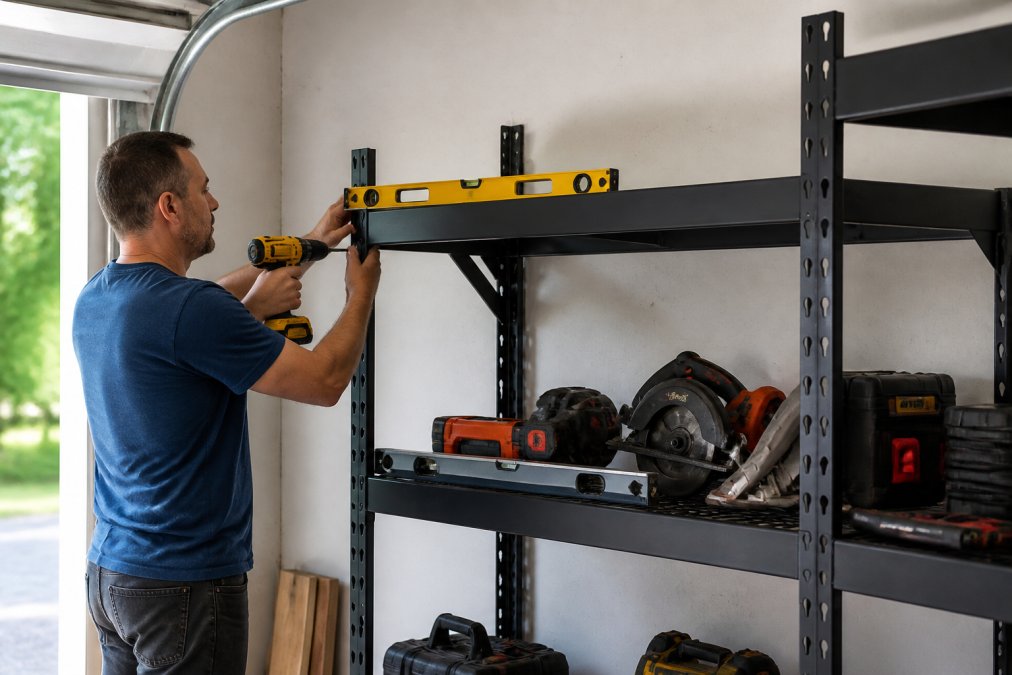
Install cabinets level and plumb using a quality level. Misaligned cabinets don't close properly and stress hinges over time.
Overhead Racks and Ceiling Storage
Ceiling-mounted storage reclaims space for items you don't need constantly: seasonal decorations, camping gear, rarely-used power tools, and bulk storage.
Anchor overhead racks directly into ceiling joists, which typically run perpendicular to the garage door at 16-inch spacing. Drywall alone won't support the weight. Use heavy-duty lag bolts or through-bolts rated for the total load. An overhead rack 4 feet wide and 8 feet long can safely hold 200-300 pounds depending on joist quality and anchor spacing (the CDC).
Maintain at least 12 inches of clearance between the rack and the garage door when it opens. Test door operation after installation to ensure nothing interferes.
DIY vs Professional Garage Storage Installation
DIY installation saves money but requires time, proper tools, and basic carpentry knowledge. Simple projects like installing a few shelves or hanging pegboard work well for DIY. More complex projects involving multiple wall-mounted systems, custom configurations, or structural concerns benefit from professional help.
Professional installers bring expertise in load calculations, proper anchoring, and building code compliance. They work faster and guarantee installations meet safety standards. Many homeowners take a hybrid approach: hire professionals for complex structural work and handle simpler tasks themselves.
Step-by-Step Installation Process
Prepare Your Workspace and Gather Materials
Clear the area where you'll be working and remove vehicles if necessary. Gather all materials and tools before beginning: stud finder, drill with appropriate bits, level, measuring tape, safety anchors, lag bolts, pencil, safety glasses, and work gloves.
Locate and mark all studs where you plan to install shelving or cabinets. Take a photo of the marked wall as a reference.
Install Wall-Mounted Storage Systems
Mount the bracket or frame for your wall-mounted system, installing the top bracket first. Use a level to ensure it sits perfectly horizontal and mark all holes before drilling.
Drill pilot holes slightly smaller than your anchors. For studs, use lag bolts rated for the combined weight of the cabinet and its contents. For drywall between studs, use heavy-duty toggle bolts or expansion anchors rated for your specific load.
Install anchors into pilot holes and attach the cabinet or shelving unit to the installed brackets. Check alignment with your level again, wall-mounted systems must sit perfectly horizontal and plumb.
Set Up Shelving and Secure Heavy Items
Adjust shelves to your desired heights using shelf pins or clips. Test each shelf by pressing firmly downward, it should not move excessively.
Arrange heavy items on shelves using proper weight distribution, placing heavier items toward the center and front. Secure items that might tip or roll using bungee cords or safety straps.
Decluttering and Inventory Management
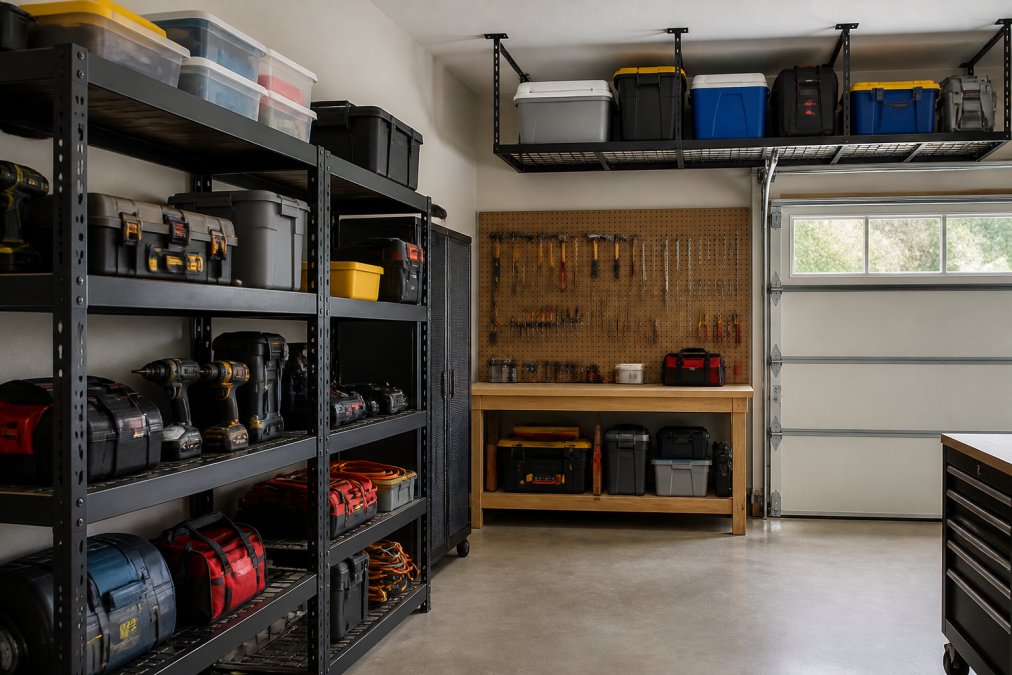
Start by removing everything from your garage. Sort items into categories: hand tools, power tools, seasonal items, sports equipment, automotive supplies, and miscellaneous. Be ruthless about items you haven't used in a year.
Create an inventory using a simple spreadsheet or mobile app listing item categories, quantities, and storage locations. Label storage bins and shelves clearly to eliminate the "where did I put that?" problem.
Maintenance and Long-Term Durability
Metal shelving and cabinets benefit from occasional cleaning. Dust accumulates and can trap moisture. Wipe down shelves quarterly with a dry cloth. In humid climates, apply a light coat of rust-preventative oil to metal surfaces annually.
Check bolt tightness twice yearly. Temperature changes and vibration gradually loosen fasteners. Inspect wall anchors and lag bolts periodically and tighten any that have loosened.
For overhead racks, inspect anchor points and joist condition annually, looking for signs of sagging, cracking, or water damage. Keep your garage relatively dry using a dehumidifier in humid climates, moisture accelerates rust and wood rot.
Organizing your garage professionally doesn't require hiring contractors for every task, but it does require planning and quality materials. The difference between a garage that functions and one that frustrates you comes down to proper installation, appropriate load capacity, and thoughtful layout.
Superior Tool Garage and Outdoors provides the heavy-duty storage systems that make this possible. Our 72" adjustable metal shelving at $101.99 and 5-tier foldable metal storage rack with wheels at $57.99 offer the durability and flexibility you need. Whether you're tackling a small garage space or building a complete workshop, our collection of premium storage solutions helps you reclaim your space and organize your tools properly. Shop now and transform your garage into the organized, functional space you've been wanting.
Frequently Asked Questions
How much does professional garage organization installation cost?
Professional installation costs vary based on garage size and complexity, typically ranging from $500 to $3,000. Heavy-duty shelving units like the 72" Adjustable Metal Shelving ($101.99) offer budget-friendly DIY alternatives. If you hire professionals, expect labor charges of $50-$150 per hour. Factor in material costs separately. Many homeowners find a hybrid approach, purchasing quality storage systems and handling installation themselves, offers the best value.
What tools are required for installing heavy-duty garage storage systems?
Essential tools include a stud finder, power drill, level, tape measure, wrench set, and safety anchors. For wall-mounted installations, you'll need a drill with bits sized for your wall type (drywall anchors for non-stud areas, lag bolts for studs). A level ensures shelving stays balanced and prevents load-bearing issues. Safety anchors are critical, they distribute weight properly and prevent collapse. Most homeowners already own these basics; if not, they're inexpensive to purchase or rent.
Is it better to DIY or hire a professional for garage organization installation?
DIY installation works well if you're comfortable with basic tools, have time, and understand load-bearing requirements. Professionals are worth hiring if your garage has structural concerns, you need custom configurations, or you're mounting systems on challenging walls. Professionals ensure proper weight distribution and compliance with safety standards. Budget-conscious homeowners often DIY with quality products like the 5-Tier Heavy Duty Foldable Metal Storage Rack ($57.99), while larger projects benefit from professional expertise.
How do I organize my garage if it's completely full of clutter?
Start by sorting everything into categories: keep, donate, sell, or discard. This decluttering step is essential before installing storage systems. Once sorted, measure your kept items and assess load capacity needs. Vertical storage and overhead racks maximize space in cluttered garages. Heavy items belong on lower shelves; lighter items on upper levels. Use modular storage solutions that adapt as your needs change. A methodical approach prevents reinstalling systems multiple times.
What should I know about load capacity and weight distribution for garage storage?
Every storage system has a maximum load capacity per shelf, typically listed in pounds. Calculate your items' total weight and divide by the number of shelves to ensure even distribution. Heavy tools and automotive equipment require heavy-duty shelving rated for 500+ pounds per shelf. Never exceed stated limits, overloading causes structural failure and safety hazards. Anchor systems to wall studs when possible; drywall anchors alone cannot support heavy loads. Always use safety anchors rated for your shelf's maximum capacity.
Can I mix DIY storage solutions with professional installation?
Yes, a hybrid approach is practical and cost-effective. You can install freestanding heavy-duty racks yourself (like the 5-Tier Foldable Metal Storage Rack at $57.99) while hiring professionals for complex wall-mounted systems requiring stud finding and load calculations. This balances budget and safety. Start with simpler installations to build confidence, then hire professionals for structural work. Mixing approaches lets you prioritize professional help where it matters most for safety and longevity.
How do I maintain garage storage systems to ensure they last?
Regular maintenance extends storage system lifespan significantly. Check safety anchors and bolts quarterly for tightness. Wipe metal surfaces to prevent rust and corrosion, especially in humid climates. Inspect shelves for sagging or damage after heavy use. Keep weight distributed evenly and never exceed rated capacity. Avoid placing wet items directly on metal shelves; use bins or liners. Epoxy floor coatings protect concrete and reduce moisture-related rust. Proper maintenance prevents premature replacement and maintains safety standards.