


Table of Contents
- Why Metal Garage Shelves Rust in Damp Concrete Garages
- Garage Condensation Prevention: Stop the Water Before It Lands
- Damp-Proofing a Garage: Sealing Floors, Walls, and Cracks
- Choosing the Right Protective Coating for Metal Shelves
- Garage Dehumidifier for Moisture Control: Picking and Running One
- Shelf Placement, Airflow, and Floor Clearance That Prevent Rust
- Step-by-Step: Treating Existing Rust and Recoating Shelves
- A Simple Inspection and Maintenance Schedule
- Frequently Asked Questions
Last Updated: October 16, 2026
Why Metal Garage Shelves Rust in Damp Concrete Garages
Rust forms on metal garage shelves when moisture in the air and moisture in the concrete combine with bare steel. In a damp concrete garage, that combination happens constantly.
The problem is rarely one big leak. It's a slow cycle. Concrete pulls moisture from the ground and releases it into the air. Warm, humid air hits a cool steel shelf and condenses.
The moisture cycle: concrete, condensation, and steel
Concrete is porous. It wicks groundwater upward through a process called capillary rise, and that vapor escapes into the garage air. When the air is warmer than the shelf surface, condensation forms on the steel. Steel has high thermal mass, so it stays cool longer than the air around it.
Rainy seasons make it worse. Cold nights followed by warm days push humidity up fast. The slab never fully dries, and the cycle repeats.
Where rust starts first on a shelf
Rust almost always shows up in the same spots:
- Shelf feet and base plates where they meet the damp floor
- Welded joints and seams where moisture traps
- Edges and cut ends where the protective finish is thinnest
Check those five areas first. If you see flash rust there, the whole shelf needs attention.
Garage Condensation Prevention: Stop the Water Before It Lands
Garage condensation prevention starts with air movement. Still, humid air deposits water on every cool metal surface it touches. Moving that air cuts condensation before it forms.
Run a fan. Keep a vent or window cracked when the weather allows.
You can also separate the metal from the moisture source. Shelf placement, wall clearance, and floor clearance all play a role, which we cover below.
Damp-Proofing a Garage: Sealing Floors, Walls, and Cracks
Damp-proofing a garage means blocking moisture at the slab and walls before it reaches your shelves. Start with the floor.
Next, find the cracks. Fill concrete cracks and patch any water leaks at the base of the walls.
For walls, a waterproof coating on the interior side helps, but fix exterior drainage first. If water pools against the foundation, no interior coating will keep up.
- Seal concrete floor with a masonry coating
- Fill all visible cracks
- Patch leaks at wall bases
Choosing the Right Protective Coating for Metal Shelves
A protective coating for metal shelves is the barrier that keeps steel away from moisture. The right choice depends on your shelf material, your climate, and how much upkeep you will actually do. Most garage shelves are one of four types, and each behaves differently in a damp concrete garage.
Shelf materials and finishes compared
| Shelf type | How it resists rust | Weak point in a damp garage | Best use |
|---|---|---|---|
| Galvanized steel | Zinc coating sacrifices itself before the steel | Cut ends and weld spatter are bare; white zinc oxide can appear | Utility shelving in humid bays |
| Powder-coated steel | Factory film blocks moisture and abrasion | Chips and scratches expose bare steel; rust creeps under the film | High-traffic shelves that get bumped |
| Painted steel | Primer plus topcoat seals the surface | Thin edges, feet, and welds; repainting needed every few years | Budget shelves you can touch up |
| Stainless steel | Chromium oxide layer self-heals in air | Chlorides and standing water can still pit it; not rust-proof | Damp rooms where you want low maintenance |
Galvanized is the value pick for a damp garage because the zinc keeps working even after a scratch. Powder coat looks best and resists knocks, but once it chips, rust spreads under the film and you may not see it until the coating blisters. Paint gives you full control and easy touch-ups, but it is only as good as the prep.

Coating damage: what to look for and how to fix it
Inspect the finish the same way you inspect for rust:
- Chips and scratches on powder coat or paint, clean, dry, and touch up with matching paint before rust starts.
- White or chalky residue on galvanized steel, this is zinc corrosion product; wipe it off and apply a zinc-rich touch-up or wax.
- Blistering or peeling, moisture is trapped under the film; strip, treat the rust, and recoat.
Matching the coating to the job
- Bare or rusty steel: clean to bare metal, prime with a rust-inhibitive primer, then topcoat with an oil-based or direct-to-metal paint.
- Factory powder coat: leave it alone until it chips, then touch up chips promptly with color-matched paint.
- Shelf feet and base plates: wax, oil, or a rubber foot cap works as a quick barrier because these spots see the most moisture.
Whichever you pick, prep matters more than the product. Clean, dry, rust-free steel holds a coating. Dirty or damp steel sheds it. If you are buying new shelves for a damp garage, favor galvanized or stainless over bare painted steel, and plan to isolate the feet from the slab.
Garage Dehumidifier for Moisture Control: Picking and Running One
A garage dehumidifier for moisture control removes water from the air before it can condense on steel. That makes it one of the most direct tools against rust on metal garage shelves, but only if you size it, place it, and set it correctly.
Measure before you buy
Hang a hygrometer at shelf height, not near the floor or the door. Log the reading morning and evening for a week, and note it after rain. You are looking for two numbers: the highest relative humidity you see and how long it stays above about 60%. A garage that spikes to 70% for a day after rain needs different treatment than one that sits at 65% all summer.
Sizing a dehumidifier for a garage
Dehumidifier capacity is rated in pints of water removed per day. As a rule of thumb, most practitioners size a garage unit at roughly 10-12 pints per day for a tight, well-sealed single-car garage, and 20-30 pints per day for a larger or leakier space. If the garage is open to outside air, no residential unit will keep up, seal gaps and close the door while it runs.
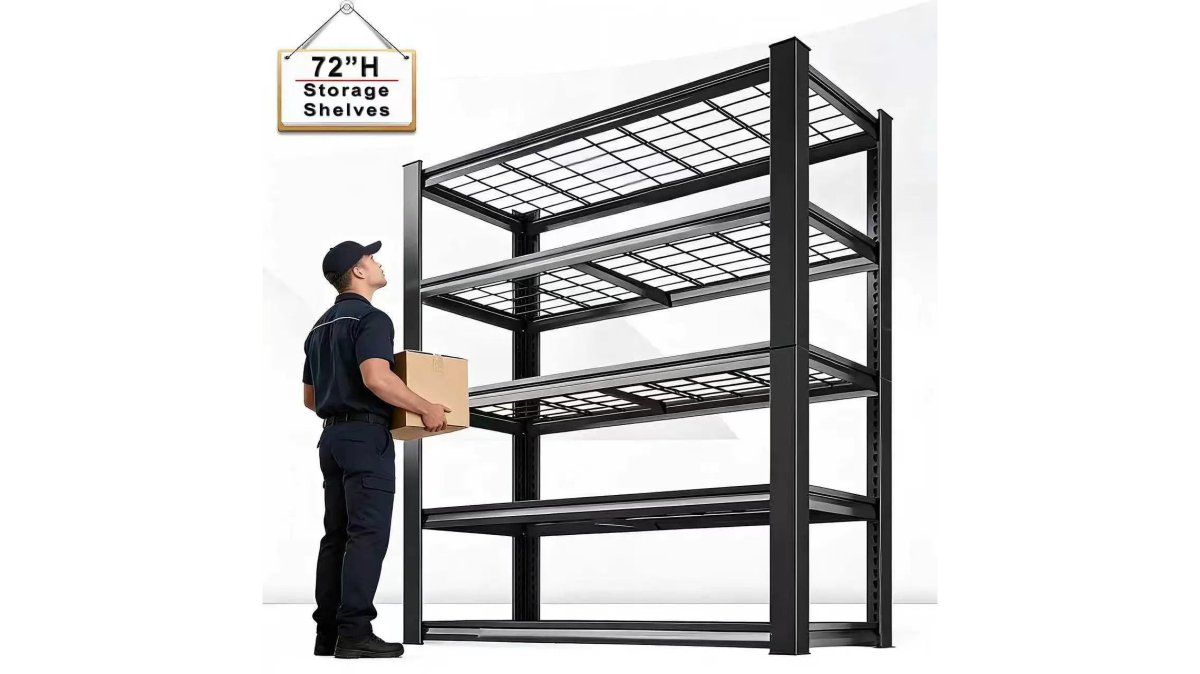
72" Adjustable Metal Shelving →
Look for:
- A humidistat so the unit cycles on and off at your target instead of running continuously.
- A hose drain port so you can run a line to a floor drain or outside instead of emptying a tank daily.
- Low-temperature operation if your garage gets cold; standard refrigerant units lose efficiency near freezing, and desiccant units work better in cool spaces.
Placement and humidity targets
Set the humidistat around 45-50% relative humidity. Below about 50%, condensation on cool steel becomes far less likely; above 60%, the rust window opens wide.
Pair the dehumidifier with a fan. A dehumidifier alone dries the air near its intake; moving air spreads that dry air into corners where shelves sit. Run the fan on low continuously during humid months.
A simple monitoring plan
- Daily during humid months: glance at the hygrometer; confirm the unit is running and the tank or drain is clear.
- After rain: check the reading and the slab for new damp spots.
- Seasonally: clean the filter, check the drain line, and recheck the humidistat setting.
Shelf Placement, Airflow, and Floor Clearance That Prevent Rust
Airflow around your shelves is rust prevention you can set up in an afternoon. Metal items rust fastest where air can't move.
Follow these placement rules:
- Keep shelves at least a few inches off the concrete floor with shelf feet or a base
- Leave a gap between the shelf back and the concrete wall
- Don't push shelves tight into corners
Floor clearance matters most. Damp concrete wicks moisture straight into shelf feet. A shelf sitting flat on the slab rusts at the base first.
When you're ready to upgrade, our 72" Adjustable Metal Shelving gives you a metal frame you can position with clearance in mind.

Step-by-Step: Treating Existing Rust and Recoating Shelves
Treating rust is a weekend job, and doing it right stops the spread. Work in this order:
- Clear the shelf. Remove everything and set it aside.
- Clean the surface. Scrub off dust and loose paint with a wire brush or sandpaper.
- Remove the rust. Sand down to bare, shiny steel at every rust spot. Don't skip edges and feet.
- Wipe it down. Use a water-displacement product, then let the metal dry fully.
- Prep for coating. Mask areas you don't want coated.
- Apply the coating. Paint, wax, or oil in thin, even coats. Follow the label.
- Let it cure. Give it full dry time before loading the shelf.
- Reassemble with clearance. Add shelf feet and keep the back off the wall.
If rust has eaten through the steel, replace that shelf. A weakened shelf can't hold weight safely. For a stainless option, our Heavy Duty Stainless Steel Storage Rack resists corrosion better than bare iron and suits damp spaces well.
A Simple Inspection and Maintenance Schedule
Rust prevention is a habit, not a one-time fix. Check your shelves on a schedule and catch problems early.
| Frequency | Task |
|---|---|
| Monthly | Check shelf feet, joints, and edges for flash rust |
| Monthly | Confirm dehumidifier is running and set correctly |
| Seasonally | Wipe down shelves and reapply wax or oil |
| Seasonally | Inspect concrete floor and walls for new cracks |
| Yearly | Recoat any chipped or worn areas |
Keep a small rust kit on hand: wire brush, sandpaper, water-displacement spray, and touch-up paint. Fixing a spot the day you spot it takes minutes.
A foldable rack with wheels, like our 5Tier Heavy Duty Foldable Metal Storage Rack With Wheels, makes it easy to pull shelves out for cleaning and inspection.

Frequently Asked Questions
Can damp concrete cause metal shelves to rust?
Yes. Concrete pulls moisture from the ground and releases it as vapor, and that vapor collects on the coldest metal surfaces it touches. A shelf sitting directly on a damp slab or pushed against a damp wall absorbs that moisture at the contact points, so rust usually appears at the feet and along the back edge first. Raising shelves on feet or a vapor barrier and sealing the concrete cuts the moisture supply that feeds the rust.
What coating protects metal shelves from rust?
A rust-inhibiting primer topped with an oil-based or enamel paint gives the most durable protection on steel shelving. For shelves you cannot paint, a coat of paste wax or a light oil film works as a renewable barrier. Powder-coated shelves resist rust well until the coating chips, so touch up bare spots promptly. Whatever you choose, clean and degrease the metal first, and treat any existing rust before coating or the corrosion continues underneath.
Should metal garage shelves be kept off the concrete floor?
Yes. Concrete wicks moisture from below and holds it, so shelf feet in direct contact stay damp for long stretches. Set shelves on rubber feet, plastic risers, or a treated wooden base to create a gap of at least an inch. Keep a few inches of clearance from walls too, so air can move behind the unit. That airflow lets surfaces dry after humid days instead of staying wet.
How can I reduce condensation in a garage?
Ventilation and humidity control do most of the work. Open a window or run a vent fan when the outside air is drier than the garage, and seal cracks in the slab and walls so ground moisture stays out. A dehumidifier sized for the space keeps relative humidity in the 40-50% range, which is low enough to stop condensation on cold metal. Check humidity with an inexpensive hygrometer and adjust as seasons change.
Rust on metal garage shelves is a moisture problem, and moisture problems have fixes. Seal the slab, move the air, control humidity, and coat the steel. Do those four things and your shelves stay solid for years.
Superior Tool Garage and Outdoors stocks the storage and tools to make it happen, from adjustable metal shelving to heavy-duty racks built to last. Shop our collection and get your garage dry, organized, and rust-free.