


Table of Contents
- Quick Comparison: Best Weather Resistant Outdoor Furniture Sets
- 7 Pieces Patio Furniture Set: Best for Large Gatherings
- 4 Piece Rattan Patio Furniture Set: Best Budget Pick
- 4-Piece Patio Furniture Set: Best for Small Patios
- 7-Piece Modular Outdoor Furniture Set: Best for Modular Flexibility
- Wicker Outdoor Couch with Storage: Best for Built-In Storage
- Best Materials for Outdoor Furniture That Withstand the Elements
- How to Maintain Patio Furniture Year-Round
- Frequently Asked Questions
Last Updated: September 14, 2026
Quick Comparison: Best Weather Resistant Outdoor Furniture Sets
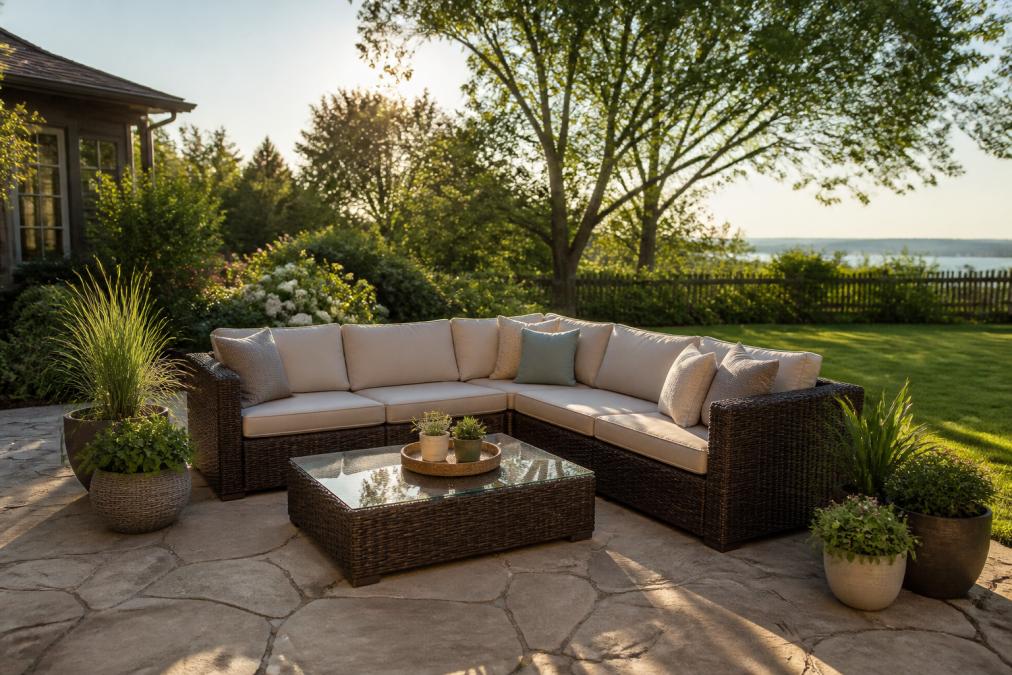
The best weather resistant outdoor furniture sets pair a corrosion-resistant frame with UV-stabilized cushion fabric, and that combination matters more than any brand name. At Superior Tool Garage and Outdoors, we see the same pattern every season: shoppers buy on looks, then replace the set two summers later. Below, we break down the sets worth your money, what each one handles well, and where it falls short.
| Set | Price | Best For | Material |
|---|---|---|---|
| 7 Pieces Patio Furniture Set | $770.99 | Large gatherings | HDPE wicker, stainless steel |
| 4 Piece Rattan Patio Furniture Set | $245.99 | Tight budgets | PE rattan, metal frame |
| 4-Piece Patio Furniture Set | $473.99 | Small patios | Metal frame, PVC-coated polyester |
| 7-Piece Modular Outdoor Furniture Set | $1,006.99 | Rearranging often | PE rattan, powder-coated metal |
| Wicker Outdoor Couch with Storage | $438.99 | Hidden storage | Steel, UV-resistant PE wicker |
7 Pieces Patio Furniture Set: Best for Large Gatherings
This is the set to buy if your patio hosts a crowd. Two corner sofas and four middle sofas seat six comfortably around a single coffee table, and the brown HDPE wicker wraps a thicker stainless steel frame. HDPE is the material that resists fading and cracking better than natural rattan, which is why coastal buyers tend to prefer it.

Cushions use Velcro and strap attachments, so they stay put in wind. Covers are removable and splash-proof. Assembly splits across three boxes that may ship separately, so confirm delivery before you plan a party.
4 Piece Rattan Patio Furniture Set: Best Budget Pick
Budget sets usually cut corners on the frame. This one does not. The heavy-duty metal frame sits under weather-resistant PE rattan, and both are treated to resist rust and corrosion, which is where cheap patio furniture normally fails first.

You get one sofa, two single chairs, and a tempered glass coffee table. The glass top wipes clean in seconds, and the waterproof surface handles spilled drinks without staining. It fits balconies and porches where a full sectional will not.
The honest limitation: at this price, cushions are thinner than the premium sets. Fine for coffee and conversation, less ideal for all-day lounging.
4-Piece Patio Furniture Set: Best for Small Patios
Small patios need seating that does not swallow the space, and this four-piece set delivers it without feeling cramped. The chairs run larger than most competitors at this size, with breathable PVC-coated polyester fabric that resists UV fading and handles water and oil spills.
The round table uses a slatted metal top, so rain drains through instead of pooling on the surface. That design detail removes a maintenance chore entirely: no cover required after a storm, no standing water to dump.
Each chair holds up to 350 pounds (Giantex Recalls Lounge Chairs Due to Amputation Hazard). Cushion covers are removable and machine washable, which matters more than most buyers expect once pollen season hits.
7-Piece Modular Outdoor Furniture Set: Best for Modular Flexibility
Modular design is the feature that separates this set from everything else here. Four single chairs and two corner armchairs rearrange into a sectional, a conversation cluster, or separate seating, so the same furniture works for a party and a quiet Tuesday.
Construction is premium PE rattan over powder-coated metal, with stabilizing foot pads that keep sections level on uneven decking. Cushions use high-resilience sponge with UV-protected, waterproof covers that are machine washable.
This is the most expensive set in the lineup, and it earns that price through flexibility rather than materials alone. If you never rearrange your patio, spend less.
Wicker Outdoor Couch with Storage: Best for Built-In Storage
Storage is the feature nobody lists and everybody wants. This three-seater hides compartments under both wide armrests, sized for cushions, throws, or grill tools you would otherwise leave out.
The steel frame carries a 794-pound capacity, wrapped in UV-resistant PE wicker that shrugs off sun and rain. Cushion covers are zippered and splash-resistant. Adjustable foot pads keep it stable on uneven surfaces.
Where it falls short: it seats three, not six. Pair it with the bistro set if you need overflow seating.
Best Materials for Outdoor Furniture That Withstand the Elements
Material choice is the single biggest predictor of how a set looks and performs in year five. The frame decides longevity; the finish and cushion fabric decide how it looks while it lasts. Here is how the main options actually behave outdoors.
Frame materials, ranked by real-world durability
Powder-coated aluminum. The best all-around frame for most buyers. Aluminum does not rust the way steel does, and the powder coat is a baked-on polymer layer that resists chipping better than wet paint. Look for a coating thickness in the 2-4 mil range and marine-grade stainless hardware (304 or 316) (Steel Standards - Standards Products - Standards & Publications). Aluminum is also light, which is a trade-off in high-wind areas, see the wind note below.
Powder-coated steel. Stronger and heavier than aluminum, and usually cheaper. The catch is that any chip or scratch exposes bare steel, which then rusts from the inside. If you buy steel, inspect the welds and touch up chips immediately with matching touch-up paint. Steel is a reasonable choice for covered patios and inland climates; it is a poor choice within a few miles of saltwater.
HDPE (high-density polyethylene) wicker. This is the synthetic weave most premium sets use. HDPE resists UV fading, moisture, and salt air without sealing or oiling, and it does not crack the way lower-grade PVC weave does. It is heavy, which helps in wind, and it can be cleaned with a hose. The trade-off is cost and a slightly plastic feel compared to natural fibers.
PE rattan. The budget cousin of HDPE. It looks similar and handles rain fine, but lower-grade PE weave can become brittle and fade faster under intense UV. Ask whether the weave is UV-stabilized; if the listing does not say, assume it is not.
Teak and other hardwoods. Teak weathers to a silver-gray patina and can last decades if the hardware is also corrosion-resistant. It needs occasional oiling to hold its honey color, and it is heavy and expensive. Cheaper woods marketed as "teak-like" (acacia, eucalyptus) are less rot-resistant and need more care.
Cushion fabric matters as much as the frame
A great frame with failing cushions looks like a failing set. Look for solution-dyed acrylic or olefin covers, solution-dyed means the color runs through the fiber rather than sitting on the surface, so it fades far more slowly. Check for UV-stabilized, fade-resistant, mildew-resistant fabric with removable, machine-washable shells. Water-repellent treatment helps in a light shower, but breathable fabric dries faster after a soaking rain, which is what actually prevents mildew.
Match the material to your climate
Most guides give one generic recommendation. The right answer depends on where the furniture lives:
- High humidity and coastal salt air: HDPE wicker over aluminum, with 316 stainless hardware. Rinse frames monthly to remove salt film. Avoid steel entirely.
- Arid and desert: UV is the enemy, not moisture. Prioritize solution-dyed fabric and UV-stabilized weave; expect to replace cushions before frames.
- Freeze-thaw and snowy winters: Water trapped in joints expands and cracks welds and weave. Choose aluminum over steel, store cushions indoors, and elevate frames off concrete so meltwater drains.
- High-wind areas: Weight is your friend. Heavy HDPE or solid cast aluminum resists tipping; lightweight hollow aluminum sections can become projectiles. Add weighted bases or anchor points.
The repairability question most buyers forget
Before you buy, check whether the manufacturer sells replacement cushions, connection brackets, foot pads, and individual sections. A modular set with available parts can be repaired for years; a set with proprietary or discontinued components becomes landfill the first time a bracket snaps. This is the single most overlooked factor in long-term ownership cost.
Spend your budget on the frame and the cushion fabric, in that order. A plain powder-coated aluminum frame with solution-dyed cushions will outlast a beautiful weave over a thin steel tube every time.
[EPA guidance on outdoor furniture(/products/7-piece-modular-outdoor-furniture-set) and materials | epa.gov]
How to Maintain Patio Furniture Year-Round
Maintenance takes minutes per month if you stay ahead of it, and it is the difference between a set that lasts three seasons and one that lasts ten. The routine changes with the season, so treat this as a calendar rather than a one-time checklist.
Spring: inspect and reset
- Tighten every bolt, bracket, and connection point. Vibration from winter wind and freeze-thaw cycles loosens hardware, and a loose bracket stresses the frame every time someone sits down.
- Check foot pads and leveling glides. Replace cracked or missing pads before they let the frame sit in standing water.
- Wash the frame with mild soap and water. Rinse thoroughly, leftover soap film attracts dirt.
- Inspect powder coat and weave for chips or cracks. Touch up metal chips immediately with matching paint; a chip left exposed becomes a rust bloom within a season.
- Wash cushion covers per the care tag, and check zippers and seams for stress.
Summer: the light-touch routine
- Wipe wicker and frames with a damp cloth every few weeks. Rinse metal frames monthly, more often in coastal areas where salt film builds up.
- Spot-clean cushion covers before stains set. Most solution-dyed acrylic covers can be cleaned with a mild soap solution and a soft brush.
- After heavy rain, tip water off slatted and glass table tops so it does not sit and leave mineral rings.
- Rotate cushions and rearrange modular sections occasionally so sun exposure is even and one side does not fade faster than the other.
Fall: prepare for the off-season
- Clean everything before storage. Dirt and pollen trapped under a cover become a breeding ground for mildew.
- Decide cover versus store. A breathable cover works for short absences and light rain. For winter or long stretches away, move cushions indoors and store the frame under cover. Sealed plastic traps moisture against the frame and speeds corrosion, never wrap a set in a tarp and leave it.
- Disconnect and store cushions indoors. Fabric is the first component to fail on most sets, and it is the easiest to protect.
- In freeze-thaw climates, elevate frames off concrete and make sure water cannot pool in joints or hollow legs.
Winter: minimal but not zero
- Brush snow off covers rather than letting it pile up and weigh down the frame.
- Check that covers are still secured after wind events.
- If you left the frame out, do a mid-winter visual check for rust spots or cracked weave so you can address them in spring.
Repair before you replace
Most owners replace a whole set when one part fails. Before you do, check whether the manufacturer sells replacement cushions, brackets, foot pads, and individual sections. Replacing a $40 bracket beats replacing a $1,000 set, and it keeps usable furniture out of the waste stream. Keep the assembly manual and hardware bag, future you will need them.
End-of-life: dispose of it responsibly
Synthetic wicker (HDPE and PE), powder-coated metals, and foam cushions are not all recyclable curbside. HDPE is a recyclable plastic in many areas, but mixed-material furniture is hard to process. Check your local recycling rules, look for manufacturer take-back programs, and consider donating still-usable sets rather than sending them to a landfill. Buying repairable, single-material furniture in the first place is the most effective way to reduce end-of-life waste.
Never store cushions in sealed plastic bags or wrap a frame in a non-breathable tarp. Trapped moisture causes mildew on fabric and corrosion on metal, the two most common causes of premature failure.
Cushions stored indoors last noticeably longer than cushions left under a cover. Fabric is the first component to fail on most sets, and it is the easiest to protect. Pair that habit with a spring hardware check and you will get years more out of any set on this list.
Frequently Asked Questions
What is the most weather resistant outdoor furniture material?
HDPE (high-density polyethylene) wicker and powder-coated aluminum offer the best weather resistance for outdoor furniture sets. HDPE resists UV fading, moisture, and cracking, while powder-coated aluminum frames won't rust or corrode. Teak is another strong option because its natural oils repel water, though it requires periodic sealing. For cushions, look for UV-stabilized, fade-resistant fabrics with removable, machine-washable covers. These materials hold up through rain, sun, and temperature swings without warping or peeling.
How do I protect outdoor furniture from sun and rain damage?
Use a combination of covers and strategic placement. Waterproof, breathable furniture covers protect against rain and UV rays during extended periods of non-use, while storing cushions indoors during heavy storms prevents mildew. For daily protection, position your weather resistant furniture under a pergola or awning. Apply a sealant to wooden pieces annually, and wipe down metal frames to prevent water spots. If you live in a coastal area, rinse frames monthly to remove salt buildup, which accelerates corrosion.
Can I leave weather resistant outdoor furniture outside all year?
Many weather resistant outdoor furniture sets are designed for year-round outdoor use, but 'weather resistant' doesn't mean maintenance-free. HDPE wicker, powder-coated aluminum, and teak can stay outside through winter in most climates. However, cushions should be brought inside or stored in a deck box during off-season months to prevent mildew and fading. In regions with heavy snow or ice, covering furniture or storing it in a garage extends its lifespan. Check manufacturer guidelines for your specific set.
How often should I clean and maintain my patio furniture?
Clean your patio furniture at least once a month during peak use and more often in coastal or dusty environments. Wipe frames with a damp cloth and mild soap, rinse cushions according to the care label, and check for loose screws or rust spots. Before storing for winter, do a thorough deep clean and apply a protective sealant to wood or metal surfaces. Regular maintenance prevents small issues like mildew or corrosion from becoming permanent damage, and it keeps your set looking new for years.
Picking the right set comes down to matching material to your climate and seating to your space. Superior Tool Garage and Outdoors stocks weather-resistant outdoor furniture built for exactly that decision, from the seven-piece set for large gatherings to the storage couch for smaller patios. Every set ships with the hardware and instructions you need for straightforward assembly. Shop now and get your outdoor space ready before the season turns.