


Table of Contents
- Why Hand Tools Rust and How to Assess the Damage
- How to Remove Rust from Tools: Preparing Your Workspace
- Vinegar Rust Removal for Tools: The Soaking Method
- Mechanical Rust Removal: Scrubbing, Sanding, and Grinding
- Alternative Rust Removal Methods: Kerosene and Penetrating Oil
- Rust Prevention for Hand Tools: Protection and Storage
- Drying, Degreasing, and Applying Protective Oil
- When to Stop: Knowing If a Tool Is Beyond Restoration
- Frequently Asked Questions
Last Updated: October 20, 2026
Why Hand Tools Rust and How to Assess the Damage
Rust forms when iron and steel tools meet moisture and oxygen. This chemical reaction creates that reddish-brown coating that weakens metal and makes tools harder to use.
Hand tools rust for simple reasons. They sit in damp garages. They get wet from rain or cleaning. They're stored without protection. The longer rust sits, the deeper it penetrates into the metal surface.
Not all rust is the same. Surface rust looks bad but stays on top of the metal. You can see it as a light coating.
Before you start any rust removal project, assess what you're dealing with. Run your finger over the rusty area. Does it feel rough but solid?
At Superior Tool Garage and Outdoors, we recommend starting with an honest assessment. Spend two minutes examining your tools. This tells you which method to use and whether the tool is worth your time.
How to Remove Rust from Tools: Preparing Your Workspace
Success starts before you touch the first tool. Set up a clean, safe workspace where you can work without interruption and contain the mess.
Find a flat work surface. A workbench is ideal. A table or sturdy cardboard box works too. You need room to lay out tools and supplies without crowding.
Gather your materials first:
- Wire brush or steel wool
- Sandpaper (medium and fine grit)
- Vinegar or kerosene
- Clean rags or old towels
- Gloves to protect your hands
- Eye protection (important when scrubbing)
- A container for soaking (if using vinegar method)
- Protective oil for finishing
Protect the area around your workspace. Rust particles and abrasive dust spread easily. Lay down newspaper or cardboard to catch debris. This makes cleanup faster and protects your garage floor.
Ventilation matters more than most people realize. Open a window or door. If you're using kerosene or other penetrating oils, good airflow keeps fumes from building up. A fan pointing outward works well.
Check your tools before starting. A 50 Piece General Household Toolbox from Superior Tool Garage and Outdoors includes basic tools you might need, though specialized rust removal tools like wire brushes and sanders are separate purchases.

Vinegar Rust Removal for Tools: The Soaking Method
The vinegar method is the gentlest approach for surface rust. White vinegar contains acetic acid, which dissolves rust without harming the underlying steel.
Fill a container with white vinegar. Use a plastic bucket, glass jar, or ceramic dish, anything that holds liquid.
Place the tool in vinegar. Let it soak. Small tools need 24 hours. Larger tools or heavily rusted items benefit from 48 hours or more.
Check progress every 12 hours. Remove the tool and wipe it with a rag. You'll see rust coming off.
After soaking, scrub the tool gently with a wire brush or steel wool. The rust should flake away easily.
Rinse the tool thoroughly with water. Dry it completely with a clean rag. Any remaining moisture will start new rust formation.
The vinegar method takes time but requires minimal effort and no special equipment. It's ideal for delicate tools or items you want to restore carefully.
Mechanical Rust Removal: Scrubbing, Sanding, and Grinding
When rust is stubborn or you need faster results, mechanical methods work. These techniques use friction to scrub, sand, or grind rust away from the metal surface.
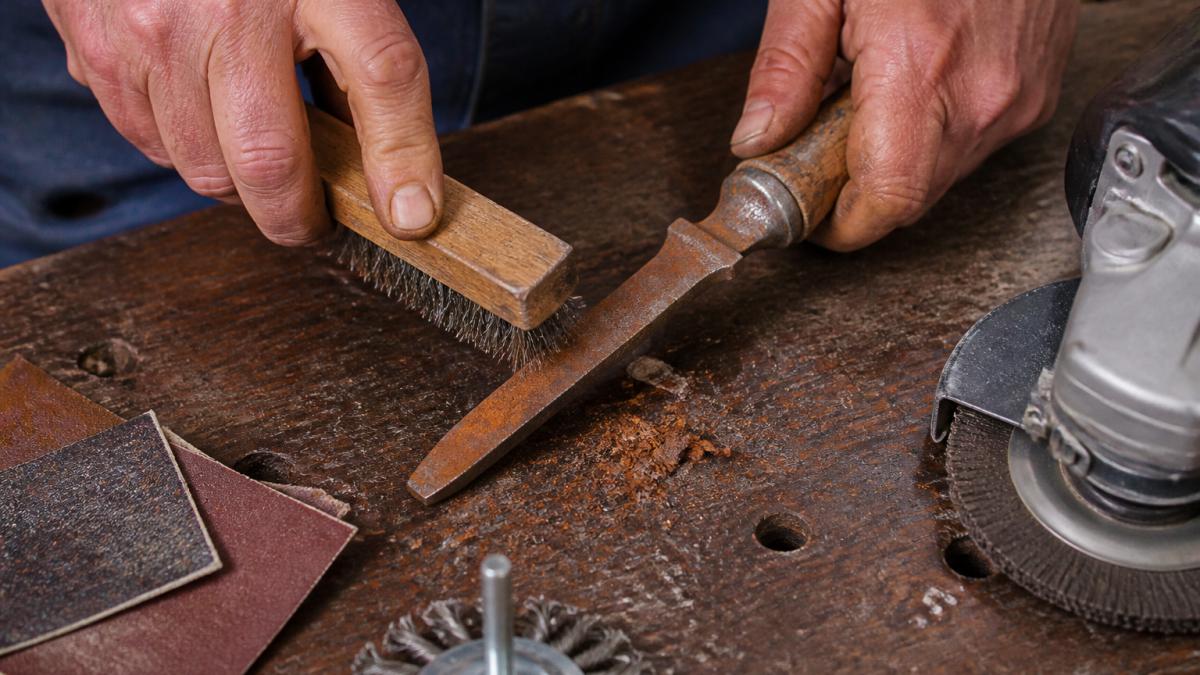
Wire Brush and Steel Wool Techniques
A wire brush is the fastest manual tool for rust removal. Attach it to a cordless drill for extra speed, or use it by hand for smaller areas.
Hold the wire brush at a slight angle to the tool surface. Apply steady, moderate pressure. Move in one direction, then reverse and go the other way. This crosshatch pattern removes rust more effectively than random scrubbing.
Steel wool works similarly but removes rust more gently. Use medium-grade steel wool for moderate rust. Fine-grade steel wool is better for finishing work after heavier rust removal.
Both methods work best on surface rust and light pitting. They won't remove deep corrosion quickly. For those cases, move to sanding or grinding.
Hand scrubbing takes 15 to 30 minutes per tool, depending on rust severity. The Cordless Angle Grinder from Superior Tool Garage and Outdoors can handle wire brush attachments and delivers 16,800 RPM for faster work.

Sanding and Polishing for Stubborn Rust
Sandpaper removes rust faster than wire brushes. Start with medium-grit sandpaper (80 to 120 grit). Work in circular motions, applying even pressure.
Switch to fine-grit sandpaper (220 grit or higher) once most rust is gone. This smooths the metal surface and prepares it for protective oil.
A cordless angle grinder with a sanding disc accelerates the process. These tools spin at high speeds, removing rust in minutes instead of hours. The Cordless Angle Grinder mentioned above includes brushing wheels and polishing discs designed for this work.
Sanding creates fine dust. Wear a dust mask and eye protection. Work in a well-ventilated area. Sweep or vacuum frequently to keep dust from settling.
Expect sanding to take 10 to 20 minutes for a moderately rusted tool. Heavily rusted tools may need 30 to 45 minutes.
Alternative Rust Removal Methods: Kerosene and Penetrating Oil
Kerosene and penetrating oils like WD-40 work differently than vinegar. They dissolve rust and loosen corrosion without soaking times. These methods suit tools that need quick treatment.
Apply kerosene directly to the rusty area. Let it sit for 30 minutes to 2 hours. The oil penetrates rust and breaks the bond between corrosion and metal.
50 Piece General Household Toolbox →
Wipe and scrub with a wire brush or steel wool. The rust comes away more easily than without the oil. Repeat the process if rust remains.
Kerosene leaves an oily residue. Wipe the tool clean with a dry rag.
Penetrating oils work similarly but may require longer soaking times. Some people let tools sit overnight in kerosene for heavy rust.
These methods work best for moderate rust on tools you want to use quickly. They're faster than vinegar soaking but less thorough for deep corrosion.
Rust Prevention for Hand Tools: Protection and Storage
The best rust removal is prevention. Once you've cleaned a tool, protect it to avoid starting over.
Apply protective oil to clean, dry metal. Linseed oil, machine oil, or specialized tool oil all work. Rub a thin coat onto the entire tool surface.
The oil creates a barrier between the metal and moisture. It won't prevent rust forever, but it slows the process significantly.
Store tools in a dry location. A heated garage is ideal.
Keep tools away from direct contact with concrete floors, which absorb and hold moisture. Store them on shelves or in cabinets.
Use silica gel packets or other desiccants in enclosed storage spaces. These absorb moisture and keep the air dry around your tools.
Check stored tools every few months. If you spot early rust, clean it immediately before it spreads.
Drying, Degreasing, and Applying Protective Oil
The final steps determine whether your restoration lasts. Proper drying and protection prevent rust from returning.
After any rust removal method, dry the tool completely. Use a clean, lint-free cloth. Pay special attention to crevices and joints where water hides.
If the tool feels slightly damp after wiping, let it air dry for 30 minutes in a warm, dry space.
Once dry, wipe the tool with a degreasing cloth if it feels oily from vinegar or kerosene treatment. A simple cloth dampened with water works.
Apply protective oil while the tool is still slightly warm from drying. Warm metal accepts oil more readily.
Buff away excess oil with a clean rag. The tool should look slightly glossy, not slick or dripping.
Store the tool immediately after oiling. Don't leave it exposed to air while wet or oily.
This final step takes 10 minutes but extends the time before rust returns from months to years.
When to Stop: Knowing If a Tool Is Beyond Restoration
Not every rusty tool deserves restoration. Sometimes replacement makes more sense than hours of scrubbing.
If rust has created deep pits covering more than half the tool's surface, restoration becomes difficult. The metal loses strength.
If the tool is cheap and easily replaced, the time spent restoring it might exceed the cost of a new one. A basic hammer or wrench is inexpensive.
If the tool's function depends on precision (like measuring tools or squares), deep rust may have warped it. Restoration won't restore accuracy.
Check the tool's value to you. Is it a family heirloom? Does it have sentimental worth? Then restoration effort is worthwhile.
Make this decision before you start. Don't spend 20 hours restoring a tool you could replace for $15.
Some tools are truly beyond saving. When rust eats through the metal or creates structural weakness, the tool has reached the end of its life.
Diy rust removal methods for hand tools don't require expensive chemicals or specialized equipment. Whether you choose hand methods or power tools, the key is starting early before rust becomes deep.
| Method | Best For | Time Required | Difficulty |
|---|---|---|---|
| Vinegar soaking | Surface rust, delicate tools | 24-48 hours | Easy |
| Wire brush | Light to moderate rust | 15-30 minutes | Easy |
| Sandpaper | Moderate rust, finishing | 10-20 minutes | Easy |
| Kerosene soak | Quick treatment, moderate rust | 30 minutes to 2 hours | Easy |
| Cordless grinder | Heavy rust, deep pitting | 5-15 minutes | Moderate |
Frequently Asked Questions
Can vinegar remove rust from hand tools?
Yes, vinegar is an effective rust removal method for hand tools. White vinegar's acidity dissolves surface rust and light corrosion. Soak rusty tools in vinegar for 12-24 hours, then scrub with a wire brush or steel wool to remove the loosened rust. For heavier rust, extend the soaking time to 24-48 hours. After scrubbing, rinse thoroughly with water, dry completely, and apply a protective oil to prevent new rust formation.
How long should you soak rusty tools in vinegar?
Soak rusty hand tools in vinegar for 12-24 hours for light surface rust, or 24-48 hours for heavier corrosion and pitting. Check progress after 12 hours; if rust is loosening, you can begin scrubbing. Very heavy rust may benefit from a full 48-hour soak. After soaking, the rust should be soft enough to scrub away with a wire brush or steel wool without damaging the underlying metal.
What's the best way to prevent rust from returning to hand tools?
Prevent rust on hand tools through proper drying, protective oil application, and correct storage. After cleaning or use, dry tools completely with a cloth to remove all moisture. Apply a thin coat of protective oil such as machine oil or WD-40 to create a barrier against humidity and oxygen. Store tools in a dry location, ideally in a toolbox with silica gel packets or a desiccant to control moisture. Keep tools away from damp environments like basements or garages with poor ventilation.
How do you remove rust without damaging the tool?
Remove rust safely by starting with the gentlest method first. For light surface rust, use a wire brush or steel wool with light pressure. For moderate rust, soak in vinegar or kerosene before scrubbing. Avoid aggressive grinding on valuable or precision tools, as it can remove too much metal and damage the tool's function. If using a cordless angle grinder or sanding disc, apply minimal pressure and work slowly. Always test your chosen method on a small area first, and prioritize the tool's structural integrity over perfect appearance.