


Last Updated: October 27, 2026
Quick Summary
Clean mildew off outdoor canopy fabric by applying mild detergent in warm water or a diluted cleaner, letting it sit 10 to 15 minutes, scrubbing gently with a soft-bristle brush, rinsing until the water runs clear, and air-drying completely. Always test any cleaner on a hidden spot first, since the best product depends on the fabric.
- Mildew appears as gray, green, or black speckles that grow in clusters and smell musty.
- Let cleaner sit 10 to 15 minutes, then scrub gently with a soft-bristle brush.
- For Wet & Forget, mix one part product to five parts water in a pump-up sprayer.
- A typical vinegar mix is equal parts white vinegar and water, left 10 to 15 minutes.
- Never fold or store canvas damp, because mildew returns quickly on damp fabric.
Table of Contents
- Spotting Mildew on Outdoor Canopy Fabric Before It Spreads
- What You'll Need Before You Start Cleaning
- Step-by-Step: How to Clean Mildew Off Outdoor Canopy Fabric
- The Best Cleaner for Awnings Depends on the Fabric
- How to Clean a Fabric Awning Without Damaging It
- How to Remove Mildew From a Canvas Tent
- How to Prevent Mildew on Outdoor Fabric All Season
- Shop Canopies and Cleaning Gear at Superior Tool Garage and Outdoors
- Frequently Asked Questions
Spotting Mildew on Outdoor Canopy Fabric Before It Spreads
Mildew on outdoor canopy fabric shows up as gray, green, or black speckles that grow in clusters and smell musty. Catching it early matters because mildew feeds on dirt and moisture, and it spreads fast across damp fabric.
Here is the good news: most surface mildew lifts off with a gentle cleaner, a soft brush, and a good rinse.
Mildew vs. Dirt, Rust, and Bird Droppings
Telling mildew apart from other marks changes how you clean. Here is how to sort them out:
- Mildew: fuzzy or powdery patches, often in spots that stay shaded and damp. It may smell musty.
- Environmental dirt: an even brown-gray film, usually heaviest on top surfaces.
- Rust stains: orange-brown streaks, often below metal frame joints or grommets.
- Bird droppings: raised white or dark splats that harden as they dry.
A quick test helps. Dab a small spot with mild detergent and warm water. Mildew lightens but usually leaves a shadow. Dirt rinses away clean. Rust and droppings need a different approach, and scrubbing them harder can push the stain deeper into the weave.
What You'll Need Before You Start Cleaning
Gather your supplies first so you are not hunting for a brush mid-job. A common mistake is starting with a strong cleaner before testing it on a hidden patch.
- A pump-up garden sprayer or a bucket
- Mild detergent or gentle soap
- Warm water
- White vinegar for light mildew
- A soft-bristle brush or car-wash brush
- A garden hose
- Gloves and eye protection
Set up on a flat, dry surface with good drainage. Work in shade if you can, since cleaner dries too fast in direct sun and leaves streaks.
Step-by-Step: How to Clean Mildew Off Outdoor Canopy Fabric
Here is the full process, from mixing to drying. Plan on 10 to 15 minutes of cleaning time per panel, plus drying.
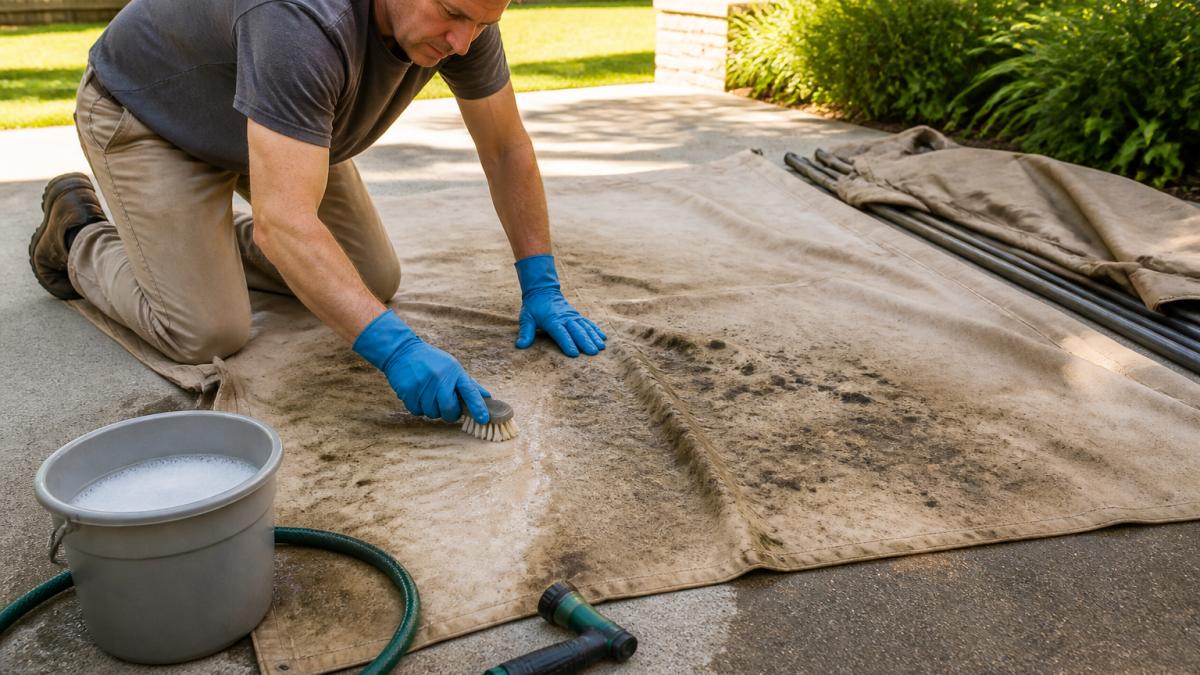
Apply, Let Sit, Scrub Gently, Rinse Thoroughly, Air-Dry
- Mix your cleaner. For a commercial product, follow the label. Wet & Forget's instructions, for example, specify one part product to five parts water in a pump-up sprayer, per Wet & Forget's product instructions. For a homemade mix, use mild detergent in warm water.
- Apply to the affected areas. Spray or sponge the solution on, inside and outside. Cover the whole stained patch, not just the center.
- Let it sit. Give the cleaner 10 to 15 minutes to break down the mildew. Do not let it dry out.
- Scrub gently. Use a soft-bristle brush in light, circular strokes. Skip the hard scrubbing; it damages fibers and spreads the stain.
- Rinse thoroughly. Hose the fabric down until the water runs clear. Leftover soap attracts new dirt.
- Air-dry completely. Stand the canopy up or hang it so air moves on both sides. Damp fabric invites mildew right back.
Here is the cleaning sequence at a glance, from mixing the solution to drying the fabric.
| Step | What to do | Time or frequency |
|---|---|---|
| Mix cleaner | Follow label; one part product to five parts water for Wet & Forget | Per label |
| Apply | Spray or sponge inside and outside, covering whole stained patch | , |
| Let sit | Give cleaner time to break down mildew; do not let it dry | 10 to 15 minutes |
| Scrub gently | Soft-bristle brush in light, circular strokes | , |
| Rinse | Hose until water runs clear | , |
| Air-dry | Stand up or hang so air moves on both sides | Until fully dry |
The Best Cleaner for Awnings Depends on the Fabric
There is no single best cleaner for awnings. The right choice depends on what the fabric is made of, how the fabric was coated, and what the care label allows. Check the manufacturer's care label before you buy anything, and when the label is missing, default to the gentlest option that works.
Here is how cleaning tolerances differ by material:
- Acrylic (solution-dyed acrylic, such as Sunbrella): mild detergent and warm water. Avoid bleach on the face fabric; solution-dyed acrylic resists mildew but its water-repellent finish can be stripped by harsh chemicals. Rinse thoroughly and let it air-dry.
- Canvas (cotton-based): gentle soap and a soft brush. Canvas holds moisture longer than synthetics, so rinse well and dry fast. Never fold or store canvas damp.
- Polyester: mild detergent works well. Test vinegar on a hidden spot first, since some polyester finishes and coatings are sensitive to acids.
- Vinyl (PVC-coated): gentle soap and water. Skip abrasive brushes and solvent cleaners that can dull or crack the coating. Rinse runoff away from plants and pets.
Bleach, Vinegar, and Commercial Mildew Removers
Bleach is the most argued-about option. Some awning guides recommend a diluted bleach solution for stubborn stains, while other guidance stresses fabric-safe cleaners and warns against concentrated products, as noted by Trivantage's awning fabric care guidance. The search results do not confirm bleach is safe for every canopy fabric, and bleach can weaken fibers, strip water-repellent finishes, and discolor solution-dyed acrylic if it sits too long.
If you decide to use bleach on a fabric whose label permits it, a common starting point is a dilute solution of about 1 part household bleach to 10 parts water, applied briefly and rinsed thoroughly. Never mix bleach with vinegar or other acids, and never let it dry on the fabric. Test on a hidden area first and watch for color change or coating damage.
White vinegar handles light mildew well and is gentler on most fabrics. A typical mix is equal parts white vinegar and water, applied, left for 10 to 15 minutes, then rinsed. Vinegar is acidic, so test it on a hidden spot and keep it off metal frames.
Commercial mildew removers are convenient but read the label for fabric compatibility before you spray. Follow the dilution on the label exactly; more concentrated is not better and can damage coatings.
10x15 FT Heavy Duty Pop Up Canopy with Mosquito Netting Walls →
How to Clean a Fabric Awning Without Damaging It
Cleaning a fabric awning safely comes down to three habits: gentle products, light pressure, and a full rinse. Damage usually comes from harsh chemicals and hard scrubbing, not from cleaning itself.
Watch out: letting cleaner dry on the fabric in direct sun can bake in streaks that never come out. Work in shade, and keep the surface wet until you rinse.
A few rules we follow:
- Never scrub with a stiff brush or abrasive pad.
- Keep cleaner off metal frames; rinse any overspray right away.
- Clean both sides when you can reach them.
- Re-treat water-repellent fabric after cleaning if the label says to.
How to Remove Mildew From a Canvas Tent
Mildew removal from a canvas tent follows the same steps as a canopy, with one big difference: canvas needs to dry fast and fully. Canvas is cotton-based and holds moisture longer than synthetic fabric, so mildew returns quickly if you store it damp.
Set the tent up in the sun, clean with mild detergent and warm water, scrub gently, and rinse until the water runs clear. Let it air-dry completely before folding. If your canvas tent is past saving, a 20x40FT party tent gives you a comparable canvas-style option for larger setups.
How to Prevent Mildew on Outdoor Fabric All Season
Preventing mildew on outdoor fabric is mostly about moisture control. Mildew needs damp, dirt, and shade to grow, so remove one of those and it struggles. The practical version of that advice comes down to drying, airflow, storage, drainage, and cleaning frequency.
Dry the Fabric Completely
Mildew returns fastest on fabric that was stored damp. After cleaning or after rain, stand the canopy up or hang it so air moves on both sides. A common pattern is to leave a canopy set up on a dry, breezy day until it is fully dry to the touch, including seams, hems, and the underside. Canvas takes longer than synthetic fabric; do not fold it until it is dry all the way through.
Keep Air Moving
A canopy left set up with airflow on both sides dries faster and stays drier. Avoid packing fabric tightly against a wall, fence, or another panel. For stored gear, leave a gap for air to circulate and avoid sealing damp fabric in a bag.
Store It Off Damp Floors
Store gear off damp floors and away from concrete that wicks moisture. Our guide to storing outdoor gear on concrete floors covers this in detail. A pallet, shelf, or hanging storage keeps fabric off the floor and lets air reach the underside.
Manage Drainage and Shade
Water that pools on a canopy or runs into folds keeps fabric damp longer. Check that the canopy is pitched so water runs off, and clear debris from gutters and frame channels. Shaded, damp spots are where mildew starts first, so pay extra attention to the underside and north-facing panels.
Clean Early and Often
Brush off dirt and bird droppings before they work into the weave. Re-clean light spots early instead of waiting for a full bloom. A quick seasonal check takes minutes and saves a full cleaning job later. In humid seasons, a monthly inspection of seams, hems, and the underside catches mildew before it spreads.
Shop Canopies and Cleaning Gear at Superior Tool Garage and Outdoors
The Heavy Duty 12'x20' Carport Canopy uses triple-layer PE fabric that blocks UV rays and resists wind and rain. For patios and events, the 10x15 FT Heavy Duty Pop Up Canopy with Mosquito Netting Walls sets up in minutes and packs into a carry bag.


Frequently Asked Questions
Will Dawn and vinegar remove mildew from outdoor canopy fabric?
A mix of mild dish soap and white vinegar can lift light surface mildew, but it is not a cure-all. Vinegar's acidity may harm some coated fabrics if left to sit, and dish soap needs thorough rinsing so residue does not attract dirt. Test a hidden patch first, keep the mix mild, scrub with a soft-bristle brush, and rinse completely. For heavy or recurring mildew, check the fabric's care label for cleaning guidance.
Can bleach damage outdoor canopy fabric?
Check the fabric's care label before using any bleach solution, and test a small inconspicuous area first.
How long should a canopy dry after cleaning?
Let it air-dry completely before folding or storing.
Can you use a pressure washer to clean outdoor canopy fabric?
A garden hose plus a soft-bristle brush or car-wash brush can be used to clean canopy fabric.
Mildew does not have to mean a new canopy every season. Clean early, rinse thoroughly, and dry completely, and most fabric lasts for years. When it is time to replace, Superior Tool Garage and Outdoors has heavy-duty canopies and outdoor gear ready to ship. Get started with Superior Tool Garage and Outdoors and get the job done right.
