


Table of Contents
- Assess Your Garage and Set Organization Goals
- Declutter and Sort Belongings
- Clean the Garage Before Organizing
- Create Functional Zones and Garage Organization Ideas
- How to Organize Garage Tools and Equipment Storage
- Garage Storage Ideas: Wall Systems, Shelves, and Overhead Solutions
- Small Garage Organization: Maximizing Limited Space
- Maintain Your Organized Garage Long-Term
- Frequently Asked Questions
Last Updated: October 10, 2026
Assess Your Garage and Set Organization Goals
Before you buy a single shelf or hook, take time to understand what you're working with, the first step in learning how to organize a professional home garage. Walk through your garage and measure the space. Check the wall dimensions, ceiling height, and floor area. Note where electrical outlets, windows, and doors are located. These details matter because they determine what storage solutions will actually fit and function properly.
Next, define what your garage needs to do. Will it be a workshop for automotive projects? A storage zone for seasonal items? A combination space for tools, bikes, and yard equipment? Your answer shapes everything that follows. We help homeowners and DIY enthusiasts clarify these goals before organizing, which prevents costly mistakes down the road.
Write down your priorities. Common garage organization goals include:
- Creating a dedicated workspace for projects
- Storing hand tools and power tools safely
- Keeping seasonal items accessible but out of the way
- Making room for bikes, sports equipment, and outdoor gear
- Establishing a clutter-free, functional space
Set a realistic budget. Garage organization doesn't require expensive systems. Smart storage solutions range from basic shelving to wall-mounted racks and overhead systems. Knowing your budget upfront helps you make informed choices about which storage products deliver the best value for your needs.
Declutter and Sort Belongings
This step separates an organized garage from a cluttered one. You cannot organize what you don't need, so ruthless decluttering comes first.
Sort everything into four categories:
- Keep and use regularly: Hand tools, frequently accessed equipment, current projects
- Keep but use seasonally: Holiday decorations, seasonal sports gear, winter clothing
- Keep but rarely use: Specialty tools, old equipment, sentimental items
- Donate, sell, or discard: Broken items, duplicates, things you haven't touched in years
Be honest about the "rarely used" category. If you haven't used something in two years, you probably won't. Selling items online or donating them to local charities frees up space and gives your belongings a second life.
Create a staging area outside the garage if possible. Pull everything out and sort it on your driveway or lawn. This forces you to touch each item and make a decision. It also reveals how much space you actually need for storage.
Clean the Garage Before Organizing
A clean garage is easier to organize and maintain. Dirt, dust, and debris hide the actual floor space and make storage systems look dingy.
Start with the floor. Sweep out loose debris, then use a broom and dustpan to clear corners and edges. For stubborn dirt, a pressure washer works well on concrete. Let the floor dry completely before moving forward.
Wipe down walls and surfaces where you'll install shelves or wall systems. Dust and grime reduce the grip of mounting hardware and adhesives. Use a damp cloth to clean high shelves and corner areas.
Check for moisture or water damage. Garages often develop damp spots, especially near doors or under gutters. If you spot mold or excessive moisture, address it before organizing. Poor ventilation leads to rust on tools and deterioration of stored items.
Finally, inspect your garage for safety hazards:
- Loose electrical outlets or damaged wiring
- Gaps or cracks in the foundation
- Pest entry points (gaps under doors, holes in walls)
- Hazardous materials stored improperly
Fix these issues before you organize. A clean, safe garage is the foundation for long-term organization success.
Create Functional Zones and Garage Organization Ideas
Zoning transforms a garage from a storage dumping ground into a purposeful workspace. Divide your garage into distinct areas based on how you actually use the space.
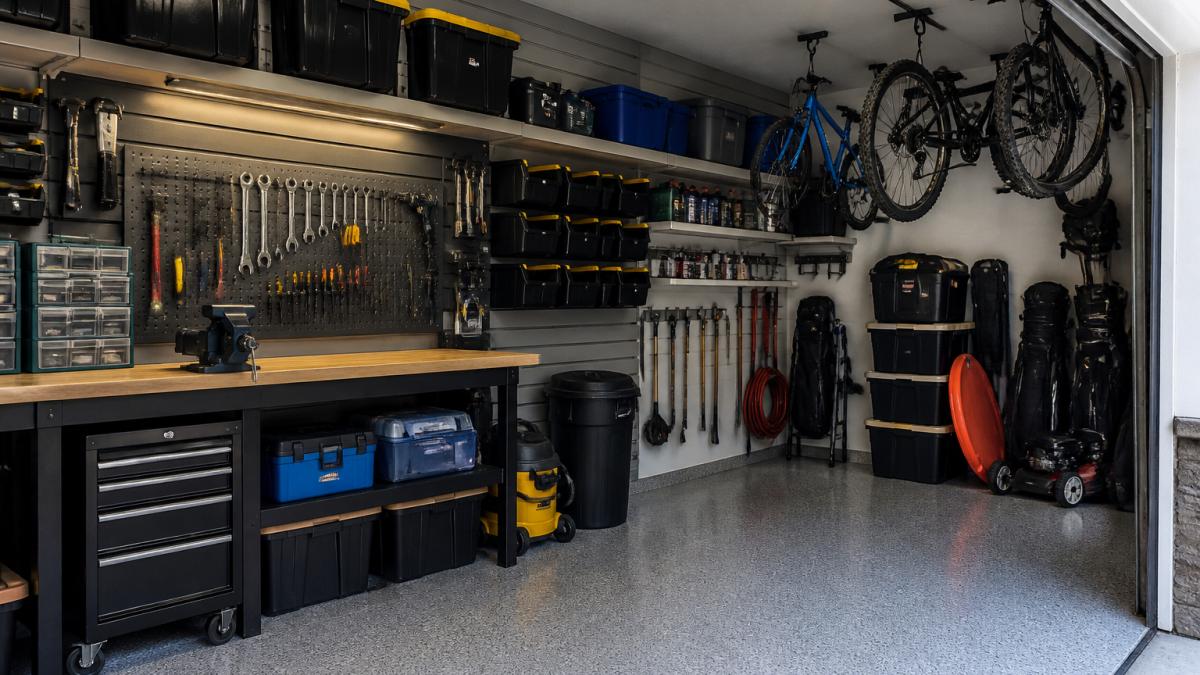
Common functional zones include:
- Work zone: A dedicated area with a workbench, task lighting, and easy access to frequently used hand tools
- Tool storage zone: Hand tools, power tools, and hardware organized by type and frequency of use
- Vehicle zone: Parking space kept clear and accessible for vehicles
- Seasonal storage zone: Holiday decorations, seasonal sports equipment, and off-season clothing
- General storage zone: Bulk items, rarely used equipment, and backup supplies
Assign each zone a specific location based on your workflow. Keep your work zone near a power outlet and natural light. Store frequently used tools closest to where you work. Place seasonal items in less accessible areas like high shelves or the back corner.
How to organize garage tools and equipment depends on your zones. In your work zone, install a pegboard or wall-mounted tool organizer for hand tools. Use clear plastic bins for hardware and fasteners. Label everything so you and your family know where items belong.
How to Organize Garage Tools and Equipment Storage
Hand tools and equipment need systematic storage. Disorganized tools waste time and create frustration during projects.
Start by grouping tools by type: hammers and mallets together, screwdrivers in one area, wrenches in another. This organization method makes tools easy to find and helps you spot missing items.
For frequently used hand tools, wall-mounted storage works best. Pegboards are affordable and flexible. You can rearrange hooks and holders as your needs change. Alternatively, wall-mounted tool racks or magnetic strips keep tools visible and accessible.
The 50 Piece General Household Toolbox from Superior Tool Garage and Outdoors provides hand tools in a compact, portable case. At $33.99, it's ideal for homeowners who need essential tools without excessive bulk.

For power tools, store them in a dedicated cabinet or on a shelf near your work zone. Keep batteries charged and bits organized in labeled containers. Store manuals and warranties in a waterproof folder nearby.
Small hardware, nails, screws, bolts, washers, belongs in a clear organizer with divided compartments. Label each section so you find what you need instantly. Avoid loose hardware in drawers or boxes where items get mixed up.
Garage Storage Ideas: Wall Systems, Shelves, and Overhead Solutions
Vertical storage maximizes your garage space and keeps frequently used items at eye level. Wall systems, shelves, and overhead solutions form the backbone of professional garage organization.
72" Adjustable Metal Shelving →
Wall-mounted shelves and cabinets are the most versatile storage option. The 72" Adjustable Metal Shelving from Superior Tool Garage and Outdoors provides durable, no-fuss installation at $101.99.

Pegboards and slat walls offer flexible tool storage. Hooks, baskets, and holders attach anywhere on the board, and you can rearrange them as your needs change. This is ideal for hand tools, small equipment, and frequently accessed items.
Overhead storage uses ceiling space for seasonal items, bulk supplies, and rarely used equipment. Ceiling-mounted racks or pulley systems keep items out of the way but still accessible.
Wall-mounted hooks and racks organize bikes, ladders, hoses, and larger equipment. Heavy-duty hooks rated for your item's weight prevent accidents and free up floor space.
For mobile storage, the 5 Tier Heavy Duty Foldable Metal Storage Rack With Wheels at $57.99 provides flexible organization. The foldable design lets you move it when needed, and the five tiers hold multiple items. Stainless steel construction ensures durability in garage environments.

Combine multiple storage solutions for comprehensive organization:
- Wall shelves for bulk storage and bins
- Pegboards for hand tools
- Overhead racks for seasonal items
- Mobile racks for flexible storage
- Hooks and racks for large equipment
Small Garage Organization: Maximizing Limited Space
Small garages require strategic thinking. Every square foot counts, so vertical storage and multi-purpose solutions become essential.
Focus on wall space first. Small garages often have limited floor area but plenty of wall real estate. Install shelves, pegboards, and wall-mounted cabinets to maximize vertical storage. Go high, use shelves near the ceiling for items you access occasionally.
Choose compact storage solutions. Narrow shelving units fit tight spaces better than wide cabinets. Fold-down workbenches provide a work surface that disappears when not in use. Wall-mounted tool organizers keep hand tools accessible without consuming floor space.
Overhead storage is crucial in small garages. Ceiling-mounted racks and pulley systems store seasonal items, bulk supplies, and rarely used equipment. This keeps your floor clear for parking or working.
Use every corner. Corner shelves, corner cabinets, and L-shaped storage units capture dead space. Corners are often wasted in small garages, but they're perfect for storage.
Keep your vehicle zone clear. If you park in the garage, protect that space. Don't encroach on parking area with storage. A cluttered garage that prevents parking defeats the purpose of having a garage.
Maintain Your Organized Garage Long-Term
Organization requires ongoing maintenance. Without a system, your garage will drift back into clutter within months.
Establish a routine. Spend 15 minutes each week returning tools and items to their designated zones. After each project, put tools away immediately. This prevents the slow creep of clutter.
Label everything clearly. Use a label maker to mark shelves, bins, and storage areas. Labels remind you and your family where items belong.
Conduct a seasonal review. Every three months, assess your garage organization. Are items in the right zones? Do you need to adjust storage based on changing needs?
Protect your storage investment. Keep your garage dry and well-ventilated. Moisture damages tools, rusts metal shelves, and deteriorates stored items.
Inspect wall-mounted systems regularly. Check that shelves, pegboards, and hooks remain secure. Tighten bolts and fasteners as needed. A failing shelf is a safety hazard and defeats your organization efforts.
Upgrade as needed. As your needs change, your garage organization should evolve. Add storage solutions where bottlenecks develop. Remove systems that aren't working.
Learning how to organize a professional home garage takes planning, but the payoff is enormous.
Superior Tool Garage and Outdoors provides the premium storage solutions and specialized tools you need to transform your garage into an organized, professional workspace. From adjustable metal shelving to heavy-duty foldable racks and complete tool kits, we have the equipment to support your organization goals.
Frequently Asked Questions
What are the 5 steps to organize a garage?
Start by assessing your space and setting goals. Next, declutter by sorting items into keep, donate, and discard categories. Third, clean the garage thoroughly before organizing. Fourth, create functional zones for different activities and item types. Finally, install storage solutions like shelves, hooks, and bins to maximize space and keep everything accessible. Following this sequence ensures a sustainable, functional garage.
How do I organize my garage when it is full of everything?
Begin with a thorough decluttering phase, be honest about what you actually use. Sort items by category: tools, seasonal equipment, sports gear, and automotive supplies. Create distinct storage zones for each category to prevent clutter from returning. Use vertical storage like wall-mounted shelves and overhead racks to reclaim floor space. Label everything clearly so items return to their designated spots. Start with one zone at a time if the task feels overwhelming.
What is the best way to store tools in a home garage?
Organize tools by frequency of use: keep daily-use hand tools in a portable toolbox or pegboard near your workbench for quick access. Store less-frequently used tools on wall-mounted shelves or in labeled storage cabinets. Use hooks and racks for larger items like power tools and equipment. A 50-piece general household toolbox works well for basic home maintenance and DIY projects, while an auto repair tool kit suits those handling vehicle maintenance. Keep similar tools grouped together and always return items to their designated spots.
How can I keep a garage organized after cleaning it out?
Establish a maintenance routine: spend 15 minutes weekly returning items to their designated zones and wiping down surfaces. Use clear labels on all storage bins and shelves so everyone in the household knows where things belong. Implement a one-item-in, one-item-out rule to prevent new clutter from accumulating. Schedule a quarterly review to assess what's working and adjust zones as needed. Keep frequently used items at eye level and within arm's reach of your workbench to encourage proper storage habits.